

the processes and products of rock deformation.
Here we introduce additional ideas and operations
and refer the interested reader to standard references (Malvern, 1969). It seems appropriate at this
point to take up a few formal topics and questions.
Deformation and flow certainly can’t be restricted
to the homogeneous case over large volumes of
rock: how would all the interesting structures that
we observe in the field have formed? We should be
suspicious from our strenuous, but not wholly satisfying, modeling of chevron folds. How do we
handle the non-homogeneous case? The secret
here is to start by transforming our picture of
homogeneous deformation down to the infinitesimal region known as the neighborhood of a particle. You may guess this from your experience
with calculus.
5.5.1 Deformation in the neighborhood
of a particle: two-dimensional case
In a two-dimensional plane or axisymmetric
deformation the initial and final positions of
particles remain in the same plane. A uniform
additional displacement of all particles, or translation, an operation that maintains the initial
orientation of the plane, would not affect this.
An example is the uniform additional upward
motion of the particles in the rising viscous
sphere. A description relative to an external fixed
coordinate would include this translation. For
example, we might wish to describe the motion
of particles in the sphere relative to a coordinate
system fixed with respect to the stationary fluid
medium far from it.
From our discussion of examples of deformation, such as the oölites of the South Mountain
anticline (Fig. 5.4) or the deformed xenoliths of
the Chindamora batholith (Fig. 5.9) you have
likely noticed that a description of deformation is
local. The range in variation between individual
oölites within a hand sample may be large, but it
represents a statistical or random variation attributed to the facts that the initial shapes of oölites
deviate from perfect spheres, and that they are
not homogeneous in their properties. One must
sample a volume that is representative of a homogeneous deformation. On the other hand the
ratios of the axial lengths of the ellipsoidal shapes
of oölites or xenoliths vary between sample locations and these variations may be representative
of a heterogeneous deformation.
Although they clearly and dramatically indicate that deformation has taken place, the axial
ratios of oölites and their orientations do not
fully quantify the deformation. As another
example to introduce our present task, consider
the deformed grid within the viscous sphere (Fig.
5.13). This shows a change in the shape, size, and
orientation of initially square material elements
after an interval of flow within the sphere. These
184
DEFORMATION AND FLOW
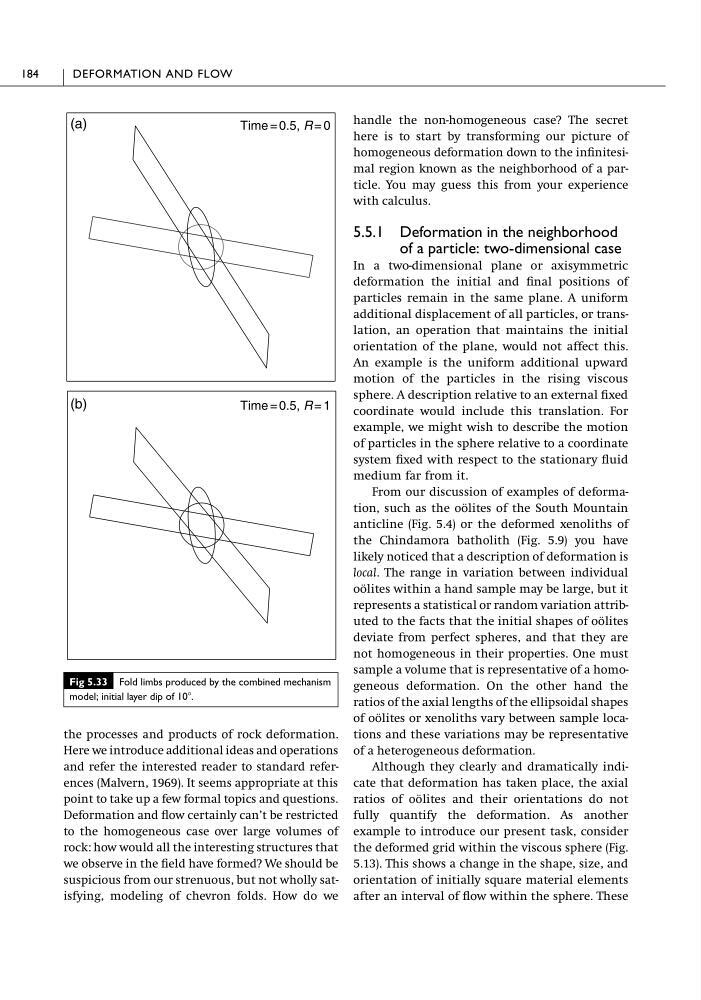
Fig 5.33 Fold limbs produced by the combined mechanism
model; initial layer dip of 10Њ.
Time = 0.5, R = 0
Time = 0.5, R = 1
(a)
(b)
Here we introduce additional ideas and operations
and refer the interested reader to standard references (Malvern, 1969). It seems appropriate at this
point to take up a few formal topics and questions.
Deformation and flow certainly can’t be restricted
to the homogeneous case over large volumes of
rock: how would all the interesting structures that
we observe in the field have formed? We should be
suspicious from our strenuous, but not wholly satisfying, modeling of chevron folds. How do we
handle the non-homogeneous case? The secret
here is to start by transforming our picture of
homogeneous deformation down to the infinitesimal region known as the neighborhood of a particle. You may guess this from your experience
with calculus.
5.5.1 Deformation in the neighborhood
of a particle: two-dimensional case
In a two-dimensional plane or axisymmetric
deformation the initial and final positions of
particles remain in the same plane. A uniform
additional displacement of all particles, or translation, an operation that maintains the initial
orientation of the plane, would not affect this.
An example is the uniform additional upward
motion of the particles in the rising viscous
sphere. A description relative to an external fixed
coordinate would include this translation. For
example, we might wish to describe the motion
of particles in the sphere relative to a coordinate
system fixed with respect to the stationary fluid
medium far from it.
From our discussion of examples of deformation, such as the oölites of the South Mountain
anticline (Fig. 5.4) or the deformed xenoliths of
the Chindamora batholith (Fig. 5.9) you have
likely noticed that a description of deformation is
local. The range in variation between individual
oölites within a hand sample may be large, but it
represents a statistical or random variation attributed to the facts that the initial shapes of oölites
deviate from perfect spheres, and that they are
not homogeneous in their properties. One must
sample a volume that is representative of a homogeneous deformation. On the other hand the
ratios of the axial lengths of the ellipsoidal shapes
of oölites or xenoliths vary between sample locations and these variations may be representative
of a heterogeneous deformation.
Although they clearly and dramatically indicate that deformation has taken place, the axial
ratios of oölites and their orientations do not
fully quantify the deformation. As another
example to introduce our present task, consider
the deformed grid within the viscous sphere (Fig.
5.13). This shows a change in the shape, size, and
orientation of initially square material elements
after an interval of flow within the sphere. These
184
DEFORMATION AND FLOW
Fig 5.33 Fold limbs produced by the combined mechanism
model; initial layer dip of 10Њ.
Time = 0.5, R = 0
Time = 0.5, R = 1
(a)
(b)