

with further assumptions, to draw a strain ellipse
associated with the deformed belemnite. It
should be clear, from the four constants required
to obtain the full transformation, that the data
afforded by this example is not sufficient to determine these and, hence, the initial positions of all
particles that now lie on the strain ellipse. Later,
we return to such transformations to study their
properties in a more formal way.
5.2 Evolving geometry of a
structure: kinematic models,
velocity models, and
deformation
5.2.1 Geometric and kinematic models
We now consider forward models for the evolution of a structure in a deforming rock mass, such
as the nappe structures in Fig. 5.2 or the folds in
Figs. 5.3 or 5.4. We look at what sequence of steps
this might involve, while continuing to avoid discussion of a complete physical description of the
process. Instead, we focus on geometric and kinematic models, which include descriptions of the
initial and current positions of particles, and of
the motion of particles between the two states.
A first step in the study of a deformed or deforming structure is the geometric description of its
form and internal structure. Topography is important in the description of an active mountain range
or volcanic edifice because it both reflects and
affects the dynamic process that created the structure and may continue to modify it. The description of the internal structure would include the
configurations of surfaces such as layer or formation boundaries and fault surfaces or fault zones,
the position, attitude, and form of minor folds, and
so forth. A description of the belemnite of Fig. 5.1
would include details seen in the figure, but would
involve a more precise and complete description as
in a detailed map of the belemnite fragments, the
intervening “veins,” and the details of cleavage orientation in the surrounding rock. This is generally
termed a description of the structure’s geometry. It
is more than that, because special significance is
invariably attached to the features whose forms
are documented, i.e. they are not merely abstract
geometric objects such as curved surfaces, triangles, or polyhedra. Without the significance
attached to these objects, there would be little
reason to painstakingly work out their forms and
disposition in space. Only the final or current state
of the body is described. We may imagine, or be
able to reconstruct, an initial state.
A hypothetical picture of the continuous
change in geometry between initial and final
states might be conceived. Such a description
would be termed a geometric model of the evolution
of the form of the structure, as described, for
example, by the changes in shape of the bed surfaces in Fig. 5.4a. In a kinematic model, the motions
of all particles in the body between the initial and
final states are described. If the observed final state
and the imagined initial states are viewed as snapshots, a kinematic model may be compared to a
movie showing all intervening states. Carrying the
analogy a bit further, such a movie would not have
a “sound track” that described the dynamics or
causal elements of the process resulting in the
motion and geometric evolution. To achieve a complete description of the process of formation of the
structure, we must incorporate geometry and
kinematics within a complete mechanical model.
5.2.2 Velocity fields
A description of the motion of particles, as in a
kinematic model, at one instant of time is given
158
DEFORMATION AND FLOW
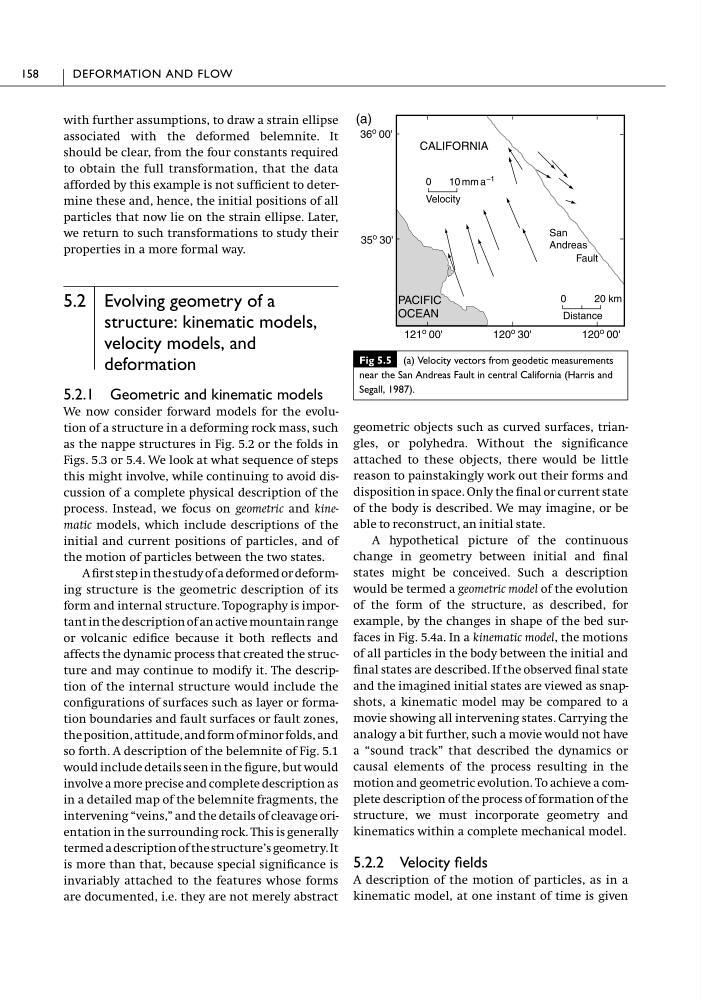
Fig 5.5 (a) Velocity vectors from geodetic measurements
near the San Andreas Fault in central California (Harris and
Segall, 1987).
0
121
o 00'
120
o 30'
120
o 00'
36
o 00'
35
o 30'
0
20 km
PACIFIC
OCEAN
CALIFORNIA
Velocity
Distance
10 mm a
–1
San
Andreas
Fault
(a)
associated with the deformed belemnite. It
should be clear, from the four constants required
to obtain the full transformation, that the data
afforded by this example is not sufficient to determine these and, hence, the initial positions of all
particles that now lie on the strain ellipse. Later,
we return to such transformations to study their
properties in a more formal way.
5.2 Evolving geometry of a
structure: kinematic models,
velocity models, and
deformation
5.2.1 Geometric and kinematic models
We now consider forward models for the evolution of a structure in a deforming rock mass, such
as the nappe structures in Fig. 5.2 or the folds in
Figs. 5.3 or 5.4. We look at what sequence of steps
this might involve, while continuing to avoid discussion of a complete physical description of the
process. Instead, we focus on geometric and kinematic models, which include descriptions of the
initial and current positions of particles, and of
the motion of particles between the two states.
A first step in the study of a deformed or deforming structure is the geometric description of its
form and internal structure. Topography is important in the description of an active mountain range
or volcanic edifice because it both reflects and
affects the dynamic process that created the structure and may continue to modify it. The description of the internal structure would include the
configurations of surfaces such as layer or formation boundaries and fault surfaces or fault zones,
the position, attitude, and form of minor folds, and
so forth. A description of the belemnite of Fig. 5.1
would include details seen in the figure, but would
involve a more precise and complete description as
in a detailed map of the belemnite fragments, the
intervening “veins,” and the details of cleavage orientation in the surrounding rock. This is generally
termed a description of the structure’s geometry. It
is more than that, because special significance is
invariably attached to the features whose forms
are documented, i.e. they are not merely abstract
geometric objects such as curved surfaces, triangles, or polyhedra. Without the significance
attached to these objects, there would be little
reason to painstakingly work out their forms and
disposition in space. Only the final or current state
of the body is described. We may imagine, or be
able to reconstruct, an initial state.
A hypothetical picture of the continuous
change in geometry between initial and final
states might be conceived. Such a description
would be termed a geometric model of the evolution
of the form of the structure, as described, for
example, by the changes in shape of the bed surfaces in Fig. 5.4a. In a kinematic model, the motions
of all particles in the body between the initial and
final states are described. If the observed final state
and the imagined initial states are viewed as snapshots, a kinematic model may be compared to a
movie showing all intervening states. Carrying the
analogy a bit further, such a movie would not have
a “sound track” that described the dynamics or
causal elements of the process resulting in the
motion and geometric evolution. To achieve a complete description of the process of formation of the
structure, we must incorporate geometry and
kinematics within a complete mechanical model.
5.2.2 Velocity fields
A description of the motion of particles, as in a
kinematic model, at one instant of time is given
158
DEFORMATION AND FLOW
Fig 5.5 (a) Velocity vectors from geodetic measurements
near the San Andreas Fault in central California (Harris and
Segall, 1987).
0
121
o 00'
120
o 30'
120
o 00'
36
o 00'
35
o 30'
0
20 km
PACIFIC
OCEAN
CALIFORNIA
Velocity
Distance
10 mm a
–1
San
Andreas
Fault
(a)