

material is shrunk down about that point. We
understand that such a viewpoint cannot be taken
literally if the element becomes too small (e.g.
smaller than a single pore in a sandstone), but the
definition provides the necessary mathematical
properties to interpret and explain geologic structures in which these point quantities vary continuously in space and time. In other words these are
field quantities defined in a material continuum.
We feel we understand something when we can
picture how the wheels and levers must fit together in
order for it to work. Physicists were reluctant to
abandon this level of understanding until they had no
alternative. However, the development of physics in
the twentieth century has been a progressive movement away from visualizable models and toward
abstract mathematical models.
Physicists now talk of fields in a much more
abstract way than Faraday or Maxwell did. A field is
now thought of as a way of assigning numbers to a
region of space, much as a temperature map assigns a
temperature to every point on the earth’s surface.
Although this description makes a field seem very
abstract, it proves to be a very rich way of talking
about nature. In fact, physicists today talk about fields
in exactly the same way as they talk about material
objects (Gregory, 1990).
This viewpoint was of tremendous value to physicists and engineers throughout the twentieth
century, but few structural geologists adopted
this perspective.
Perhaps our most familiar experience with the
concept of a continuum comes with the realization that given any two real numbers one can
choose another that falls between the first two.
Because of this property the set of real numbers is
called continuous, or we would say it forms a continuum. This concept is applied every time we construct a graph of a continuous function and give a
scale to the ordinate and abscissa. We know that
we can choose any scale for the axes and the function will plot without gaps. Because physicists
assert, based on intuition, that time and space can
be represented by real numbers, it is natural to
think of time and space as continuous. The fertile
imaginations of mathematicians have come up
with functions that are discontinuous and some
of these have applications in structural geology.
For example, faults may be modeled as a surface
of discontinuity in a function for the displacement field. None-the-less, the displacement field
is adequately represented as continuous in the
rock surrounding the fault.
Structural geologists seek to describe the
motion of particles in a rock mass as it deforms
under the action of prescribed forces. It would be
useful to assign material properties or calculate
physical quantities at arbitrary points within
the rock mass. For this endeavor we construct a
material continuum for which the mass density,
momentum, and energy are well defined at every
4.1 PHYSICAL QUANTITIES AND THE CONTINUUM
125
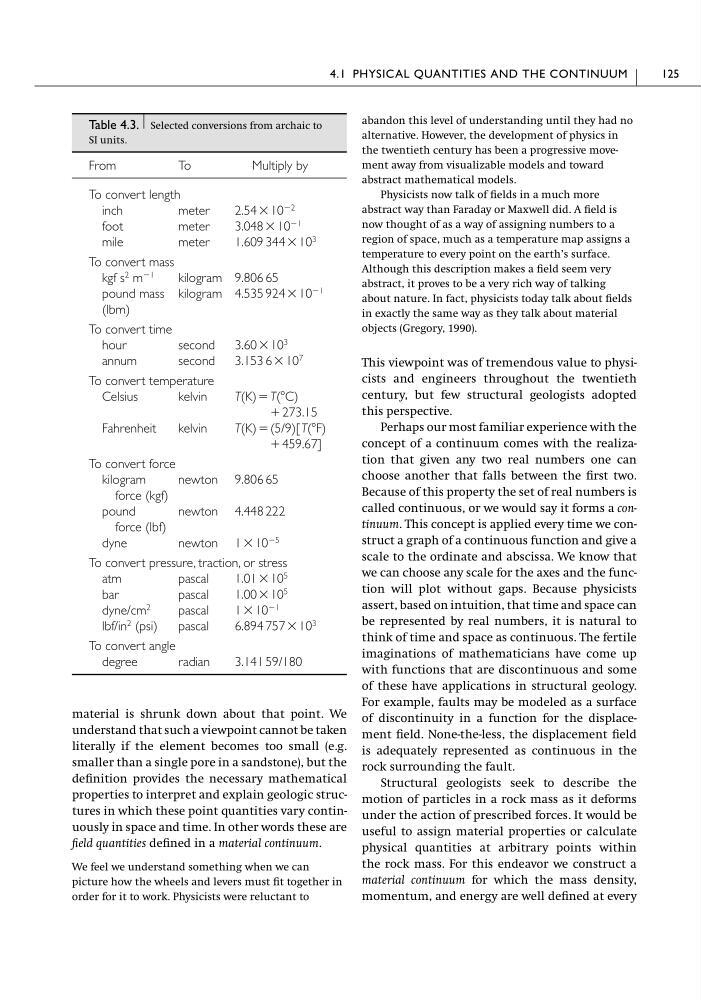
Table 4.3. Selected conversions from archaic to
SI units.
From
To
Multiply by
To convert length
inch
meter
2.54ϫ10
Ϫ2
foot
meter
3.048ϫ 10
Ϫ1
mile
meter
1.609 344ϫ10
3
To convert mass
kgf s
2
m
Ϫ1
kilogram 9.806 65
pound mass kilogram 4.535 924ϫ10
Ϫ1
(lbm)
To convert time
hour
second 3.60ϫ 10
3
annum
second 3.153 6ϫ10
7
To convert temperature
Celsius
kelvin
T(K)ϭT(ЊC)
ϩ273.15
Fahrenheit
kelvin
T(K)ϭ(5/9)[T(ЊF)
ϩ459.67]
To convert force
kilogram
newton 9.806 65
force (kgf)
pound
newton 4.448 222
force (lbf)
dyne
newton 1ϫ10
Ϫ5
To convert pressure, traction, or stress
atm
pascal
1.01ϫ10
5
bar
pascal
1.00ϫ 10
5
dyne/cm
2
pascal
1ϫ10
Ϫ1
lbf/in
2
(psi)
pascal
6.894 757ϫ10
3
To convert angle
degree
radian
3.141 59/180
understand that such a viewpoint cannot be taken
literally if the element becomes too small (e.g.
smaller than a single pore in a sandstone), but the
definition provides the necessary mathematical
properties to interpret and explain geologic structures in which these point quantities vary continuously in space and time. In other words these are
field quantities defined in a material continuum.
We feel we understand something when we can
picture how the wheels and levers must fit together in
order for it to work. Physicists were reluctant to
abandon this level of understanding until they had no
alternative. However, the development of physics in
the twentieth century has been a progressive movement away from visualizable models and toward
abstract mathematical models.
Physicists now talk of fields in a much more
abstract way than Faraday or Maxwell did. A field is
now thought of as a way of assigning numbers to a
region of space, much as a temperature map assigns a
temperature to every point on the earth’s surface.
Although this description makes a field seem very
abstract, it proves to be a very rich way of talking
about nature. In fact, physicists today talk about fields
in exactly the same way as they talk about material
objects (Gregory, 1990).
This viewpoint was of tremendous value to physicists and engineers throughout the twentieth
century, but few structural geologists adopted
this perspective.
Perhaps our most familiar experience with the
concept of a continuum comes with the realization that given any two real numbers one can
choose another that falls between the first two.
Because of this property the set of real numbers is
called continuous, or we would say it forms a continuum. This concept is applied every time we construct a graph of a continuous function and give a
scale to the ordinate and abscissa. We know that
we can choose any scale for the axes and the function will plot without gaps. Because physicists
assert, based on intuition, that time and space can
be represented by real numbers, it is natural to
think of time and space as continuous. The fertile
imaginations of mathematicians have come up
with functions that are discontinuous and some
of these have applications in structural geology.
For example, faults may be modeled as a surface
of discontinuity in a function for the displacement field. None-the-less, the displacement field
is adequately represented as continuous in the
rock surrounding the fault.
Structural geologists seek to describe the
motion of particles in a rock mass as it deforms
under the action of prescribed forces. It would be
useful to assign material properties or calculate
physical quantities at arbitrary points within
the rock mass. For this endeavor we construct a
material continuum for which the mass density,
momentum, and energy are well defined at every
4.1 PHYSICAL QUANTITIES AND THE CONTINUUM
125
Table 4.3. Selected conversions from archaic to
SI units.
From
To
Multiply by
To convert length
inch
meter
2.54ϫ10
Ϫ2
foot
meter
3.048ϫ 10
Ϫ1
mile
meter
1.609 344ϫ10
3
To convert mass
kgf s
2
m
Ϫ1
kilogram 9.806 65
pound mass kilogram 4.535 924ϫ10
Ϫ1
(lbm)
To convert time
hour
second 3.60ϫ 10
3
annum
second 3.153 6ϫ10
7
To convert temperature
Celsius
kelvin
T(K)ϭT(ЊC)
ϩ273.15
Fahrenheit
kelvin
T(K)ϭ(5/9)[T(ЊF)
ϩ459.67]
To convert force
kilogram
newton 9.806 65
force (kgf)
pound
newton 4.448 222
force (lbf)
dyne
newton 1ϫ10
Ϫ5
To convert pressure, traction, or stress
atm
pascal
1.01ϫ10
5
bar
pascal
1.00ϫ 10
5
dyne/cm
2
pascal
1ϫ10
Ϫ1
lbf/in
2
(psi)
pascal
6.894 757ϫ10
3
To convert angle
degree
radian
3.141 59/180