

179
12.3 Discussion and Results: Localizing Global Development
Goals
While SDG 11 sets broad objectives, it is important to contextualize and mainstream the universal goals into local development process, to make tangible differences in the lives of people – and here urban local bodies have crucial role to play.
To make timebound progress to achieve sustainability goals, the targets and indicators of SDG 11 need to be aligned and benchmarked with infrastructure delivery
process through the local development plans and budgetary priorities. However,
incorporation of global goals into local planning and policy discourse faces considerable governance and economic challenge. This section looks at how these issues
are being negotiated through the example of India.
India had been one of the fastest-growing major economies of the world over the
past couple of decades. India is also the second largest urban system in the world,
with an urban population of 377 million at an urbanization level of 31.14%, and has
three megacities with ten million plus population (Census 2011). Although in percentage terms India’s urbanization rate is less compared to big Asian countries like
China or Indonesia, it has started to accelerate. For the first time in history, net
population growth rate in urban areas exceeded rural population growth rate – during the 2001–2011 census decade. It is projected that the urban population would
reach 600 million (40%) by 2031 and 850 million (50%) by 2051 (ibid).
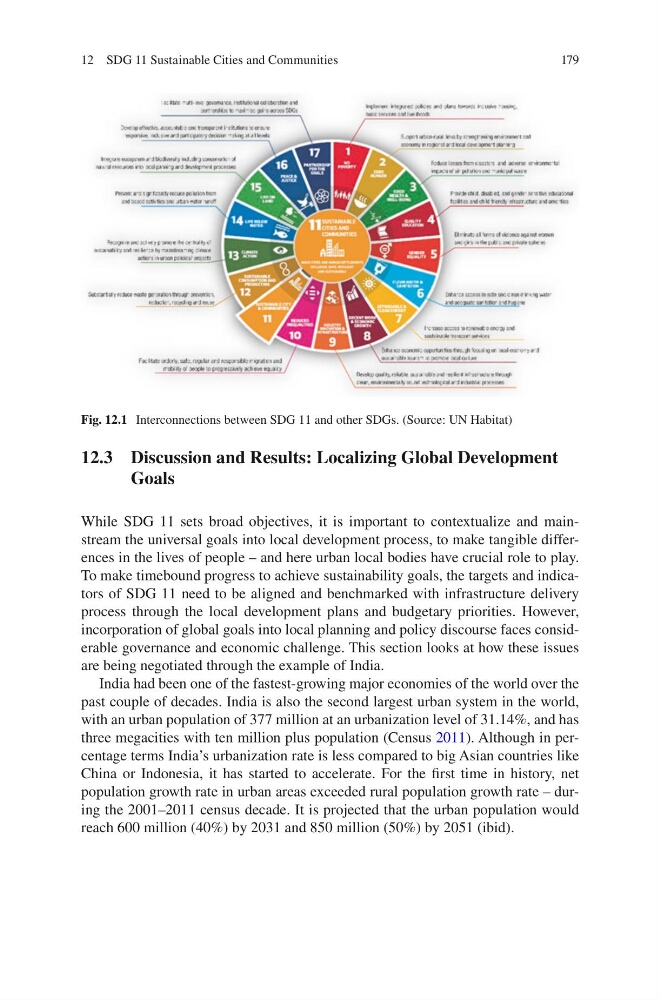
Fig. 12.1 Interconnections between SDG 11 and other SDGs. (Source: UN Habitat)
12 SDG 11 Sustainable Cities and Communities
12.3 Discussion and Results: Localizing Global Development
Goals
While SDG 11 sets broad objectives, it is important to contextualize and mainstream the universal goals into local development process, to make tangible differences in the lives of people – and here urban local bodies have crucial role to play.
To make timebound progress to achieve sustainability goals, the targets and indicators of SDG 11 need to be aligned and benchmarked with infrastructure delivery
process through the local development plans and budgetary priorities. However,
incorporation of global goals into local planning and policy discourse faces considerable governance and economic challenge. This section looks at how these issues
are being negotiated through the example of India.
India had been one of the fastest-growing major economies of the world over the
past couple of decades. India is also the second largest urban system in the world,
with an urban population of 377 million at an urbanization level of 31.14%, and has
three megacities with ten million plus population (Census 2011). Although in percentage terms India’s urbanization rate is less compared to big Asian countries like
China or Indonesia, it has started to accelerate. For the first time in history, net
population growth rate in urban areas exceeded rural population growth rate – during the 2001–2011 census decade. It is projected that the urban population would
reach 600 million (40%) by 2031 and 850 million (50%) by 2051 (ibid).
Fig. 12.1 Interconnections between SDG 11 and other SDGs. (Source: UN Habitat)
12 SDG 11 Sustainable Cities and Communities