

496
G. Romanescu and I. Minea
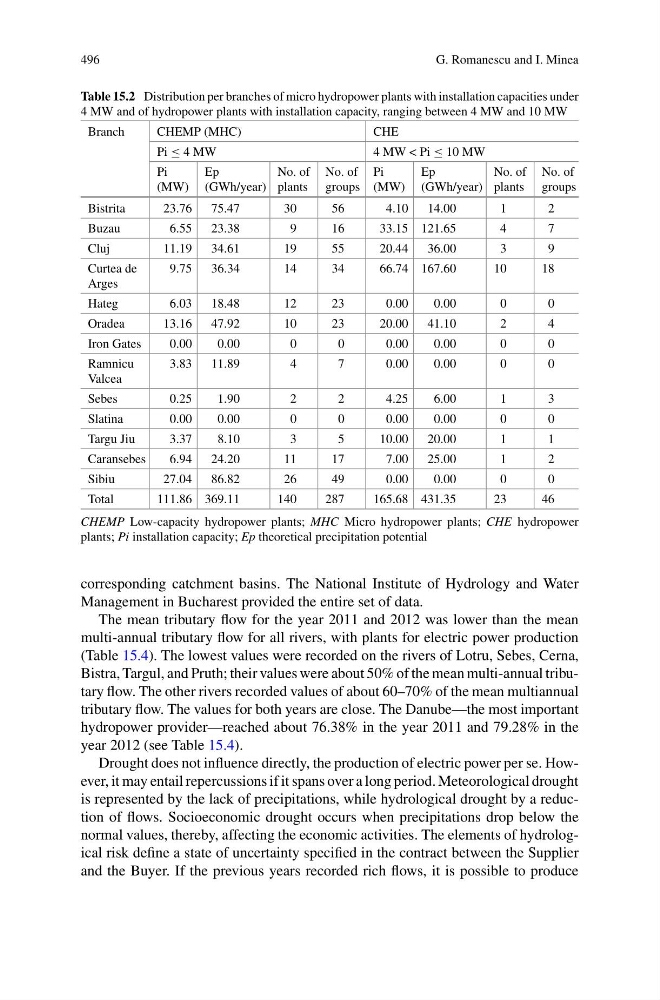
Table 15.2 Distribution per branches of micro hydropower plants with installation capacities under
4 MW and of hydropower plants with installation capacity, ranging between 4 MW and 10 MW
Branch
CHEMP (MHC)
CHE
Pi ≤ 4 MW
4 MW < Pi ≤ 10 MW
Pi
(MW)
Ep
(GWh/year)
No. of
plants
No. of
groups
Pi
(MW)
Ep
(GWh/year)
No. of
plants
No. of
groups
Bistrita
23.76
75.47
30
56
4.10
14.00
1
2
Buzau
6.55
23.38
9
16
33.15 121.65
4
7
Cluj
11.19
34.61
19
55
20.44
36.00
3
9
Curtea de
Arges
9.75
36.34
14
34
66.74 167.60
10
18
Hateg
6.03
18.48
12
23
0.00
0.00
0
0
Oradea
13.16
47.92
10
23
20.00
41.10
2
4
Iron Gates
0.00
0.00
0
0
0.00
0.00
0
0
Ramnicu
Valcea
3.83
11.89
4
7
0.00
0.00
0
0
Sebes
0.25
1.90
2
2
4.25
6.00
1
3
Slatina
0.00
0.00
0
0
0.00
0.00
0
0
Targu Jiu
3.37
8.10
3
5
10.00
20.00
1
1
Caransebes
6.94
24.20
11
17
7.00
25.00
1
2
Sibiu
27.04
86.82
26
49
0.00
0.00
0
0
Total
111.86 369.11
140
287
165.68 431.35
23
46
CHEMP Low-capacity hydropower plants; MHC Micro hydropower plants; CHE hydropower
plants; Pi installation capacity; Ep theoretical precipitation potential
corresponding catchment basins. The National Institute of Hydrology and Water
Management in Bucharest provided the entire set of data.
The mean tributary flow for the year 2011 and 2012 was lower than the mean
multi-annual tributary flow for all rivers, with plants for electric power production
(Table 15.4). The lowest values were recorded on the rivers of Lotru, Sebes, Cerna,
Bistra, Targul, and Pruth; their values were about 50% of the mean multi-annual tributary flow. The other rivers recorded values of about 60–70% of the mean multiannual
tributary flow. The values for both years are close. The Danube—the most important
hydropower provider—reached about 76.38% in the year 2011 and 79.28% in the
year 2012 (see Table 15.4).
Drought does not influence directly, the production of electric power per se. However, it may entail repercussions if it spans over a long period. Meteorological drought
is represented by the lack of precipitations, while hydrological drought by a reduction of flows. Socioeconomic drought occurs when precipitations drop below the
normal values, thereby, affecting the economic activities. The elements of hydrological risk define a state of uncertainty specified in the contract between the Supplier
and the Buyer. If the previous years recorded rich flows, it is possible to produce
G. Romanescu and I. Minea
Table 15.2 Distribution per branches of micro hydropower plants with installation capacities under
4 MW and of hydropower plants with installation capacity, ranging between 4 MW and 10 MW
Branch
CHEMP (MHC)
CHE
Pi ≤ 4 MW
4 MW < Pi ≤ 10 MW
Pi
(MW)
Ep
(GWh/year)
No. of
plants
No. of
groups
Pi
(MW)
Ep
(GWh/year)
No. of
plants
No. of
groups
Bistrita
23.76
75.47
30
56
4.10
14.00
1
2
Buzau
6.55
23.38
9
16
33.15 121.65
4
7
Cluj
11.19
34.61
19
55
20.44
36.00
3
9
Curtea de
Arges
9.75
36.34
14
34
66.74 167.60
10
18
Hateg
6.03
18.48
12
23
0.00
0.00
0
0
Oradea
13.16
47.92
10
23
20.00
41.10
2
4
Iron Gates
0.00
0.00
0
0
0.00
0.00
0
0
Ramnicu
Valcea
3.83
11.89
4
7
0.00
0.00
0
0
Sebes
0.25
1.90
2
2
4.25
6.00
1
3
Slatina
0.00
0.00
0
0
0.00
0.00
0
0
Targu Jiu
3.37
8.10
3
5
10.00
20.00
1
1
Caransebes
6.94
24.20
11
17
7.00
25.00
1
2
Sibiu
27.04
86.82
26
49
0.00
0.00
0
0
Total
111.86 369.11
140
287
165.68 431.35
23
46
CHEMP Low-capacity hydropower plants; MHC Micro hydropower plants; CHE hydropower
plants; Pi installation capacity; Ep theoretical precipitation potential
corresponding catchment basins. The National Institute of Hydrology and Water
Management in Bucharest provided the entire set of data.
The mean tributary flow for the year 2011 and 2012 was lower than the mean
multi-annual tributary flow for all rivers, with plants for electric power production
(Table 15.4). The lowest values were recorded on the rivers of Lotru, Sebes, Cerna,
Bistra, Targul, and Pruth; their values were about 50% of the mean multi-annual tributary flow. The other rivers recorded values of about 60–70% of the mean multiannual
tributary flow. The values for both years are close. The Danube—the most important
hydropower provider—reached about 76.38% in the year 2011 and 79.28% in the
year 2012 (see Table 15.4).
Drought does not influence directly, the production of electric power per se. However, it may entail repercussions if it spans over a long period. Meteorological drought
is represented by the lack of precipitations, while hydrological drought by a reduction of flows. Socioeconomic drought occurs when precipitations drop below the
normal values, thereby, affecting the economic activities. The elements of hydrological risk define a state of uncertainty specified in the contract between the Supplier
and the Buyer. If the previous years recorded rich flows, it is possible to produce