

at seven of the ten stites in the major tributaries of Upper Yangtze River and
continued increasing (with a rate of 4.9 μeq L
À1 year
À1 ) to 112 μeq L
À1 at almost
all the stites during 1998–2007, coinciding with the increase of the emission of NO x
and NH 3 (Duan et al. 2011). However, the contribution of NO 3
À to surface water
acidification was far less than that of SO 4
2À , manifested as the equivalence ratio of
NO 3
À to SO 4
2À in water (averaged at 0.11) much smaller than the equivalence ratio
of N/S in emission (about 0.47 in 2008) (Duan et al. 2011). According to the survey
of 255 forest streams, the NO 3
À concentration (averaged at 110 μeq L
À1 ) in the
stream water was much less than SO 4
2À (averaged at 810 μeq L
À1 ), even under the N
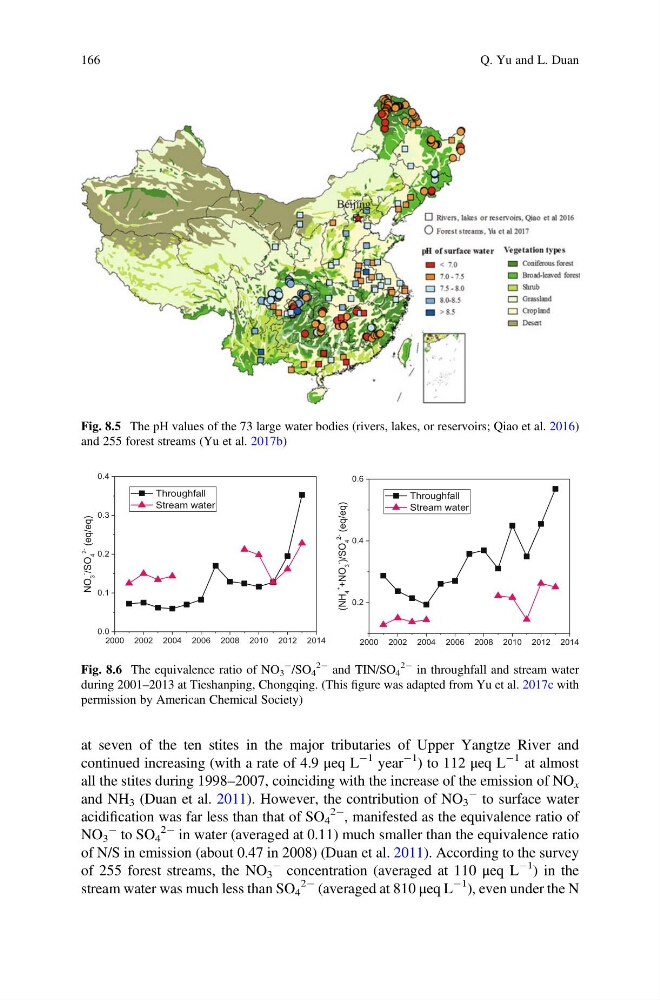
Fig. 8.5 The pH values of the 73 large water bodies (rivers, lakes, or reservoirs; Qiao et al. 2016)
and 255 forest streams (Yu et al. 2017b)
2000 2002 2004 2006 2008 2010 2012 2014
0.0
0.1
0.2
0.3
0.4
NO
3
-
/SO
4
2)
q
e
/
q
e
(
Throughfall
Stream water
2000 2002 2004 2006 2008 2010 2012 2014
0.2
0.4
0.6
(NH
4
+
O
N
+
3
-
O
S
/
)
4
2)
q
e
/
q
e
(
Throughfall
Stream water
Fig. 8.6 The equivalence ratio of NO 3
À
/SO 4
2À and TIN/SO 4
2À in throughfall and stream water
during 2001–2013 at Tieshanping, Chongqing. (This figure was adapted from Yu et al. 2017c with
permission by American Chemical Society)
166
Q. Yu and L. Duan
continued increasing (with a rate of 4.9 μeq L
À1 year
À1 ) to 112 μeq L
À1 at almost
all the stites during 1998–2007, coinciding with the increase of the emission of NO x
and NH 3 (Duan et al. 2011). However, the contribution of NO 3
À to surface water
acidification was far less than that of SO 4
2À , manifested as the equivalence ratio of
NO 3
À to SO 4
2À in water (averaged at 0.11) much smaller than the equivalence ratio
of N/S in emission (about 0.47 in 2008) (Duan et al. 2011). According to the survey
of 255 forest streams, the NO 3
À concentration (averaged at 110 μeq L
À1 ) in the
stream water was much less than SO 4
2À (averaged at 810 μeq L
À1 ), even under the N
Fig. 8.5 The pH values of the 73 large water bodies (rivers, lakes, or reservoirs; Qiao et al. 2016)
and 255 forest streams (Yu et al. 2017b)
2000 2002 2004 2006 2008 2010 2012 2014
0.0
0.1
0.2
0.3
0.4
NO
3
-
/SO
4
2)
q
e
/
q
e
(
Throughfall
Stream water
2000 2002 2004 2006 2008 2010 2012 2014
0.2
0.4
0.6
(NH
4
+
O
N
+
3
-
O
S
/
)
4
2)
q
e
/
q
e
(
Throughfall
Stream water
Fig. 8.6 The equivalence ratio of NO 3
À
/SO 4
2À and TIN/SO 4
2À in throughfall and stream water
during 2001–2013 at Tieshanping, Chongqing. (This figure was adapted from Yu et al. 2017c with
permission by American Chemical Society)
166
Q. Yu and L. Duan