

and still observed but less often for watermelon, grapevines, and gourds. Several
native trees, such as pines, ailanthus, and ash trees, also showed symptoms. Rose of
Sharon, black locust, and Japanese morning glory were among the injured ornamental plants. Examples of O 3 symptoms are shown in Fig. 7.10 for some of the plants
mentioned above (Feng et al. 2014).
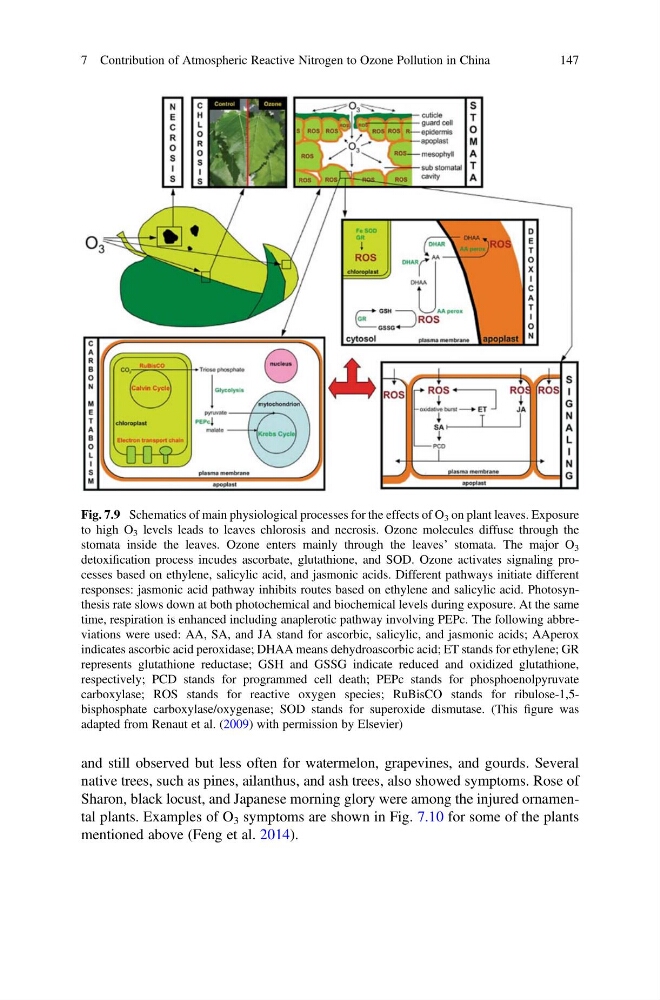
Fig. 7.9 Schematics of main physiological processes for the effects of O 3 on plant leaves. Exposure
to high O 3 levels leads to leaves chlorosis and necrosis. Ozone molecules diffuse through the
stomata inside the leaves. Ozone enters mainly through the leaves’ stomata. The major O 3
detoxification process incudes ascorbate, glutathione, and SOD. Ozone activates signaling processes based on ethylene, salicylic acid, and jasmonic acids. Different pathways initiate different
responses: jasmonic acid pathway inhibits routes based on ethylene and salicylic acid. Photosynthesis rate slows down at both photochemical and biochemical levels during exposure. At the same
time, respiration is enhanced including anaplerotic pathway involving PEPc. The following abbreviations were used: AA, SA, and JA stand for ascorbic, salicylic, and jasmonic acids; AAperox
indicates ascorbic acid peroxidase; DHAA means dehydroascorbic acid; ET stands for ethylene; GR
represents glutathione reductase; GSH and GSSG indicate reduced and oxidized glutathione,
respectively; PCD stands for programmed cell death; PEPc stands for phosphoenolpyruvate
carboxylase; ROS stands for reactive oxygen species; RuBisCO stands for ribulose-1,5bisphosphate carboxylase/oxygenase; SOD stands for superoxide dismutase. (This figure was
adapted from Renaut et al. (2009) with permission by Elsevier)
7 Contribution of Atmospheric Reactive Nitrogen to Ozone Pollution in China
147
native trees, such as pines, ailanthus, and ash trees, also showed symptoms. Rose of
Sharon, black locust, and Japanese morning glory were among the injured ornamental plants. Examples of O 3 symptoms are shown in Fig. 7.10 for some of the plants
mentioned above (Feng et al. 2014).
Fig. 7.9 Schematics of main physiological processes for the effects of O 3 on plant leaves. Exposure
to high O 3 levels leads to leaves chlorosis and necrosis. Ozone molecules diffuse through the
stomata inside the leaves. Ozone enters mainly through the leaves’ stomata. The major O 3
detoxification process incudes ascorbate, glutathione, and SOD. Ozone activates signaling processes based on ethylene, salicylic acid, and jasmonic acids. Different pathways initiate different
responses: jasmonic acid pathway inhibits routes based on ethylene and salicylic acid. Photosynthesis rate slows down at both photochemical and biochemical levels during exposure. At the same
time, respiration is enhanced including anaplerotic pathway involving PEPc. The following abbreviations were used: AA, SA, and JA stand for ascorbic, salicylic, and jasmonic acids; AAperox
indicates ascorbic acid peroxidase; DHAA means dehydroascorbic acid; ET stands for ethylene; GR
represents glutathione reductase; GSH and GSSG indicate reduced and oxidized glutathione,
respectively; PCD stands for programmed cell death; PEPc stands for phosphoenolpyruvate
carboxylase; ROS stands for reactive oxygen species; RuBisCO stands for ribulose-1,5bisphosphate carboxylase/oxygenase; SOD stands for superoxide dismutase. (This figure was
adapted from Renaut et al. (2009) with permission by Elsevier)
7 Contribution of Atmospheric Reactive Nitrogen to Ozone Pollution in China
147