

reactive oxygen species (ROS) or biomolecule oxidation products formed as a result
of O 3 interaction with cellular redox systems originate or support reactions in
physiological tissues (Tausz et al. 2007). Schematics of O 3 effects on plants are
shown in Fig. 7.9 (Renaut et al. 2009). Ground-level O 3 caused visible leaf injury,
which also reduced photosynthesis and inhibited growth and yield. High O 3 level
also changes how plants deal with diseases and pests (Krupa et al. 2000).
High O 3 levels could affect plant leaves, and the visible O 3 symptoms of plant
leaves could be used to visually quickly assess and predict O 3 pollution in the field
conditions (Hayes et al. 2007). Feng et al. (2014) examined clearly visible plant
injuries in July and August of 2013 in parks, forests, and agricultural regions of
Beijing, China. The visible injury was detected in many areas and in 28 different
plant species or cultivars. Ozone symptoms were observed more frequently in rural
and mountain areas of Northern Beijing, which are located downwind from the city.
Less leaves damage was observed in city gardens. Injuries to crop-bearing plants
were detected most frequently for genera Phaseolus, Canavalia, and Vigna beans
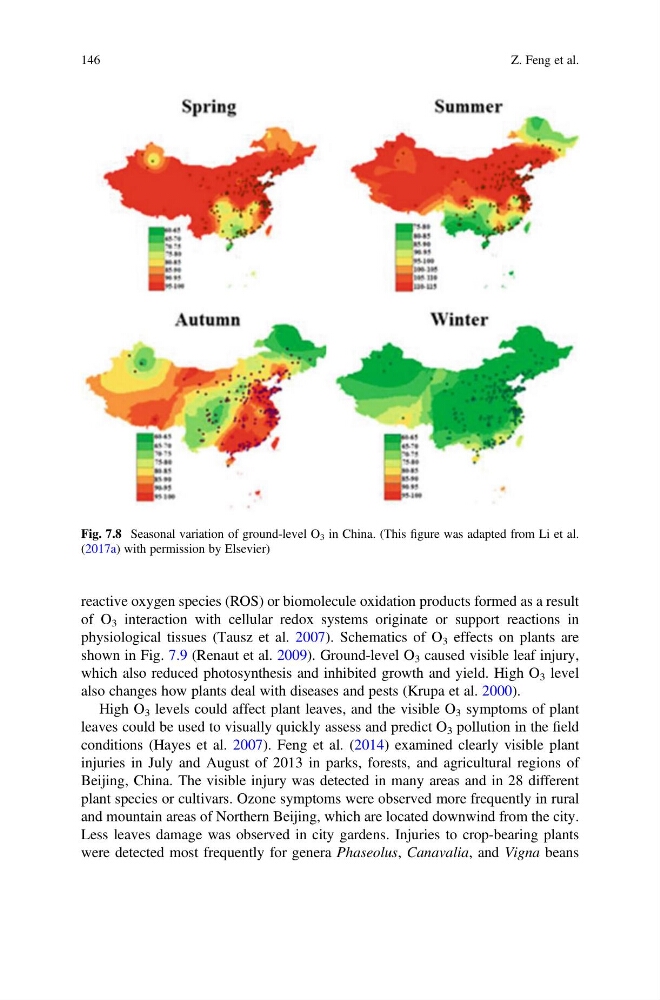
Fig. 7.8 Seasonal variation of ground-level O 3 in China. (This figure was adapted from Li et al.
(2017a) with permission by Elsevier)
146
Z. Feng et al.
of O 3 interaction with cellular redox systems originate or support reactions in
physiological tissues (Tausz et al. 2007). Schematics of O 3 effects on plants are
shown in Fig. 7.9 (Renaut et al. 2009). Ground-level O 3 caused visible leaf injury,
which also reduced photosynthesis and inhibited growth and yield. High O 3 level
also changes how plants deal with diseases and pests (Krupa et al. 2000).
High O 3 levels could affect plant leaves, and the visible O 3 symptoms of plant
leaves could be used to visually quickly assess and predict O 3 pollution in the field
conditions (Hayes et al. 2007). Feng et al. (2014) examined clearly visible plant
injuries in July and August of 2013 in parks, forests, and agricultural regions of
Beijing, China. The visible injury was detected in many areas and in 28 different
plant species or cultivars. Ozone symptoms were observed more frequently in rural
and mountain areas of Northern Beijing, which are located downwind from the city.
Less leaves damage was observed in city gardens. Injuries to crop-bearing plants
were detected most frequently for genera Phaseolus, Canavalia, and Vigna beans
Fig. 7.8 Seasonal variation of ground-level O 3 in China. (This figure was adapted from Li et al.
(2017a) with permission by Elsevier)
146
Z. Feng et al.