

the TTF
•+ units and the tetracationic cyclophane. It is also strong enough to
compensate the potential enthalpy release that results from the donor-acceptor
interactions between the DNP unit and the CBPQB
4+ ring. Further oxidizing
TTF
•+ to TTF
2+ diminished the (TTF
•+
) 2 radical-pairing interactions, leading to a
co-conformation that the ring encircled the two DNP stations.
Different from CBPQT
2(•+) that can recognize a BIPY
•+ guest, the ability of
CBPQB
2(•+) to accommodate two BIPY
•+ guests in the cavity is relatively weak.
This is probably because encapsulation of two BIPY
•+ guests within the cavity of
CBPQB
2(•+) simultaneously leads to too much entropy loss. However, when the two
BIPY
•+ units are connected by two m-xylyl linkers, the macrocyclic 22
2(•+) could be
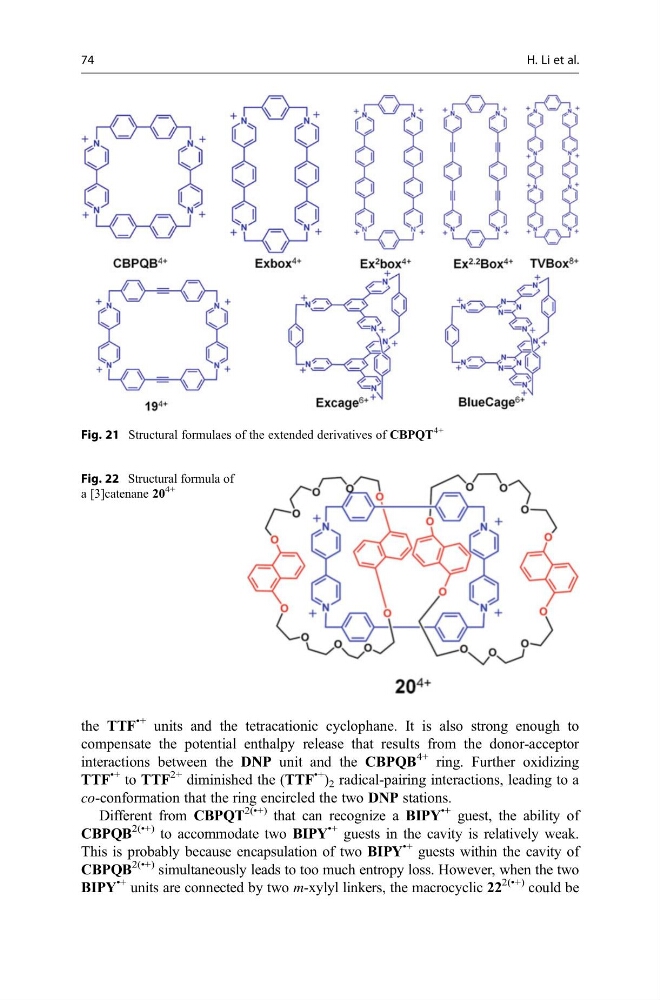
Fig. 21 Structural formulaes of the extended derivatives of CBPQT
4+
Fig. 22 Structural formula of
a [3]catenane 20
4+
74
H. Li et al.
•+ units and the tetracationic cyclophane. It is also strong enough to
compensate the potential enthalpy release that results from the donor-acceptor
interactions between the DNP unit and the CBPQB
4+ ring. Further oxidizing
TTF
•+ to TTF
2+ diminished the (TTF
•+
) 2 radical-pairing interactions, leading to a
co-conformation that the ring encircled the two DNP stations.
Different from CBPQT
2(•+) that can recognize a BIPY
•+ guest, the ability of
CBPQB
2(•+) to accommodate two BIPY
•+ guests in the cavity is relatively weak.
This is probably because encapsulation of two BIPY
•+ guests within the cavity of
CBPQB
2(•+) simultaneously leads to too much entropy loss. However, when the two
BIPY
•+ units are connected by two m-xylyl linkers, the macrocyclic 22
2(•+) could be
Fig. 21 Structural formulaes of the extended derivatives of CBPQT
4+
Fig. 22 Structural formula of
a [3]catenane 20
4+
74
H. Li et al.