

cancelled or neutralized when we reset the molecular switch, because the ring returns
to its original position by using a reversed pathway. Or expressed in another way, the
net energy produced by the molecular switch is nothing after a full switching cycle.
In order to produce a real artificial molecular machine that is able to produce useful
work to the surroundings, a pseudorotaxane 18
+
&CBPQT
4+ that produces unidirectional motion was designed [56] (Fig. 20). A CBPQT
4+ ring encircles a DNP unit
in a dumbbell-shaped molecule 18
+ bearing two terminal units, namely, a neutral 2isopropylphenyl group and a positively charged 3,5-dimethylpyridinium unit. The
formation of the pseudorotaxane 18
+
&CBPQT
4+ is again driven by donor-acceptor
interactions. However, due to the Coulombic repulsion introduced by the 3,5dimethylpyridinium, the association of the pseudorotaxane occurs in the manner
that the ring passes the 2-isopropylphenyl unit. Reduction of the ring diminishes its
binding affinity for the DNP station and therefore results in the dissociation of the
pseudorotaxane. At the same time, the Coulombic repulsion between the reduced ring
and the 3,5-dimethylpyridinium unit undergoes significant decrease. In order to avoid
the steric hindrance introduced by the 2-isopropylphenyl group, the CBPQT
2(•+) ring
chooses to pass the 3,5-dimethylpyridinium unit to finish dissociation. These switching
behaviors enable the ring to perform unidirectional movement from one end of the
dumbbell to another, generating useful work.
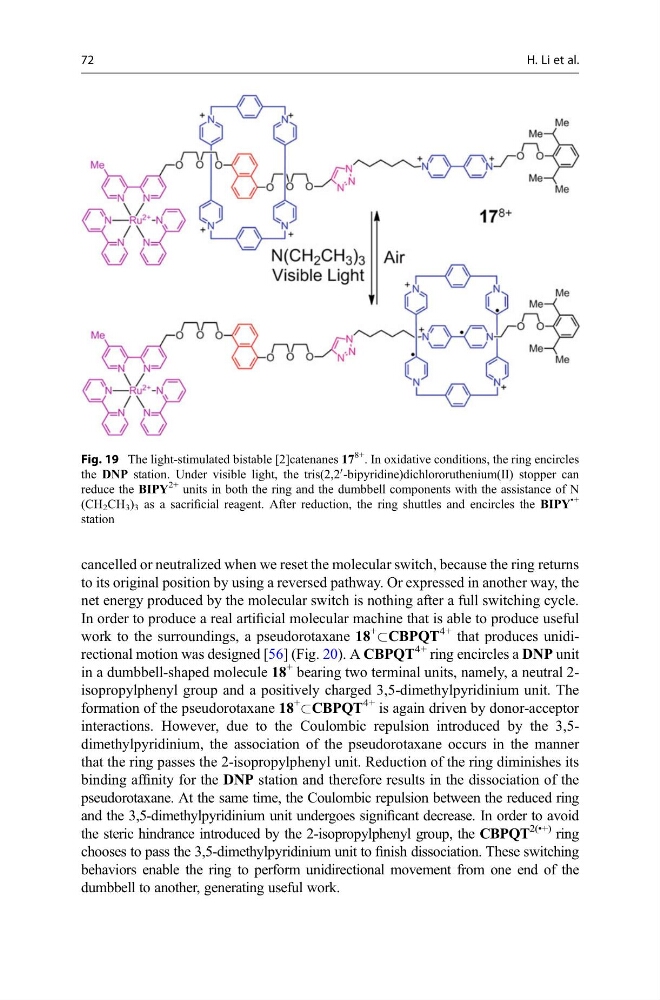
Fig. 19 The light-stimulated bistable [2]catenanes 17
8+ . In oxidative conditions, the ring encircles
the DNP station. Under visible light, the tris(2,2
0 -bipyridine)dichlororuthenium(II) stopper can
reduce the BIPY
2+ units in both the ring and the dumbbell components with the assistance of N
(CH 2 CH 3 ) 3 as a sacrificial reagent. After reduction, the ring shuttles and encircles the BIPY
•+
station
72
H. Li et al.
to its original position by using a reversed pathway. Or expressed in another way, the
net energy produced by the molecular switch is nothing after a full switching cycle.
In order to produce a real artificial molecular machine that is able to produce useful
work to the surroundings, a pseudorotaxane 18
+
&CBPQT
4+ that produces unidirectional motion was designed [56] (Fig. 20). A CBPQT
4+ ring encircles a DNP unit
in a dumbbell-shaped molecule 18
+ bearing two terminal units, namely, a neutral 2isopropylphenyl group and a positively charged 3,5-dimethylpyridinium unit. The
formation of the pseudorotaxane 18
+
&CBPQT
4+ is again driven by donor-acceptor
interactions. However, due to the Coulombic repulsion introduced by the 3,5dimethylpyridinium, the association of the pseudorotaxane occurs in the manner
that the ring passes the 2-isopropylphenyl unit. Reduction of the ring diminishes its
binding affinity for the DNP station and therefore results in the dissociation of the
pseudorotaxane. At the same time, the Coulombic repulsion between the reduced ring
and the 3,5-dimethylpyridinium unit undergoes significant decrease. In order to avoid
the steric hindrance introduced by the 2-isopropylphenyl group, the CBPQT
2(•+) ring
chooses to pass the 3,5-dimethylpyridinium unit to finish dissociation. These switching
behaviors enable the ring to perform unidirectional movement from one end of the
dumbbell to another, generating useful work.
Fig. 19 The light-stimulated bistable [2]catenanes 17
8+ . In oxidative conditions, the ring encircles
the DNP station. Under visible light, the tris(2,2
0 -bipyridine)dichlororuthenium(II) stopper can
reduce the BIPY
2+ units in both the ring and the dumbbell components with the assistance of N
(CH 2 CH 3 ) 3 as a sacrificial reagent. After reduction, the ring shuttles and encircles the BIPY
•+
station
72
H. Li et al.