

A few reversible reactions were also employed in order to prepare the catenane in
a reversible manner, such as imine bond formation [39], as well as metal-catalyzed
olefin metathesis [40]. These dynamic approaches often resulted in higher yields,
compared with those in the condition of irreversible ones. This is because
(i) dynamic bond undergoes reversible forming/cleavage processes, which allows
the systems to perform error checking, and therefore the MIMs are synthesized in a
thermodynamic control and (ii) the guest recognition ability of CBPQT
4+ acts as the
driving forces, making the MIMs more thermodynamically favored compared with
other byproducts.
Even although CBPQT
4+ is considered as a macrocycle containing only irreversible covalent bonds, it has been discovered that one of the four C–N bonds between
the pyridinium nitrogen and the methylene carbon could become reversible, by using
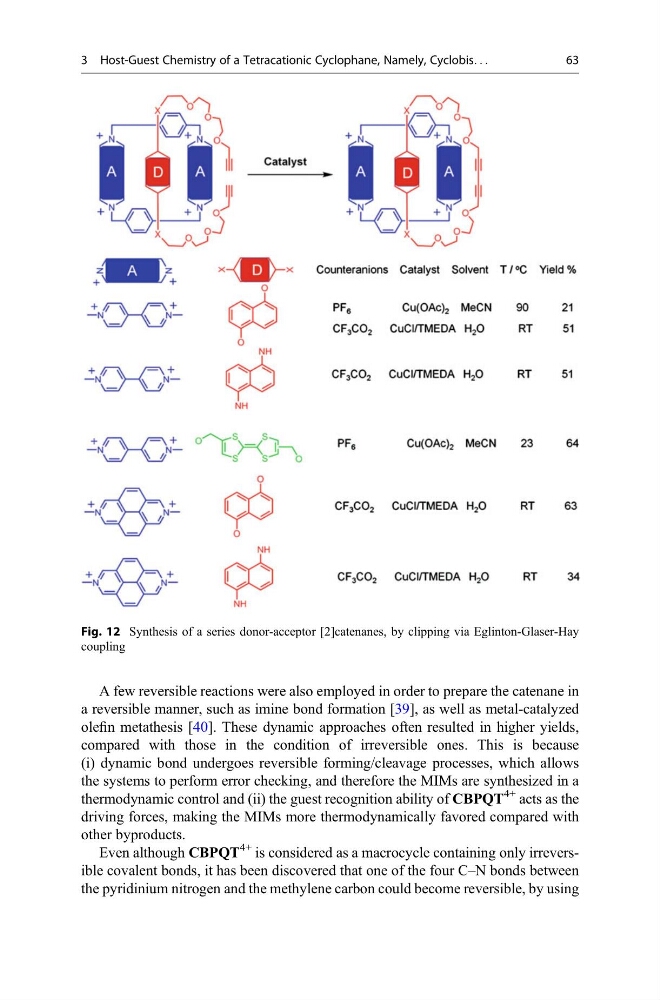
Fig. 12 Synthesis of a series donor-acceptor [2]catenanes, by clipping via Eglinton-Glaser-Hay
coupling
3 Host-Guest Chemistry of a Tetracationic Cyclophane, Namely, Cyclobis. . .
63
a reversible manner, such as imine bond formation [39], as well as metal-catalyzed
olefin metathesis [40]. These dynamic approaches often resulted in higher yields,
compared with those in the condition of irreversible ones. This is because
(i) dynamic bond undergoes reversible forming/cleavage processes, which allows
the systems to perform error checking, and therefore the MIMs are synthesized in a
thermodynamic control and (ii) the guest recognition ability of CBPQT
4+ acts as the
driving forces, making the MIMs more thermodynamically favored compared with
other byproducts.
Even although CBPQT
4+ is considered as a macrocycle containing only irreversible covalent bonds, it has been discovered that one of the four C–N bonds between
the pyridinium nitrogen and the methylene carbon could become reversible, by using
Fig. 12 Synthesis of a series donor-acceptor [2]catenanes, by clipping via Eglinton-Glaser-Hay
coupling
3 Host-Guest Chemistry of a Tetracationic Cyclophane, Namely, Cyclobis. . .
63