

3.4
Guest Recognition Ability of CBPQT Ring
3.4.1 Guest Recognition Ability of CBPQT
4+
As we mentioned before, CBPQT
4+ is able to recognize a variety of π-electron-rich
guests within its cavity. The driving forces for the host-guest recognition include:
(i) π–π donor-acceptor interactions. This noncovalent force is also referred to as
charge-transfer interactions. It is noteworthy that the width of CBPQT
4+ ring,
namely, 6.8 Å, allows the guest to be able to undergo π–π donor-acceptor
interactions with both of the two BIPY
2+ units in the host. However, in a given
instant, only one of the two electron acceptors is strongly engaged in the
noncovalent interactions. This proposition is supported by the observation
that upon recognition of a π-electron-rich guest, the two BIPY
2+ units in the
CBPQT
4+ ring have different reduction potentials on the cyclic voltammetry
(CV) timescale, i.e., one BIPY
2+ unit in the CBPQT
4+ ring is easier to be
reduced than the other one, in the cases when the dissociation process of the
complex is slow or prohibited.
Charge-transfer interactions lead to the optical absorption of the complexes in
the visible light region, which brings about various colors of the complexes in
solution. This is because when the complex absorbs a photon with a specific
wavelength, electrons undergo transfer from the HOMO of the π-electron-rich
guests to the LUMO of one of the two BIPY
2+ units in the CBPQT
4+ ring,
leading a charge-separated excited state. For example, upon complexation
with the CBPQT
4+ ring, guest-bearing dioxyarene functions are typically
orange to red [26], while diaminoarenes and TTF derivatives have green
colors [27]. The difluorobenzidine-contained guest produces a blue color in
solution [28].
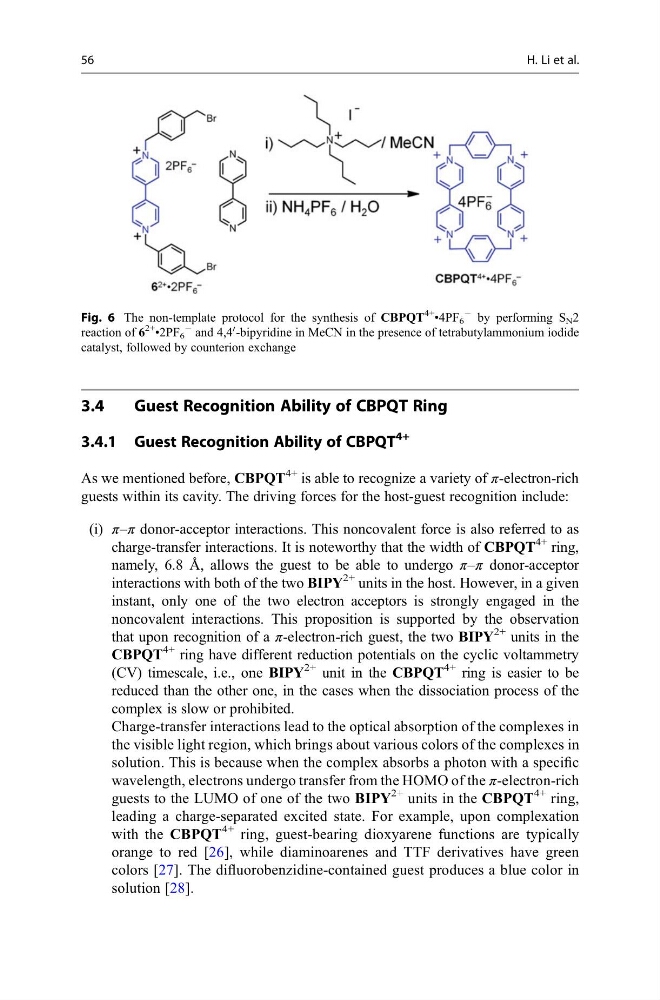
Fig. 6 The non-template protocol for the synthesis of CBPQT
4+ •4PF 6
À by performing S N 2
reaction of 6
2+ •2PF 6
À and 4,4
0 -bipyridine in MeCN in the presence of tetrabutylammonium iodide
catalyst, followed by counterion exchange
56
H. Li et al.
Guest Recognition Ability of CBPQT Ring
3.4.1 Guest Recognition Ability of CBPQT
4+
As we mentioned before, CBPQT
4+ is able to recognize a variety of π-electron-rich
guests within its cavity. The driving forces for the host-guest recognition include:
(i) π–π donor-acceptor interactions. This noncovalent force is also referred to as
charge-transfer interactions. It is noteworthy that the width of CBPQT
4+ ring,
namely, 6.8 Å, allows the guest to be able to undergo π–π donor-acceptor
interactions with both of the two BIPY
2+ units in the host. However, in a given
instant, only one of the two electron acceptors is strongly engaged in the
noncovalent interactions. This proposition is supported by the observation
that upon recognition of a π-electron-rich guest, the two BIPY
2+ units in the
CBPQT
4+ ring have different reduction potentials on the cyclic voltammetry
(CV) timescale, i.e., one BIPY
2+ unit in the CBPQT
4+ ring is easier to be
reduced than the other one, in the cases when the dissociation process of the
complex is slow or prohibited.
Charge-transfer interactions lead to the optical absorption of the complexes in
the visible light region, which brings about various colors of the complexes in
solution. This is because when the complex absorbs a photon with a specific
wavelength, electrons undergo transfer from the HOMO of the π-electron-rich
guests to the LUMO of one of the two BIPY
2+ units in the CBPQT
4+ ring,
leading a charge-separated excited state. For example, upon complexation
with the CBPQT
4+ ring, guest-bearing dioxyarene functions are typically
orange to red [26], while diaminoarenes and TTF derivatives have green
colors [27]. The difluorobenzidine-contained guest produces a blue color in
solution [28].
Fig. 6 The non-template protocol for the synthesis of CBPQT
4+ •4PF 6
À by performing S N 2
reaction of 6
2+ •2PF 6
À and 4,4
0 -bipyridine in MeCN in the presence of tetrabutylammonium iodide
catalyst, followed by counterion exchange
56
H. Li et al.