

presence of 4, which is almost three times compared to that in the absence of
template. It is noteworthy that when the solvent was switched from MeCN to DMF,
the yield increased from 36% to 45%, which might be explained by the fact that the
triscationic reaction intermediate 5
3+
•2PF 6
–
•Br
À has better solubility in DMF. The
same group also discovered that the yield of CBPQT
4+ was dependent on the
electron-donating ability of the guest. For example, when the guest 1,5-bis-[2-(2methoxyethoxy)-ethoxy]naphthalene (BMEEN), an analogue of 4, was employed
to template the formation of CBPQT
4+ in DMF, the yield underwent further
increase to 62%. This higher yield is attributed to the 1,5-dialkoxy-naphthalene
(DNP) unit in BMEEN, which introduces stronger π-electron donor-acceptor
interactions to the intermediate 5
3+ , compared to the HQ unit in 4.
One of the disadvantages of using templates for the synthesis of CBPQT
4+ is that
template removal is technically demanding and time-consuming, especially in the
case of high binding constant of guest&CBPQT
4+ . In fact, when the guest 1,5-bis[2(2-hydroxyethoxy)ethoxy]-naphthalene (BHEEN) was employed to template the
ring formation, it took a few days or weeks to remove the template from the ring
cavity by performing liquid-liquid extraction. This problem was resolved (Fig. 5) by
Stoddart group in the year 2010, by using a guest exchange strategy [24]. After the
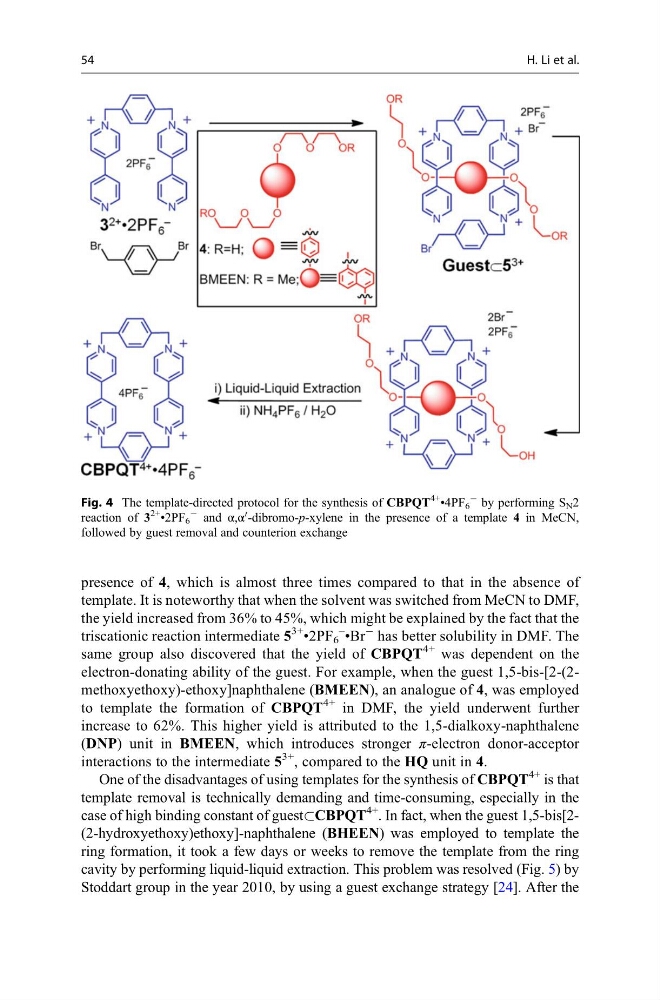
Fig. 4 The template-directed protocol for the synthesis of CBPQT
4+ •4PF 6
À by performing S N 2
reaction of 3
2+ •2PF 6
À and α,α
0 -dibromo-p-xylene in the presence of a template 4 in MeCN,
followed by guest removal and counterion exchange
54
H. Li et al.
template. It is noteworthy that when the solvent was switched from MeCN to DMF,
the yield increased from 36% to 45%, which might be explained by the fact that the
triscationic reaction intermediate 5
3+
•2PF 6
–
•Br
À has better solubility in DMF. The
same group also discovered that the yield of CBPQT
4+ was dependent on the
electron-donating ability of the guest. For example, when the guest 1,5-bis-[2-(2methoxyethoxy)-ethoxy]naphthalene (BMEEN), an analogue of 4, was employed
to template the formation of CBPQT
4+ in DMF, the yield underwent further
increase to 62%. This higher yield is attributed to the 1,5-dialkoxy-naphthalene
(DNP) unit in BMEEN, which introduces stronger π-electron donor-acceptor
interactions to the intermediate 5
3+ , compared to the HQ unit in 4.
One of the disadvantages of using templates for the synthesis of CBPQT
4+ is that
template removal is technically demanding and time-consuming, especially in the
case of high binding constant of guest&CBPQT
4+ . In fact, when the guest 1,5-bis[2(2-hydroxyethoxy)ethoxy]-naphthalene (BHEEN) was employed to template the
ring formation, it took a few days or weeks to remove the template from the ring
cavity by performing liquid-liquid extraction. This problem was resolved (Fig. 5) by
Stoddart group in the year 2010, by using a guest exchange strategy [24]. After the
Fig. 4 The template-directed protocol for the synthesis of CBPQT
4+ •4PF 6
À by performing S N 2
reaction of 3
2+ •2PF 6
À and α,α
0 -dibromo-p-xylene in the presence of a template 4 in MeCN,
followed by guest removal and counterion exchange
54
H. Li et al.