

example, during cancer therapy, hyperthermia has been developed to stimulate nonspecific immunotherapy of cancers (41–46
C) or induce tumor cell necrosis and
apoptosis for tumor destruction (>46
C) [31]. Two strategies, i.e., magnetic hyperthermia and photo-hyperthermia, are hot topics in anticancer fields, since they have
almost no side effect as compared to the traditional chemotherapy, radiotherapy, and
surgery. Among them, magnetic hyperthermia is a therapeutic method that the
magnetic nanomaterials could adsorb the electromagnetic energy and convert it
into heat when exposed to an external electrical and magnetic field, especially
alternative magnetic field (AMF) [32]. Therefore, it is highly applicable in treatment
of deeply tumors, with no obvious damage to normal tissues. Recently, we found that
both the two-dimensional MNP@GO-MitP&HACD supramolecular assemblies and
the one-dimensional tumor actin-targeting MNP-ABP-Ada&HACD have splendid
anticancer ability under AMF. Espinosa et al. reported that the constructed magnetic
assemblies based on cubic MNPs could realize high heating efficiency in combination with magnetic hyperthermia and photothermal treatment [33].
20.4.3 Suppression of Metastasis
Besides the most prevalent application in drug delivery and magnetothermal therapy,
supramolecular assemblies themselves could also be used to fight against cancer
diseases by its confining effect on tumor invasion and metastasis. For example, as
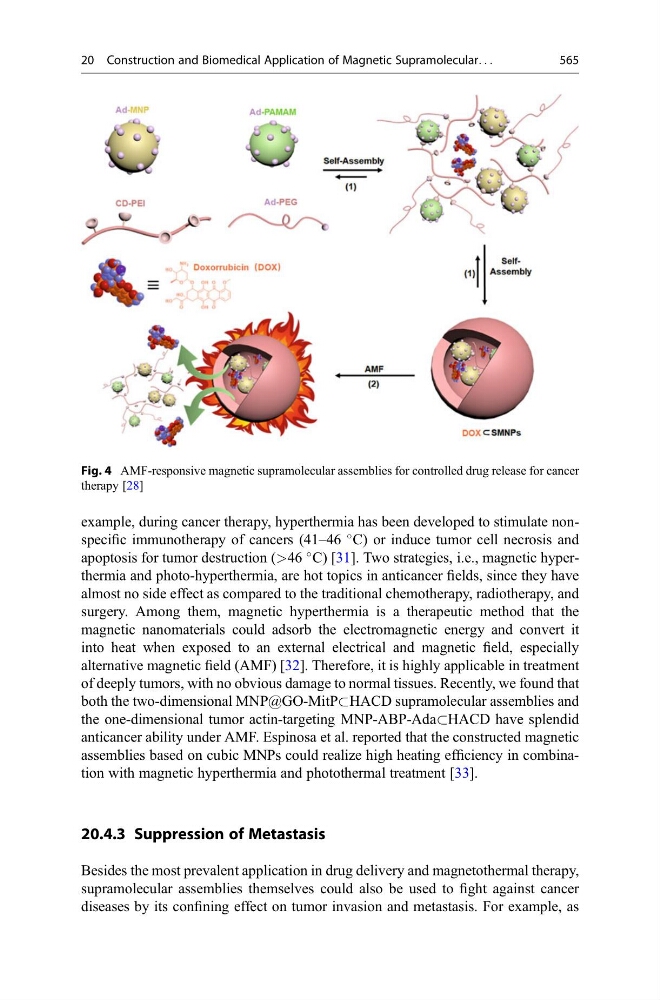
Fig. 4 AMF-responsive magnetic supramolecular assemblies for controlled drug release for cancer
therapy [28]
20 Construction and Biomedical Application of Magnetic Supramolecular. . .
565