

19.4 Hyperbranched CD Polymers
Another common and intensively studied type of CD polymers is hyperbranched CD
polymers. Hyperbranched polymers with low viscosity, good solubility, and noncrystalline have a large number of reactive groups, which can introduce various
functional groups, such as CDs [86, 87]. The combination of hyperbranched polymers and CDs has quickly become a research hotspot, attracting more and more
researchers’ attention. In recent years, hyperbranched CD polymers have been
successfully prepared by researchers using various methods, and their applications
have been explored in sundry fields.
The preparation of hyperbranched CD polymers can be roughly divided into two
categories: (1) CDs are located in the outer layer of the hyperbranched polymer and
(2) CDs as supramolecular linker by host-guest interaction or covalent linker are
located in the inner layer of the hyperbranched polymer.
For the former type, Lee et al. successfully attached β-CDs to the peripheral end
group of two dendrimer poly(ethylenimine)s (PEIs) [88]. After that, Mamba et al.
constructed hyperbranched CD polymers by β-CD carbonyl imidazole and
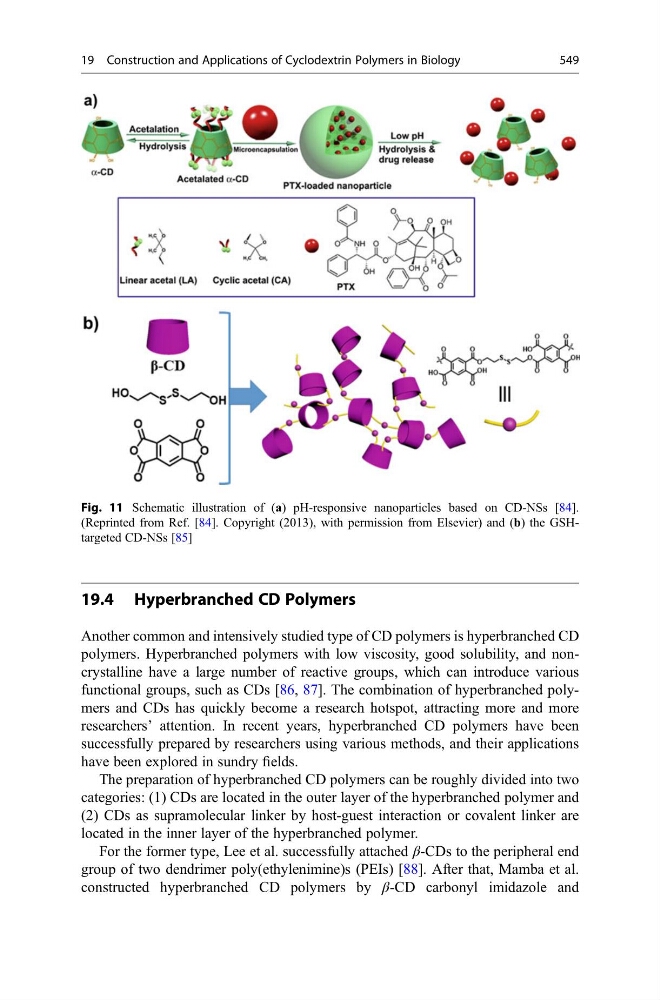
Fig. 11 Schematic illustration of (a) pH-responsive nanoparticles based on CD-NSs [84].
(Reprinted from Ref. [84]. Copyright (2013), with permission from Elsevier) and (b) the GSHtargeted CD-NSs [85]
19 Construction and Applications of Cyclodextrin Polymers in Biology
549