

CD-NSs can easily be prepared by reacting the CDs with a specific crosslinker, and
more and more applications of the CD-NSs have been found, including biology.
Thanks to the good biocompatibility and inclusion ability of CDs, CD-NSs may
have many applications in biology. Among them, the most studied application of
CD-NSs is drug delivery. For example, Zhang et al. constructed pH-responsive
nanoparticles based on CD-NSs prepared by crosslinked α-CDs using
2-methoxypropene for delivery of paclitaxel (PTX) (Fig. 11a) [84]. The hydrolysis
time of CD-NSs can be precisely controlled by using different acetal, reaction times
of acetalation, and pH. Considering cell culture in vitro and acute toxicity experiments in vivo, the CD-NSs convincingly were proved to have good biocompatibility.
Importantly, compared with other pH-responsive materials, the CD-NSs presented
more drug loading, lower side effects, and more effective antitumor activity. The
novel CD-NSs in this work provide researchers new method into design of stimuliresponsive materials for drug delivery and tumor therapy. Besides, Pizzimentia et al.
constructed the GSH-targeted CD-NS-loaded doxorubicin (DOX) with high antioxidant defenses (Fig. 11b) [85]. Compared with free DOX, not only the drug carried
by CD-NSs was internalized faster in all types of cells examined in confocal
microscopy analysis, but also the CD-NS-loaded DOX can more effectively reduce
cell viability and induce G2/M cell accumulation and cell death in DU145 and
HCT116 cells. Furthermore, the CD-NS-loaded DOX that can specifically extravasate in tumor tissue showed a longer plasma circulation time from the pharmacokinetic experiment, so that the CD-NSs may enhance drug accumulation in tumor
tissue. Therefore, the CD-NS-loaded DOX can more effectively reduce tumor
growth and weight than free DOX. In a word, the CD-NSs prepared in this work
as a drug-delivery carrier has outstanding potential applications in cancer therapy.
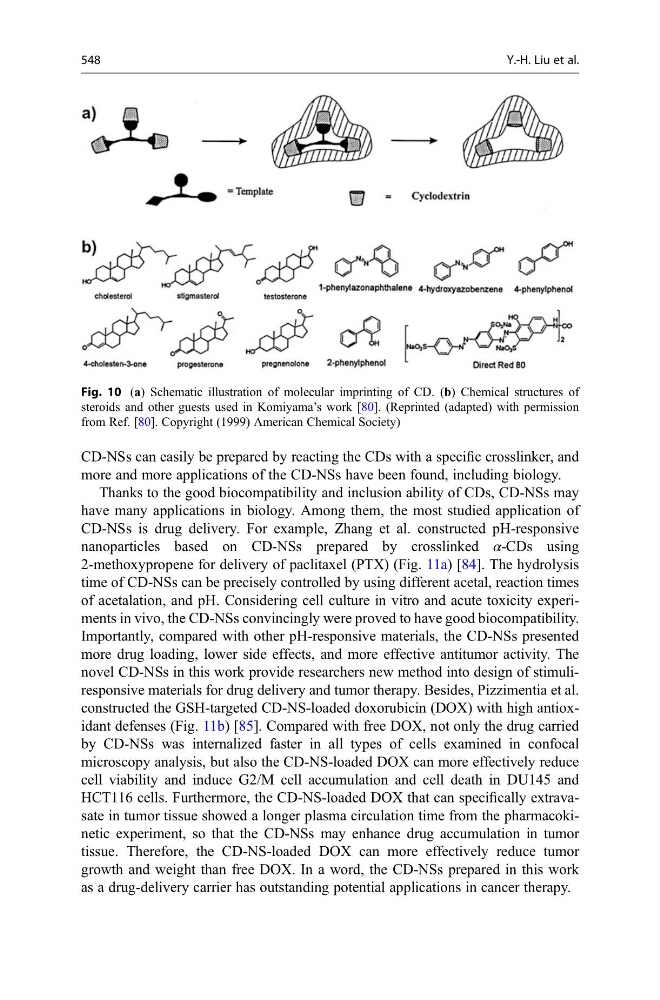
Fig. 10 (a) Schematic illustration of molecular imprinting of CD. (b) Chemical structures of
steroids and other guests used in Komiyama’s work [80]. (Reprinted (adapted) with permission
from Ref. [80]. Copyright (1999) American Chemical Society)
548
Y.-H. Liu et al.