

17.3 Function of CD Gels
CDs, as a class of water-soluble macrocycle host, possessed excellent biocompatibility, selective and reversible host-guest recognition ability, and simple preparation
crafts, thus endowing supramolecular gels containing CD units with the ability to
load and transport drug molecules, detect and eliminate small molecular pollutants,
respond to external stimuli as smart materials, etc. In the following part, we will
briefly introduce the recent progresses on functions and applications of supramolecular CD gels.
17.3.1 Biological Applications
17.3.1.1 Loading of Anticancer Drugs
How to build an integrated platform for diagnosis and treatment to achieve the
targeted and sustained release of drugs, thus enhancing the killing of diseased cells
and reducing the damage to normal cells, is still a worldwide concerned topic
because of the close relationship to humans’ health and life [50–52].
Zhang and Cheng [24] developed a light-responsive, injectable, on-demand
degradable CD hydrogel which can efficiently load drugs and release them upon
near-IR light irradiation. As shown in Fig. 9, PEG chains were chosen to graft on the
poly(amidoamine) (PAMAM, generation 5 with amine-terminal group) dendrimers
via amide condensation first. And then due to the template effect of the dendrimers,
ultrasmall Pt nanoparticles were formed in situ acting as the NIR-responsive agent
which could help to realize both the controllable degradation of the carrier hydrogel
and the on-demand release of drugs. Next α-CDs were threaded on the PEG chains at
the outermost surface generating PPRs, thus leading to the hydrogel formation due to
the hydrogen bond interaction. Finally, bortezomib and cyanine 5.5 were loaded
on the hydrogel as model drugs and demonstrated the efficient killing of cancer cells
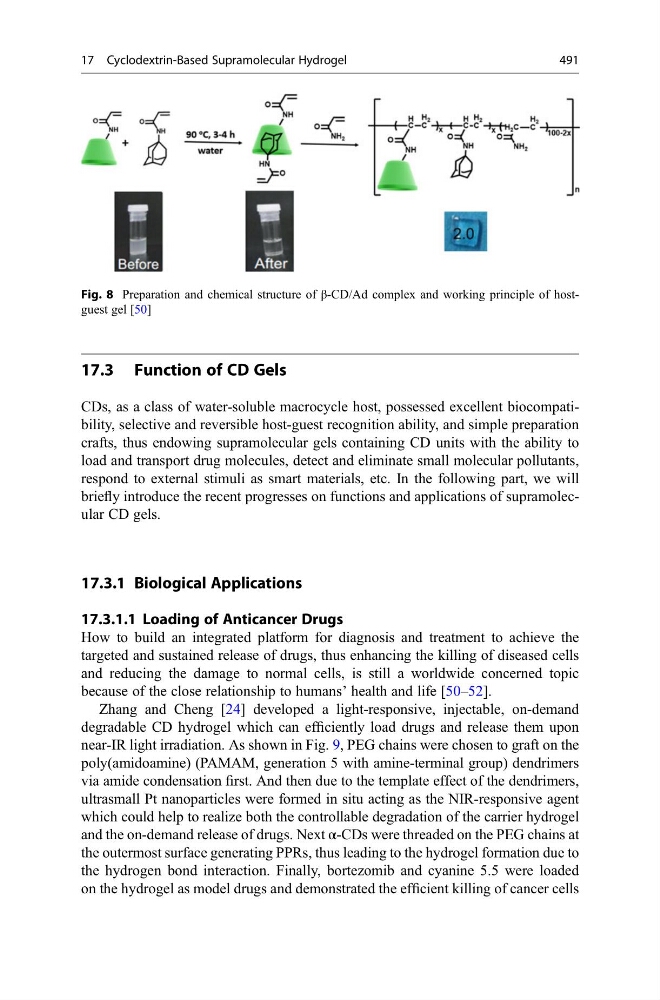
Fig. 8 Preparation and chemical structure of β-CD/Ad complex and working principle of hostguest gel [50]
17 Cyclodextrin-Based Supramolecular Hydrogel
491