

crown-8 (BMP26C8), and double-form benzene-32-crown-10 crown ethers
(BMP32C10) are used to construct topologies such as molecular machines [25]
and supramolecular polymers [26]. In order to expand the applications of molecular recognition based on crown ethers, many researchers have begun to challenge
the development of crown ethers, like preparing organic white light-emitting
materials.
16.4.1 Networks and Hydrogels of Supramolecular Polymer Based
on Crown Ether
Photoresponsive supramolecular polymer systems based on crown ethers are rarely
reported in recent years. Huang et al. (2015) [27] reported novel supramolecular
polymers by utilizing the host–guest interaction with dependent photoresponse and
self-healing property. A conjugated polymer 1 and the guest component 2 were
used for the fabrication of the polymer network which could be disassembled by
the inducement of different signals. The conjugated polymer in its assembled state
showed a weak fluorescence, while it was enhanced in the presence of potassium ion,
chloride ion, pH increase, and heating.
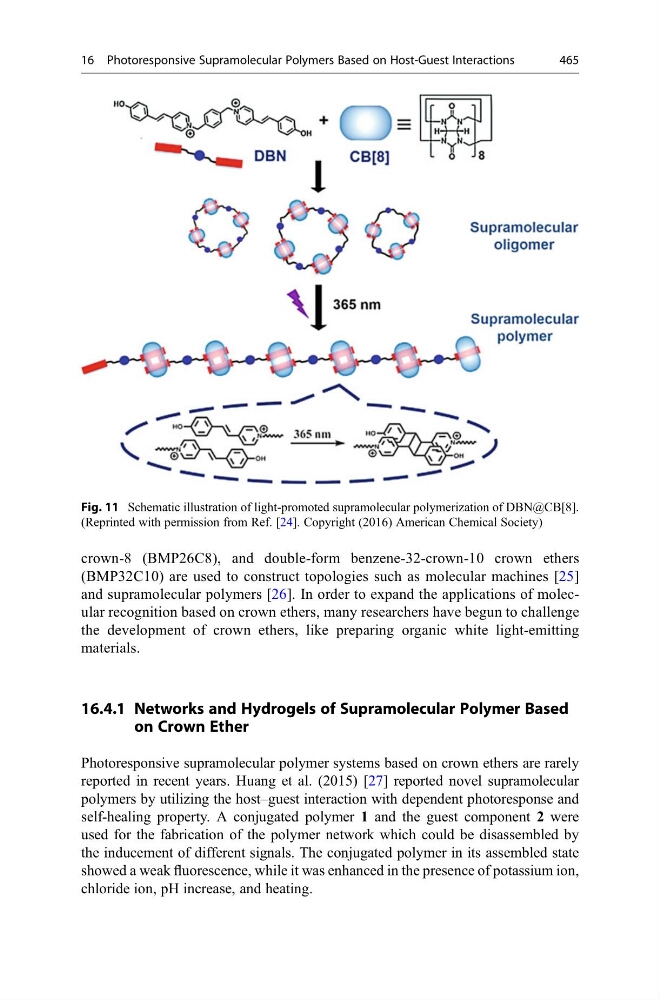
Fig. 11 Schematic illustration of light-promoted supramolecular polymerization of DBN@CB[8].
(Reprinted with permission from Ref. [24]. Copyright (2016) American Chemical Society)
16 Photoresponsive Supramolecular Polymers Based on Host-Guest Interactions
465