

16.3.3 Controllable Supramolecular Polymerization Based on CB
Zhang et al. (2015) [23] developed a new method for controllable supramolecular
polymerization based on ABBA type monomer and CB[8] monomer through
host–guest interaction and photochemistry, Fig. 10. The molecular weight
and polydispersity of supramolecular polymers could be well controlled by tuning
the molar ratio of these host and guest monomers or by tuning the isomer ratio of
azobenzene groups in the guest monomers upon the competitive irradiation of lights.
This was somehow like a dissipative supramolecular polymerization through the
transfer of matter and energy. In addition to the CB[8], other host molecules such as
cyclodextrin, crown ethers, calixarene, pillar[n]arenes, and even other noncovalent
interaction systems are supposed to be available by employing this methodology.
Therefore, it was anticipated that this line of research provides a general methodology for controllable supramolecular polymerization.
Zhang et al. (2016) [24] reported a new method of controllable supramolecular
polymerization, taking advantage of host-enhanced photodimerization, seen in
Fig. 11. The low-molecular-weight supramolecular oligomers were formed by
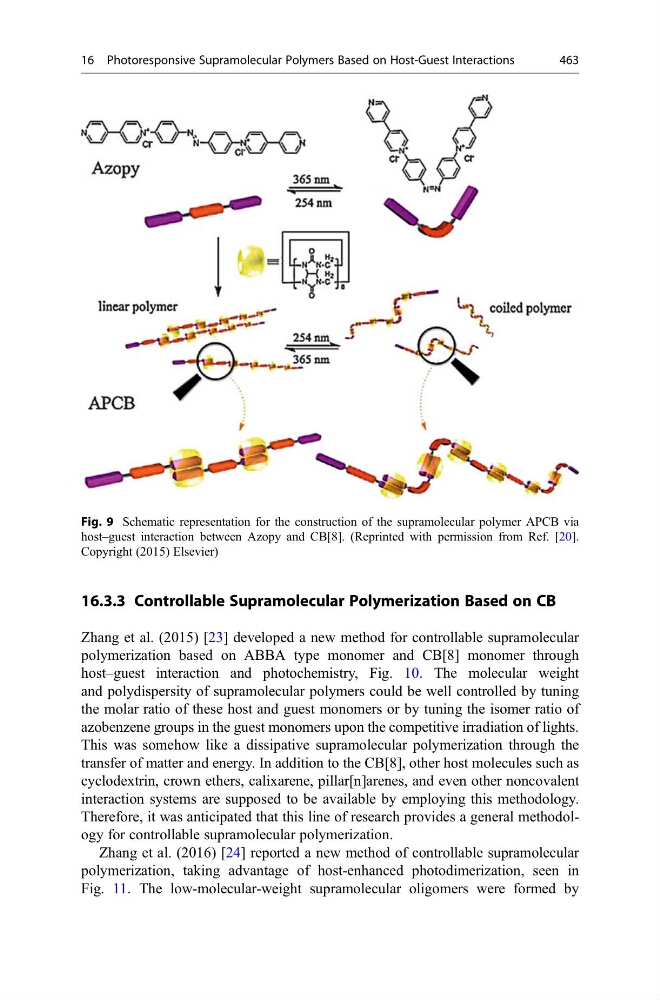
Fig. 9 Schematic representation for the construction of the supramolecular polymer APCB via
host–guest interaction between Azopy and CB[8]. (Reprinted with permission from Ref. [20].
Copyright (2015) Elsevier)
16 Photoresponsive Supramolecular Polymers Based on Host-Guest Interactions
463