

reversibly achieve the conversion between (Z)-B3–CB[8] and (E)-B3–CB[8] upon
exposure to blue light or heat. SHP created an extended physically crosslinked
supramolecular network which can be formed at the interface of a droplet, thus
it could be further explored as surfactant in the future.
Zhang et al. (2018) [22] demonstrated the fabrication of water-soluble cucurbit[8]uril
(CB[8])-mediated supramolecular polymers by connecting the fluorinated azobenzene
(FAB)-containing monomers through host-enhanced heteroternary π-π stacking interactions. Benefiting from the unique visible-light-induced E ! Z photoisomerization of the
FAB photochromophores, the encapsulation behaviors between the CB[8] macrocycle
and the monomers can be regulated upon visible light irradiation, resulting in the
depolymerization of such CB[8]-mediated supramolecular polymers. This CB[8]based hybrid recognition motif was expected to be served as molecular trafficking
system, which may find widespread applications such as drug delivery and release,
photopharmacology, and so on. The use of visible light as external stimulus provided
well remote spatiotemporal controllability, together with the advantages of mild aqueous
conditions at room temperature. The development of such unique visible-light-regulated
CB[8]-mediated supramolecular polymers as well as the related hybrid host–guest
systems was highly valuable in the construction of biocompatible smart materials.
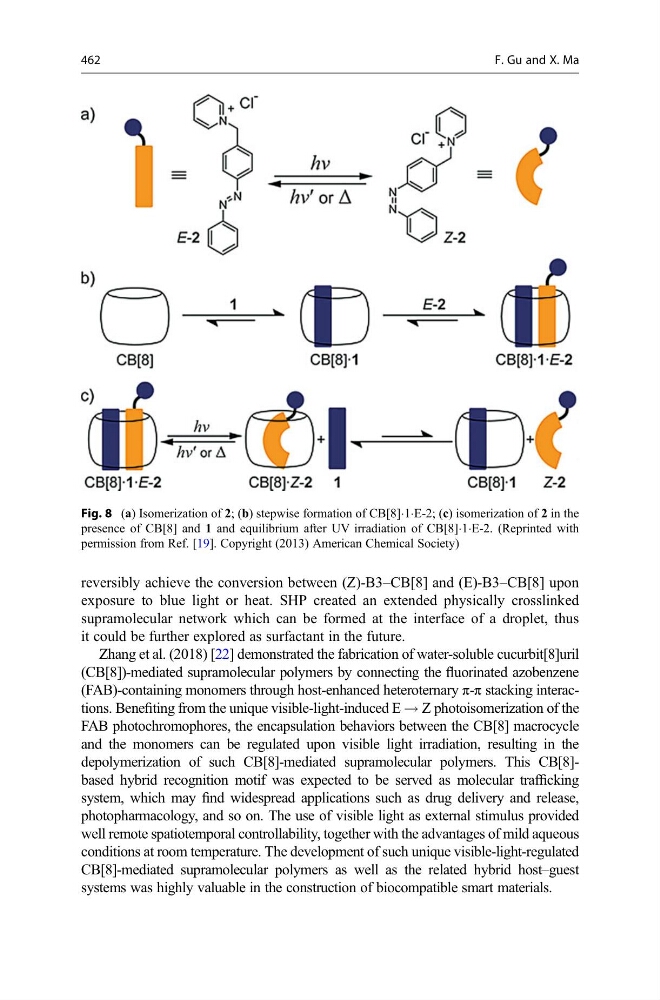
Fig. 8 (a) Isomerization of 2; (b) stepwise formation of CB[8]Á1ÁE-2; (c) isomerization of 2 in the
presence of CB[8] and 1 and equilibrium after UV irradiation of CB[8]Á1ÁE-2. (Reprinted with
permission from Ref. [19]. Copyright (2013) American Chemical Society)
462
F. Gu and X. Ma