

Ma et al. (2015) [20] constructed a rigid aqueous phase supramolecular polymer,
using the CB[8] urea as the host and the 4,4
0 -bipyridyl group conjugated at both
ends of the azobenzene as the guest, seen in Fig. 9. Since the CB[8] macrocycle could
contain two 4,4
0 -bipyridyl groups at the same time, the host and guest system was
packed in a 1:1 ratio. Owing to the photoisomerism of azobenzene, the supramolecular
polymer would respond under the light of specific wavelengths (254 and 365 nm), and
the linear/nonlinear reversible regulation of its morphology would be realized.
Scherman et al. (2017) [21] reported a light and chemical responsive
supramolecular hyperbranched-like polymer (SHP) with 1:1:1 heteroternary complex between methyl viologen (MV), azobenzene, and CB[8], which could
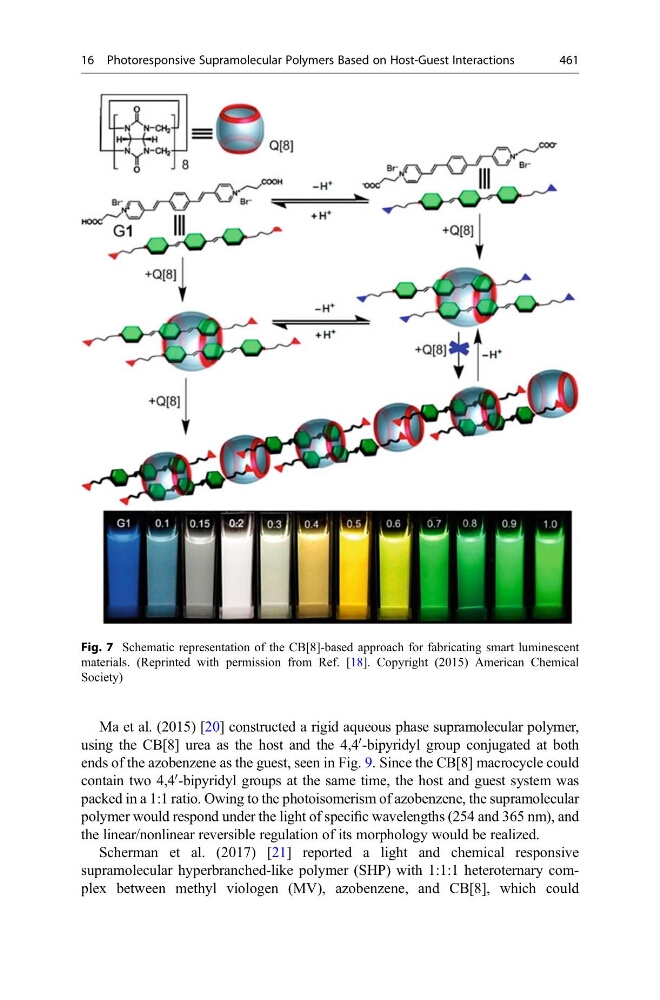
Fig. 7 Schematic representation of the CB[8]-based approach for fabricating smart luminescent
materials. (Reprinted with permission from Ref. [18]. Copyright (2015) American Chemical
Society)
16 Photoresponsive Supramolecular Polymers Based on Host-Guest Interactions
461
using the CB[8] urea as the host and the 4,4
0 -bipyridyl group conjugated at both
ends of the azobenzene as the guest, seen in Fig. 9. Since the CB[8] macrocycle could
contain two 4,4
0 -bipyridyl groups at the same time, the host and guest system was
packed in a 1:1 ratio. Owing to the photoisomerism of azobenzene, the supramolecular
polymer would respond under the light of specific wavelengths (254 and 365 nm), and
the linear/nonlinear reversible regulation of its morphology would be realized.
Scherman et al. (2017) [21] reported a light and chemical responsive
supramolecular hyperbranched-like polymer (SHP) with 1:1:1 heteroternary complex between methyl viologen (MV), azobenzene, and CB[8], which could
Fig. 7 Schematic representation of the CB[8]-based approach for fabricating smart luminescent
materials. (Reprinted with permission from Ref. [18]. Copyright (2015) American Chemical
Society)
16 Photoresponsive Supramolecular Polymers Based on Host-Guest Interactions
461