

In addition to the biological activities described above, calixarenes are used in
detoxification [87], anti-protein folding [88–90], and protein-protein interaction
disruptors [91]. Viologens are widely used as herbicides (e.g., paraquat and
diquat) in farmland worldwide due to their fast and efficient herbicidal effects.
However, these compounds are extremely toxic to humans and animals without
available treatment. Presently, most countries have strictly controlled or banned
the use of paraquats. Regardless, there are still many reports of death from
paraquat poisoning every year. When paraquat enters the human body, it will
accumulate in the alveolar type I cells, type II cells, and kidneys, affecting the
process of redox reaction, generating a large number of oxygen-free radicals
harmful to tissues, destroying the defense mechanism of cells, and leading to
alveolar and interstitial fibrosis (acute or subacute) [92]. According to the biochemical mechanism of viologen in vivo, we developed a supramolecular detoxification strategy based on p-sulfonato-calixarenes. We verified in vivo
experiments that p-sulfonato-calix[5]arenes can treat viologen poisoning. When
the viologen-poisoned mice were treated with p-sulfonato-calix[5]arenes immediately or after 2 h, the mortality rate was significantly decreased. Moreover,
p-sulfonato-calix[5]arenes can also effectively prevent the damage of the lung
and liver induced by viologen (Fig. 17).
After our above work, Qi et al. studied the detoxification mechanism
of p-sulfonato-calix[4]arene with paraquat by pharmacokinetic study in vivo [93].
They measured the concentration of paraquat in rat plasma using high-performance
liquid chromatography. The results showed that peak plasma concentration and
plasma concentrations under plasma concentration-time curves for animals administration of p-sulfonato-calix[4]arene were significantly lower than the control of
p-sulfonato-calix[4]arene complexation on absorption pharmacokinetics, finding
that the absorption of paraquat was effectively prevented by the formation of a stable
host-guest complex of paraquat with p-sulfonato-calix[4]arene.
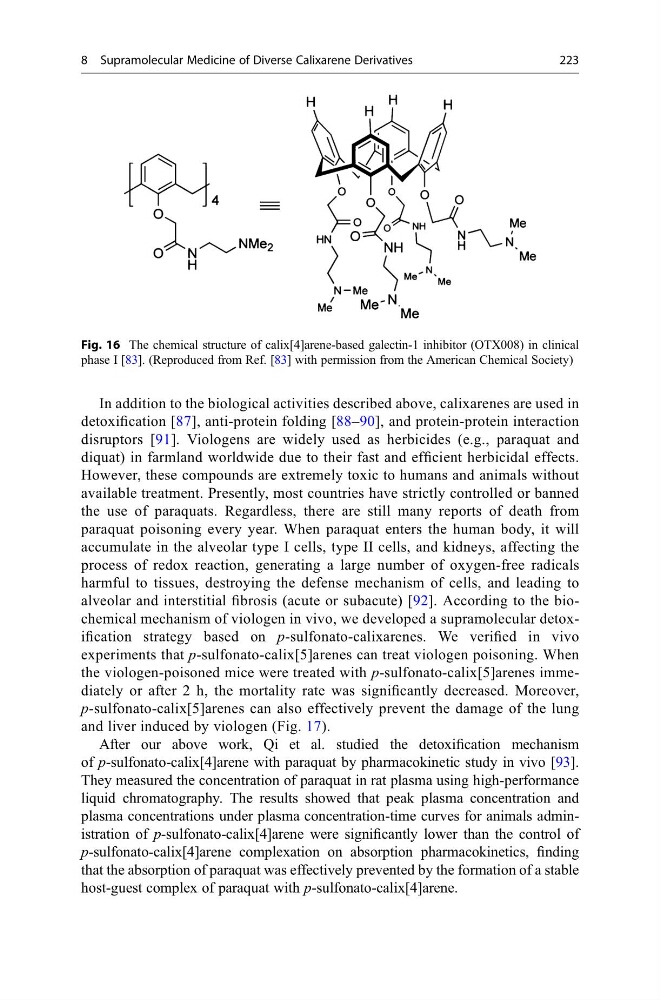
Fig. 16 The chemical structure of calix[4]arene-based galectin-1 inhibitor (OTX008) in clinical
phase I [83]. (Reproduced from Ref. [83] with permission from the American Chemical Society)
8 Supramolecular Medicine of Diverse Calixarene Derivatives
223
detoxification [87], anti-protein folding [88–90], and protein-protein interaction
disruptors [91]. Viologens are widely used as herbicides (e.g., paraquat and
diquat) in farmland worldwide due to their fast and efficient herbicidal effects.
However, these compounds are extremely toxic to humans and animals without
available treatment. Presently, most countries have strictly controlled or banned
the use of paraquats. Regardless, there are still many reports of death from
paraquat poisoning every year. When paraquat enters the human body, it will
accumulate in the alveolar type I cells, type II cells, and kidneys, affecting the
process of redox reaction, generating a large number of oxygen-free radicals
harmful to tissues, destroying the defense mechanism of cells, and leading to
alveolar and interstitial fibrosis (acute or subacute) [92]. According to the biochemical mechanism of viologen in vivo, we developed a supramolecular detoxification strategy based on p-sulfonato-calixarenes. We verified in vivo
experiments that p-sulfonato-calix[5]arenes can treat viologen poisoning. When
the viologen-poisoned mice were treated with p-sulfonato-calix[5]arenes immediately or after 2 h, the mortality rate was significantly decreased. Moreover,
p-sulfonato-calix[5]arenes can also effectively prevent the damage of the lung
and liver induced by viologen (Fig. 17).
After our above work, Qi et al. studied the detoxification mechanism
of p-sulfonato-calix[4]arene with paraquat by pharmacokinetic study in vivo [93].
They measured the concentration of paraquat in rat plasma using high-performance
liquid chromatography. The results showed that peak plasma concentration and
plasma concentrations under plasma concentration-time curves for animals administration of p-sulfonato-calix[4]arene were significantly lower than the control of
p-sulfonato-calix[4]arene complexation on absorption pharmacokinetics, finding
that the absorption of paraquat was effectively prevented by the formation of a stable
host-guest complex of paraquat with p-sulfonato-calix[4]arene.
Fig. 16 The chemical structure of calix[4]arene-based galectin-1 inhibitor (OTX008) in clinical
phase I [83]. (Reproduced from Ref. [83] with permission from the American Chemical Society)
8 Supramolecular Medicine of Diverse Calixarene Derivatives
223