

8.10 Conclusions and Outlook
Since C. David Gutsche optimized the calixarene synthesis route and made it possible
to synthesize a large amount of calixarenes, more and more chemists have began to
pay attention to calixarenes. Various group-modified calixarene hosts were synthesized and applied to different fields depending on the molecular recognition and selfassembly properties. To date, the continued and growing interest toward calixarene
macrocycles is evidenced by the study of new supramolecular applications such as
calixarene-based supramolecular medicine. The calixarene derivatives are rich and
complex, many of which have been reported to have potential applications in medical
applications but mostly remain in the laboratory stage. The future goal of calixarene
research is to integrate advancements in supramolecular chemistry with clinical trials,
taking research from the “bench to bedside.” High-throughput screening methods can
be used to screen a wide range of medicinal activities of existing calixarenes and their
derivatives to find suitable potential drugs. The pharmacology and toxicology of
calixarenes need to be studied in depth and systematically in vitro and in vivo. In
the future, the derivatization of calixarene should likely translate “synthesis for
synthesis” to “synthesis on demand.” The development of calixarenes in supramolecular medicine has just begun, and more new fields of application need to be explored.
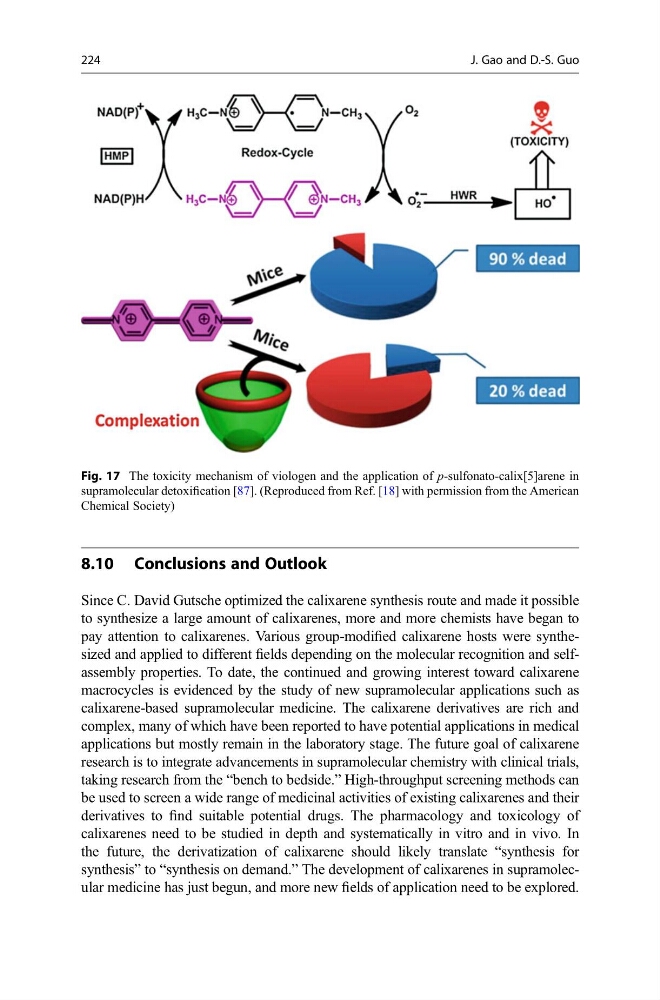
Fig. 17 The toxicity mechanism of viologen and the application of p-sulfonato-calix[5]arene in
supramolecular detoxification [87]. (Reproduced from Ref. [18] with permission from the American
Chemical Society)
224
J. Gao and D.-S. Guo
Since C. David Gutsche optimized the calixarene synthesis route and made it possible
to synthesize a large amount of calixarenes, more and more chemists have began to
pay attention to calixarenes. Various group-modified calixarene hosts were synthesized and applied to different fields depending on the molecular recognition and selfassembly properties. To date, the continued and growing interest toward calixarene
macrocycles is evidenced by the study of new supramolecular applications such as
calixarene-based supramolecular medicine. The calixarene derivatives are rich and
complex, many of which have been reported to have potential applications in medical
applications but mostly remain in the laboratory stage. The future goal of calixarene
research is to integrate advancements in supramolecular chemistry with clinical trials,
taking research from the “bench to bedside.” High-throughput screening methods can
be used to screen a wide range of medicinal activities of existing calixarenes and their
derivatives to find suitable potential drugs. The pharmacology and toxicology of
calixarenes need to be studied in depth and systematically in vitro and in vivo. In
the future, the derivatization of calixarene should likely translate “synthesis for
synthesis” to “synthesis on demand.” The development of calixarenes in supramolecular medicine has just begun, and more new fields of application need to be explored.
Fig. 17 The toxicity mechanism of viologen and the application of p-sulfonato-calix[5]arene in
supramolecular detoxification [87]. (Reproduced from Ref. [18] with permission from the American
Chemical Society)
224
J. Gao and D.-S. Guo