

inhibit pancreatic cancer cells was superior to that of liver cancer cells. Imaging
experiments in vivo found that the supramolecular vesicles can release more dye in
tissue with a high concentration of trypsin.
8.9
Calixarenes as Treatment Agents
Calixarenes have structural features suitable for the design and development of
new drugs. At present, calixarenes and their derivatives have been found to
have antiviral [79], antibacterial, antifungal, antituberculosis, and anticancer activities
[80–83]. In 2009, Fátima et al. reviewed the bioactivity of calixarenes and their
applications [84]. In 2015, Yousaf et al. summarized the anticancer potential
of calixarenes and the potential use of calixarenes in chemoradiotherapy [85]. Additionally, in 2017, Naseer et al. reviewed the functionalized calixarenes as potential
therapeutic agents [86]. It is worth noting that clinical trial reports of calixarene-based
drugs are still rare. To date, only one calixarene-based, OTX008, is undergoing phase I
clinical studies according to the US Clinical Trial Database. OTX008 is a galectin-1
inhibitor that may have antiangiogenic and antitumor activity (Fig. 16) [83]. The drug
can downregulate the multifunctional carbohydrate-binding protein, galectin-1, to
treatment patients with advanced solid tumors. The clinical trial seems to have been
ongoing since 2012, but with no follow-up reports.
Amphiphilic
Assembly
Amphiphilic
Host-Guest
Complexation
SC4A
Assembly
CAC Decrease
Binary Vesicle
Myristoylcholine
SC4A
O
O
O
O
HO
N
N
Myristic acid
Choline
Micelle 1
BChE
BChE
BChE
Micelle 2
No Release
Drug Delivery
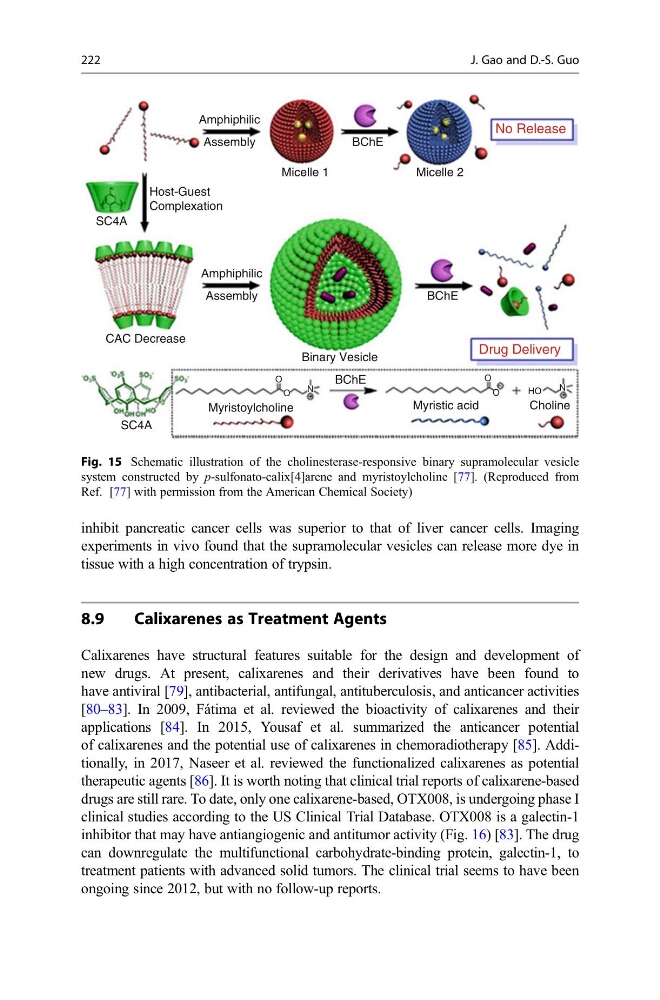
Fig. 15 Schematic illustration of the cholinesterase-responsive binary supramolecular vesicle
system constructed by p-sulfonato-calix[4]arene and myristoylcholine [77]. (Reproduced from
Ref. [77] with permission from the American Chemical Society)
222
J. Gao and D.-S. Guo
experiments in vivo found that the supramolecular vesicles can release more dye in
tissue with a high concentration of trypsin.
8.9
Calixarenes as Treatment Agents
Calixarenes have structural features suitable for the design and development of
new drugs. At present, calixarenes and their derivatives have been found to
have antiviral [79], antibacterial, antifungal, antituberculosis, and anticancer activities
[80–83]. In 2009, Fátima et al. reviewed the bioactivity of calixarenes and their
applications [84]. In 2015, Yousaf et al. summarized the anticancer potential
of calixarenes and the potential use of calixarenes in chemoradiotherapy [85]. Additionally, in 2017, Naseer et al. reviewed the functionalized calixarenes as potential
therapeutic agents [86]. It is worth noting that clinical trial reports of calixarene-based
drugs are still rare. To date, only one calixarene-based, OTX008, is undergoing phase I
clinical studies according to the US Clinical Trial Database. OTX008 is a galectin-1
inhibitor that may have antiangiogenic and antitumor activity (Fig. 16) [83]. The drug
can downregulate the multifunctional carbohydrate-binding protein, galectin-1, to
treatment patients with advanced solid tumors. The clinical trial seems to have been
ongoing since 2012, but with no follow-up reports.
Amphiphilic
Assembly
Amphiphilic
Host-Guest
Complexation
SC4A
Assembly
CAC Decrease
Binary Vesicle
Myristoylcholine
SC4A
O
O
O
O
HO
N
N
Myristic acid
Choline
Micelle 1
BChE
BChE
BChE
Micelle 2
No Release
Drug Delivery
Fig. 15 Schematic illustration of the cholinesterase-responsive binary supramolecular vesicle
system constructed by p-sulfonato-calix[4]arene and myristoylcholine [77]. (Reproduced from
Ref. [77] with permission from the American Chemical Society)
222
J. Gao and D.-S. Guo