

supramolecular polymer network was achieved via a self-assembly process driven
by hydrogen-bonding interactions with the UPy units. The remained B21C7 moieties could offer a platform for further introducing a guest via host-guest interaction.
For example, TPE-functionalized dialkylammonium salt and perylene-decorated
dialkylammonium salt were incorporated into supramolecular polymer network to
obtain two light-emitting supramolecular polymers by taking advantage of B21C7/
dialkylammonium complexation. Moreover, the network could form supramolecular
gels at high concentrations or upon solvent swelling. This orthogonal strategy based
on noncovalent bond provides a simple yet highly efficient method to achieve
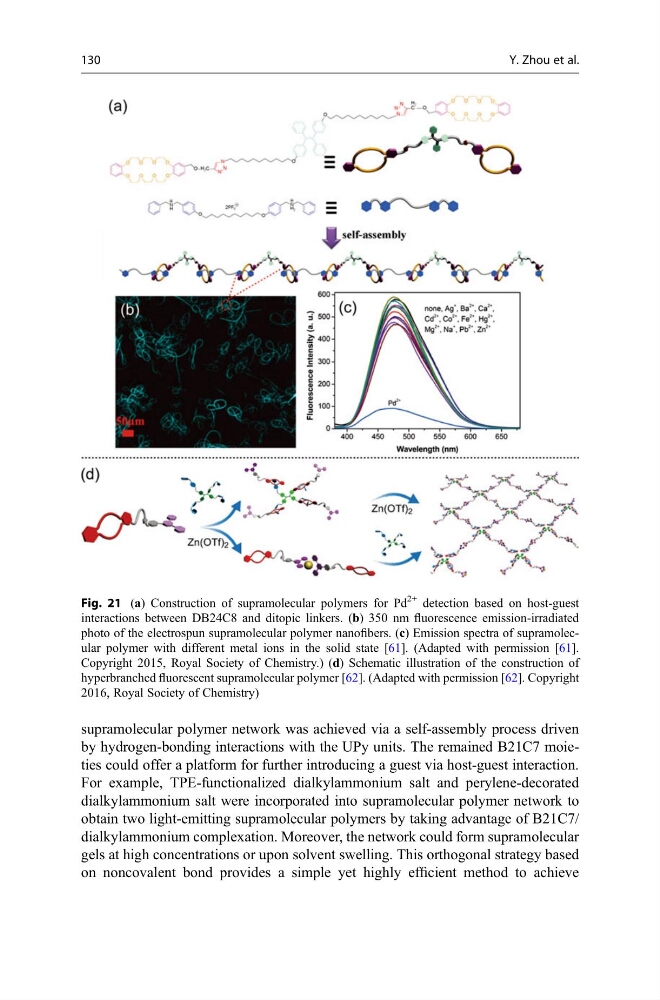
Fig. 21 (a) Construction of supramolecular polymers for Pd
2+ detection based on host-guest
interactions between DB24C8 and ditopic linkers. (b) 350 nm fluorescence emission-irradiated
photo of the electrospun supramolecular polymer nanofibers. (c) Emission spectra of supramolecular polymer with different metal ions in the solid state [61]. (Adapted with permission [61].
Copyright 2015, Royal Society of Chemistry.) (d) Schematic illustration of the construction of
hyperbranched fluorescent supramolecular polymer [62]. (Adapted with permission [62]. Copyright
2016, Royal Society of Chemistry)
130
Y. Zhou et al.
by hydrogen-bonding interactions with the UPy units. The remained B21C7 moieties could offer a platform for further introducing a guest via host-guest interaction.
For example, TPE-functionalized dialkylammonium salt and perylene-decorated
dialkylammonium salt were incorporated into supramolecular polymer network to
obtain two light-emitting supramolecular polymers by taking advantage of B21C7/
dialkylammonium complexation. Moreover, the network could form supramolecular
gels at high concentrations or upon solvent swelling. This orthogonal strategy based
on noncovalent bond provides a simple yet highly efficient method to achieve
Fig. 21 (a) Construction of supramolecular polymers for Pd
2+ detection based on host-guest
interactions between DB24C8 and ditopic linkers. (b) 350 nm fluorescence emission-irradiated
photo of the electrospun supramolecular polymer nanofibers. (c) Emission spectra of supramolecular polymer with different metal ions in the solid state [61]. (Adapted with permission [61].
Copyright 2015, Royal Society of Chemistry.) (d) Schematic illustration of the construction of
hyperbranched fluorescent supramolecular polymer [62]. (Adapted with permission [62]. Copyright
2016, Royal Society of Chemistry)
130
Y. Zhou et al.