

et al. [36] also synthesized a β-CD-based [1]<2>rotaxane and studied its light response
behavior. Cai et al. [37] reported a pseudo[1]rotaxane containing an altro-α-CD derivative bearing an adamantyl end group tumbling of its arm into the altro-α-CD’s cavity, as
shown in Fig. 17. They used molecular dynamics simulations and free energy calculations explained the formation of the pseudo[1]rotaxane through the tumbling process via
an altro-α-CD conformation rather than threading of the adamantyl unit across the
α-CD’s cavity.
4.3
Pseudo[1]catenanes
Various mechanically self-locked and interlocked molecules can be synthesized conveniently through pseudorotaxane. As just mentioned, when one end of the axle is
linked to the macrocycle in one molecule, we call it pseudo[1]rotaxane. Comparing to
pseudo[1]rotaxane, when two ends of the axle are both linked to the same region of a
macrocycle in one molecule, we call the self-complex pseudo[1]catenane.
In 1998, Stoddart et al. [38] designed and synthesized molecules of this structure
for the first time. Two dipyridyl units were first connected with the phenyl segment
of a crown ether containing both naphthyl and phenyl units. Then the two dipyridyls
were chained up by a phenyl to form a cyclophane (Fig. 18). Due to the strong π-π
interaction between the electron-rich naphthyl-contained crown ether and the
electron-deficient viologen-based cyclophane, a [1]cantenane was successfully fabricated. Upon the addition of electron-rich guest TTF, the naphthyl was squeezed
out of the cyclophane, along with a change of the conformation from mechanically
interlocked structure to a spiro-macrocycles structure. Therefore, the optical property
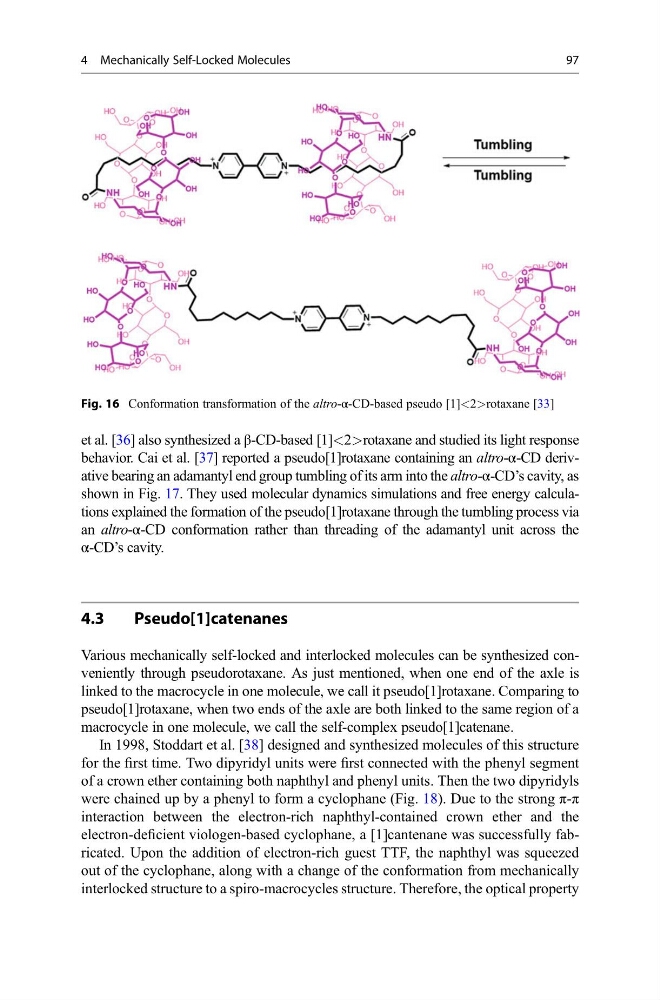
Fig. 16 Conformation transformation of the altro-α-CD-based pseudo [1]<2>rotaxane [33]
4 Mechanically Self-Locked Molecules
97
behavior. Cai et al. [37] reported a pseudo[1]rotaxane containing an altro-α-CD derivative bearing an adamantyl end group tumbling of its arm into the altro-α-CD’s cavity, as
shown in Fig. 17. They used molecular dynamics simulations and free energy calculations explained the formation of the pseudo[1]rotaxane through the tumbling process via
an altro-α-CD conformation rather than threading of the adamantyl unit across the
α-CD’s cavity.
4.3
Pseudo[1]catenanes
Various mechanically self-locked and interlocked molecules can be synthesized conveniently through pseudorotaxane. As just mentioned, when one end of the axle is
linked to the macrocycle in one molecule, we call it pseudo[1]rotaxane. Comparing to
pseudo[1]rotaxane, when two ends of the axle are both linked to the same region of a
macrocycle in one molecule, we call the self-complex pseudo[1]catenane.
In 1998, Stoddart et al. [38] designed and synthesized molecules of this structure
for the first time. Two dipyridyl units were first connected with the phenyl segment
of a crown ether containing both naphthyl and phenyl units. Then the two dipyridyls
were chained up by a phenyl to form a cyclophane (Fig. 18). Due to the strong π-π
interaction between the electron-rich naphthyl-contained crown ether and the
electron-deficient viologen-based cyclophane, a [1]cantenane was successfully fabricated. Upon the addition of electron-rich guest TTF, the naphthyl was squeezed
out of the cyclophane, along with a change of the conformation from mechanically
interlocked structure to a spiro-macrocycles structure. Therefore, the optical property
Fig. 16 Conformation transformation of the altro-α-CD-based pseudo [1]<2>rotaxane [33]
4 Mechanically Self-Locked Molecules
97