

of glutathione). While upon the addition of the competitive guest – sodium dodecyl
sulfate – the TEMPO was extruded from the cavity, and the single electron in
this system was gradually consumed by glutathione, leading to a fast decreasement
of the EPR signal. The experimental data suggested a potential application of
pseudo[1]rotaxane for the protection of free radical in the reductive environment.
4.2.3.2 Pseudo[1]rotaxanes related to altro-pyranose Based Altro-CDs
CDs are versatile macrocyclic oligosaccharides composed of α-(1,4)-linked
d-glucopyranose units in the
4 C 1 chair conformation. Different from traditional
α-CD, the altropyranose-based altro-α-CD’s secondary rim is more convenient to
be modified with functional groups. Compared to the cavity size of the traditional
α-CD, Harada et al. [33, 34] found that altro-α-CD had a slightly larger cavity which
could allow the pass of the amantadine fragments. They synthesized a series of
altro-α-CD-based pseudo [1]<2>rotaxanes and studied their conformations in
detail by systematic NMR experiments. They grafted two altro-α-CD macrocycles
at both ends of an alkyl chain first, and then the alkyl bridged altro-α-CD dimer
reeled its decamethylene chain into the cavity of the α-CD and thus forming a pseudo
[1]<2>rotaxane dimer through simple tumbling (Fig. 16). They described this
highly variable pseudo [1]<2>rotaxane system as a molecular puzzle ring.
Similarly, the conformation of β-CD-based pseudo [1]<2>rotaxane was studied by
Desire [35]. They synthesized a series of novel β-CD dimers linked through their primary
faces by different glycerol-like moieties via “click” chemistry. The unusual behavior of
the above-mentioned glycerol bridged β-CD dimers in aqueous solution had been
investigated by NMR. They found that the β-CD dimers could adopt two very different
conformations in water, the symmetrical one and the pseudo[1]rotaxane one which was
formed through the tumbling of one glucopyranose unit in a β-CD group. This phenomenon was totally depending on the length of the linking arm between the two CDs. Tian
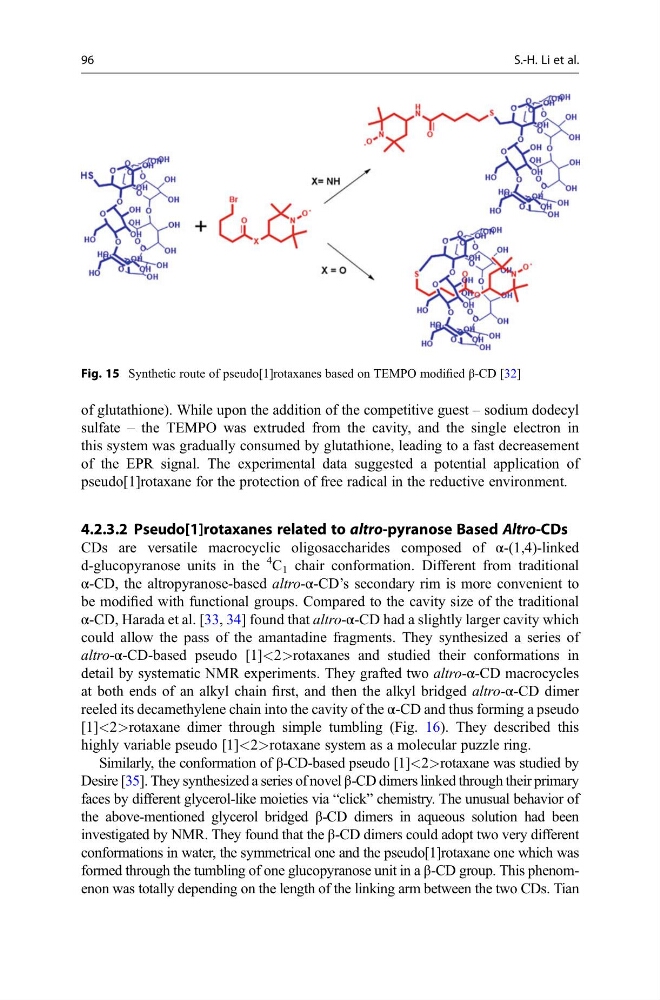
Fig. 15 Synthetic route of pseudo[1]rotaxanes based on TEMPO modified β-CD [32]
96
S.-H. Li et al.
sulfate – the TEMPO was extruded from the cavity, and the single electron in
this system was gradually consumed by glutathione, leading to a fast decreasement
of the EPR signal. The experimental data suggested a potential application of
pseudo[1]rotaxane for the protection of free radical in the reductive environment.
4.2.3.2 Pseudo[1]rotaxanes related to altro-pyranose Based Altro-CDs
CDs are versatile macrocyclic oligosaccharides composed of α-(1,4)-linked
d-glucopyranose units in the
4 C 1 chair conformation. Different from traditional
α-CD, the altropyranose-based altro-α-CD’s secondary rim is more convenient to
be modified with functional groups. Compared to the cavity size of the traditional
α-CD, Harada et al. [33, 34] found that altro-α-CD had a slightly larger cavity which
could allow the pass of the amantadine fragments. They synthesized a series of
altro-α-CD-based pseudo [1]<2>rotaxanes and studied their conformations in
detail by systematic NMR experiments. They grafted two altro-α-CD macrocycles
at both ends of an alkyl chain first, and then the alkyl bridged altro-α-CD dimer
reeled its decamethylene chain into the cavity of the α-CD and thus forming a pseudo
[1]<2>rotaxane dimer through simple tumbling (Fig. 16). They described this
highly variable pseudo [1]<2>rotaxane system as a molecular puzzle ring.
Similarly, the conformation of β-CD-based pseudo [1]<2>rotaxane was studied by
Desire [35]. They synthesized a series of novel β-CD dimers linked through their primary
faces by different glycerol-like moieties via “click” chemistry. The unusual behavior of
the above-mentioned glycerol bridged β-CD dimers in aqueous solution had been
investigated by NMR. They found that the β-CD dimers could adopt two very different
conformations in water, the symmetrical one and the pseudo[1]rotaxane one which was
formed through the tumbling of one glucopyranose unit in a β-CD group. This phenomenon was totally depending on the length of the linking arm between the two CDs. Tian
Fig. 15 Synthetic route of pseudo[1]rotaxanes based on TEMPO modified β-CD [32]
96
S.-H. Li et al.