

205
Rosin derivatives are reported to have interesting biological features when they are used as a drug delivery system due to their
capability to cross the blood-brain barrier, which makes it an excellent drug carrier for several central nerve system diseases [56].
Esters of rosin and polymers are also reported to have good film
coating, especially for enteric tablets because of their delayedrelease profile [57]. Interestingly, rosin ester nanoparticle drug
delivery structure has been shown to be an excellent candidate for
several pharmaceutical applications, such as matrix material in
sustained- release tablets due to their biocompatibility, biodegradability, and antibacterial activity [58]. Moreover, transdermal drug
patches containing rosin matrix and polyvinyl pyrrolidone (PVP)
have been shown to improve pharmacokinetics and pharmacodynamics, prolonging drug release from the drug matrix [59].
Interestingly, besides all the mentioned properties of rosin derivatives as film coating, controlled sustained release, and biodegradability, rosin derivatives have significant antitumor activity
attributed to dehydroabietic acid, the major component of gum
[60]. However, rosin ester material is highly hydrophobic and
chemically dissolves only in organic solvents. Therefore, using
rosin material as a drug delivery system without surface modification might be limited by rapid elimination of the drug from the
blood circulation.
PEGylation is a well-known method used in several biotechnology
and pharmaceutical applications including drug coating, gene
therapy, and multifunctional nanoparticle drug formulations [61].
PEGylation as a technique was first introduced by Davis et al. in
1970, and can be defined as the attachment of one or more polyethylene glycol (PEG) chains to the surface of drug or carrier molecules, aiming to improve solubility and pharmacokinetic and
pharmacodynamic properties of the bioactive drug ingredient
[62]. PEG is a water-soluble synthetic biocompatible polymer
1.7 Improving
the Structure
1.8 PEGylation
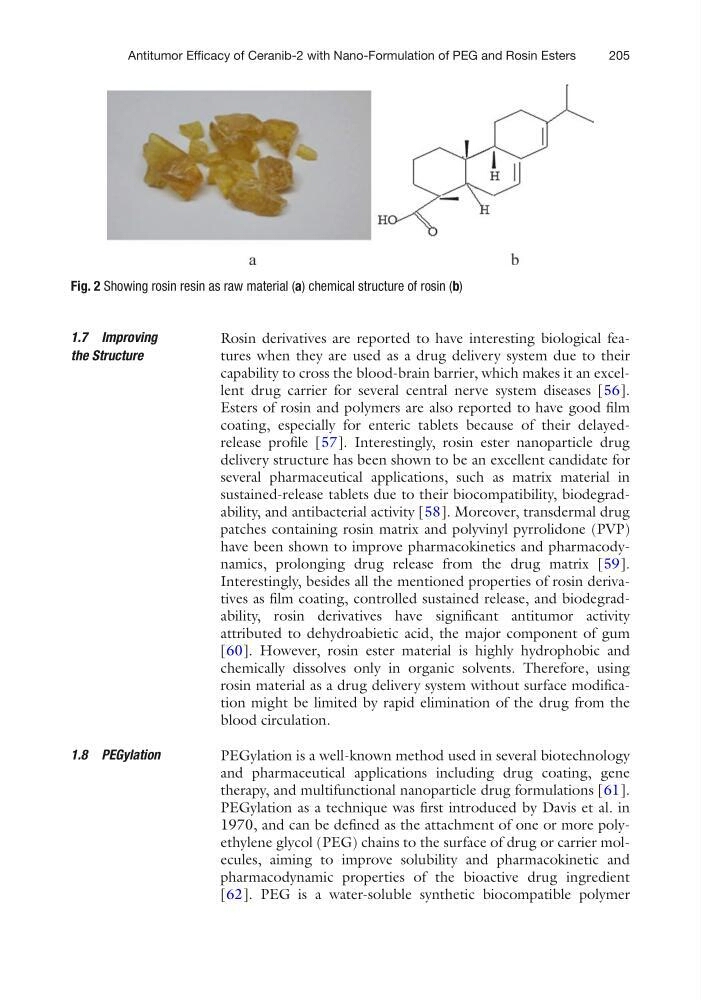
Fig. 2 Showing rosin resin as raw material (a) chemical structure of rosin (b)
Antitumor Efficacy of Ceranib-2 with Nano-Formulation of PEG and Rosin Esters
Rosin derivatives are reported to have interesting biological features when they are used as a drug delivery system due to their
capability to cross the blood-brain barrier, which makes it an excellent drug carrier for several central nerve system diseases [56].
Esters of rosin and polymers are also reported to have good film
coating, especially for enteric tablets because of their delayedrelease profile [57]. Interestingly, rosin ester nanoparticle drug
delivery structure has been shown to be an excellent candidate for
several pharmaceutical applications, such as matrix material in
sustained- release tablets due to their biocompatibility, biodegradability, and antibacterial activity [58]. Moreover, transdermal drug
patches containing rosin matrix and polyvinyl pyrrolidone (PVP)
have been shown to improve pharmacokinetics and pharmacodynamics, prolonging drug release from the drug matrix [59].
Interestingly, besides all the mentioned properties of rosin derivatives as film coating, controlled sustained release, and biodegradability, rosin derivatives have significant antitumor activity
attributed to dehydroabietic acid, the major component of gum
[60]. However, rosin ester material is highly hydrophobic and
chemically dissolves only in organic solvents. Therefore, using
rosin material as a drug delivery system without surface modification might be limited by rapid elimination of the drug from the
blood circulation.
PEGylation is a well-known method used in several biotechnology
and pharmaceutical applications including drug coating, gene
therapy, and multifunctional nanoparticle drug formulations [61].
PEGylation as a technique was first introduced by Davis et al. in
1970, and can be defined as the attachment of one or more polyethylene glycol (PEG) chains to the surface of drug or carrier molecules, aiming to improve solubility and pharmacokinetic and
pharmacodynamic properties of the bioactive drug ingredient
[62]. PEG is a water-soluble synthetic biocompatible polymer
1.7 Improving
the Structure
1.8 PEGylation
Fig. 2 Showing rosin resin as raw material (a) chemical structure of rosin (b)
Antitumor Efficacy of Ceranib-2 with Nano-Formulation of PEG and Rosin Esters