

Integrating Sustainability within University Sustainability …
501
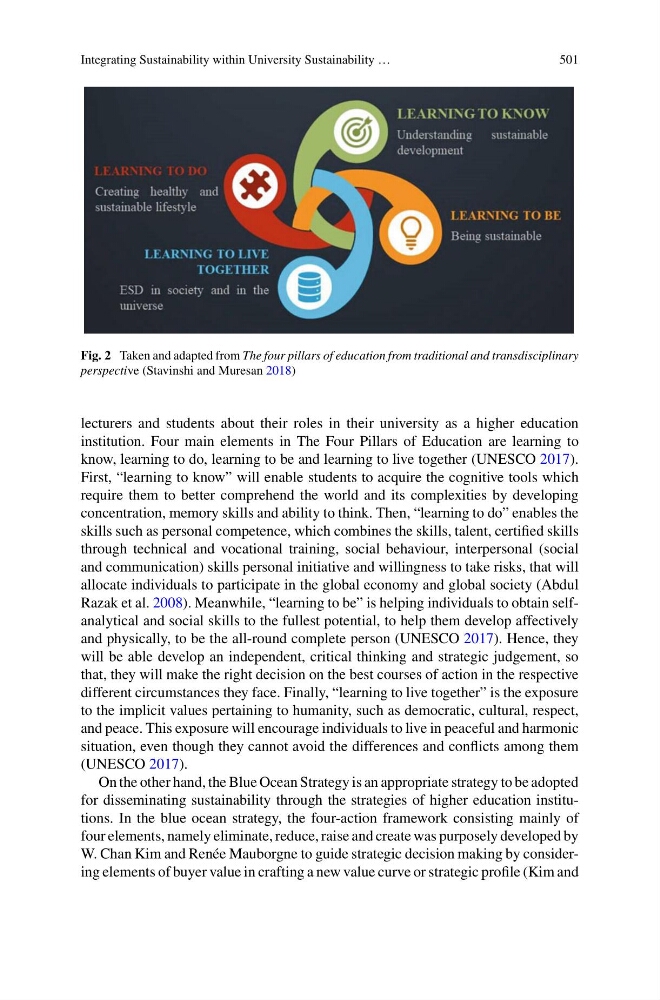
Fig. 2 Taken and adapted from The four pillars of education from traditional and transdisciplinary
perspective (Stavinshi and Muresan 2018)
lecturers and students about their roles in their university as a higher education
institution. Four main elements in The Four Pillars of Education are learning to
know, learning to do, learning to be and learning to live together (UNESCO 2017).
First, “learning to know” will enable students to acquire the cognitive tools which
require them to better comprehend the world and its complexities by developing
concentration, memory skills and ability to think. Then, “learning to do” enables the
skills such as personal competence, which combines the skills, talent, certified skills
through technical and vocational training, social behaviour, interpersonal (social
and communication) skills personal initiative and willingness to take risks, that will
allocate individuals to participate in the global economy and global society (Abdul
Razak et al. 2008). Meanwhile, “learning to be” is helping individuals to obtain selfanalytical and social skills to the fullest potential, to help them develop affectively
and physically, to be the all-round complete person (UNESCO 2017). Hence, they
will be able develop an independent, critical thinking and strategic judgement, so
that, they will make the right decision on the best courses of action in the respective
different circumstances they face. Finally, “learning to live together” is the exposure
to the implicit values pertaining to humanity, such as democratic, cultural, respect,
and peace. This exposure will encourage individuals to live in peaceful and harmonic
situation, even though they cannot avoid the differences and conflicts among them
(UNESCO 2017).
On the other hand, the Blue Ocean Strategy is an appropriate strategy to be adopted
for disseminating sustainability through the strategies of higher education institutions. In the blue ocean strategy, the four-action framework consisting mainly of
four elements, namely eliminate, reduce, raise and create was purposely developed by
W. Chan Kim and Renée Mauborgne to guide strategic decision making by considering elements of buyer value in crafting a new value curve or strategic profile (Kim and
501
Fig. 2 Taken and adapted from The four pillars of education from traditional and transdisciplinary
perspective (Stavinshi and Muresan 2018)
lecturers and students about their roles in their university as a higher education
institution. Four main elements in The Four Pillars of Education are learning to
know, learning to do, learning to be and learning to live together (UNESCO 2017).
First, “learning to know” will enable students to acquire the cognitive tools which
require them to better comprehend the world and its complexities by developing
concentration, memory skills and ability to think. Then, “learning to do” enables the
skills such as personal competence, which combines the skills, talent, certified skills
through technical and vocational training, social behaviour, interpersonal (social
and communication) skills personal initiative and willingness to take risks, that will
allocate individuals to participate in the global economy and global society (Abdul
Razak et al. 2008). Meanwhile, “learning to be” is helping individuals to obtain selfanalytical and social skills to the fullest potential, to help them develop affectively
and physically, to be the all-round complete person (UNESCO 2017). Hence, they
will be able develop an independent, critical thinking and strategic judgement, so
that, they will make the right decision on the best courses of action in the respective
different circumstances they face. Finally, “learning to live together” is the exposure
to the implicit values pertaining to humanity, such as democratic, cultural, respect,
and peace. This exposure will encourage individuals to live in peaceful and harmonic
situation, even though they cannot avoid the differences and conflicts among them
(UNESCO 2017).
On the other hand, the Blue Ocean Strategy is an appropriate strategy to be adopted
for disseminating sustainability through the strategies of higher education institutions. In the blue ocean strategy, the four-action framework consisting mainly of
four elements, namely eliminate, reduce, raise and create was purposely developed by
W. Chan Kim and Renée Mauborgne to guide strategic decision making by considering elements of buyer value in crafting a new value curve or strategic profile (Kim and