

500
H. Rosli et al.
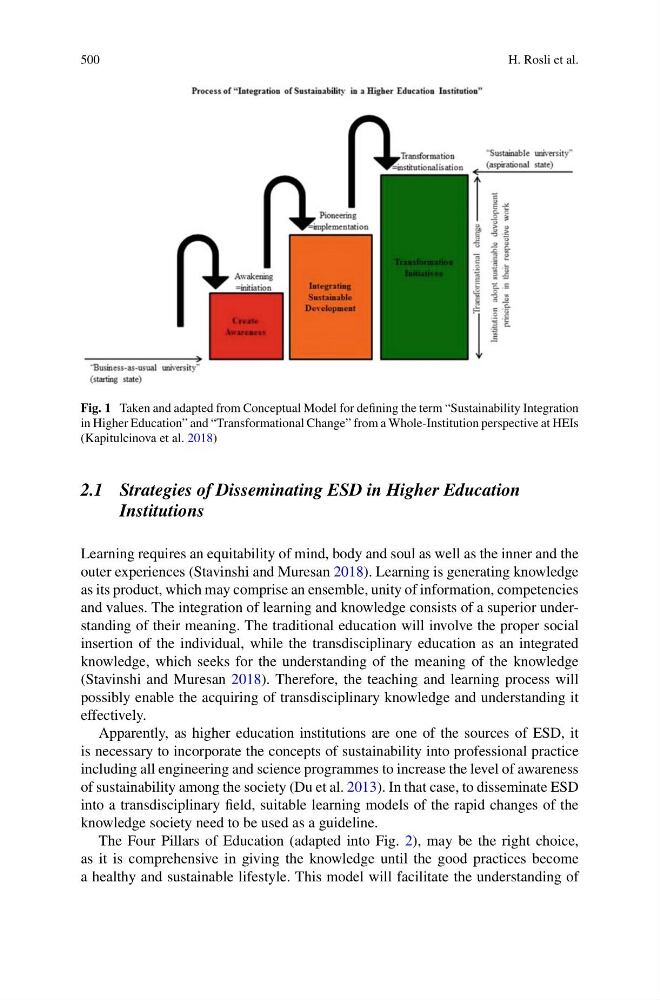
Fig. 1 Taken and adapted from Conceptual Model for defining the term “Sustainability Integration
in Higher Education” and “Transformational Change” from a Whole-Institution perspective at HEIs
(Kapitulcinova et al. 2018)
2.1 Strategies of Disseminating ESD in Higher Education
Institutions
Learning requires an equitability of mind, body and soul as well as the inner and the
outer experiences (Stavinshi and Muresan 2018). Learning is generating knowledge
as its product, which may comprise an ensemble, unity of information, competencies
and values. The integration of learning and knowledge consists of a superior understanding of their meaning. The traditional education will involve the proper social
insertion of the individual, while the transdisciplinary education as an integrated
knowledge, which seeks for the understanding of the meaning of the knowledge
(Stavinshi and Muresan 2018). Therefore, the teaching and learning process will
possibly enable the acquiring of transdisciplinary knowledge and understanding it
effectively.
Apparently, as higher education institutions are one of the sources of ESD, it
is necessary to incorporate the concepts of sustainability into professional practice
including all engineering and science programmes to increase the level of awareness
of sustainability among the society (Du et al. 2013). In that case, to disseminate ESD
into a transdisciplinary field, suitable learning models of the rapid changes of the
knowledge society need to be used as a guideline.
The Four Pillars of Education (adapted into Fig. 2), may be the right choice,
as it is comprehensive in giving the knowledge until the good practices become
a healthy and sustainable lifestyle. This model will facilitate the understanding of
H. Rosli et al.
Fig. 1 Taken and adapted from Conceptual Model for defining the term “Sustainability Integration
in Higher Education” and “Transformational Change” from a Whole-Institution perspective at HEIs
(Kapitulcinova et al. 2018)
2.1 Strategies of Disseminating ESD in Higher Education
Institutions
Learning requires an equitability of mind, body and soul as well as the inner and the
outer experiences (Stavinshi and Muresan 2018). Learning is generating knowledge
as its product, which may comprise an ensemble, unity of information, competencies
and values. The integration of learning and knowledge consists of a superior understanding of their meaning. The traditional education will involve the proper social
insertion of the individual, while the transdisciplinary education as an integrated
knowledge, which seeks for the understanding of the meaning of the knowledge
(Stavinshi and Muresan 2018). Therefore, the teaching and learning process will
possibly enable the acquiring of transdisciplinary knowledge and understanding it
effectively.
Apparently, as higher education institutions are one of the sources of ESD, it
is necessary to incorporate the concepts of sustainability into professional practice
including all engineering and science programmes to increase the level of awareness
of sustainability among the society (Du et al. 2013). In that case, to disseminate ESD
into a transdisciplinary field, suitable learning models of the rapid changes of the
knowledge society need to be used as a guideline.
The Four Pillars of Education (adapted into Fig. 2), may be the right choice,
as it is comprehensive in giving the knowledge until the good practices become
a healthy and sustainable lifestyle. This model will facilitate the understanding of