

202
K. K. Birawat et al.
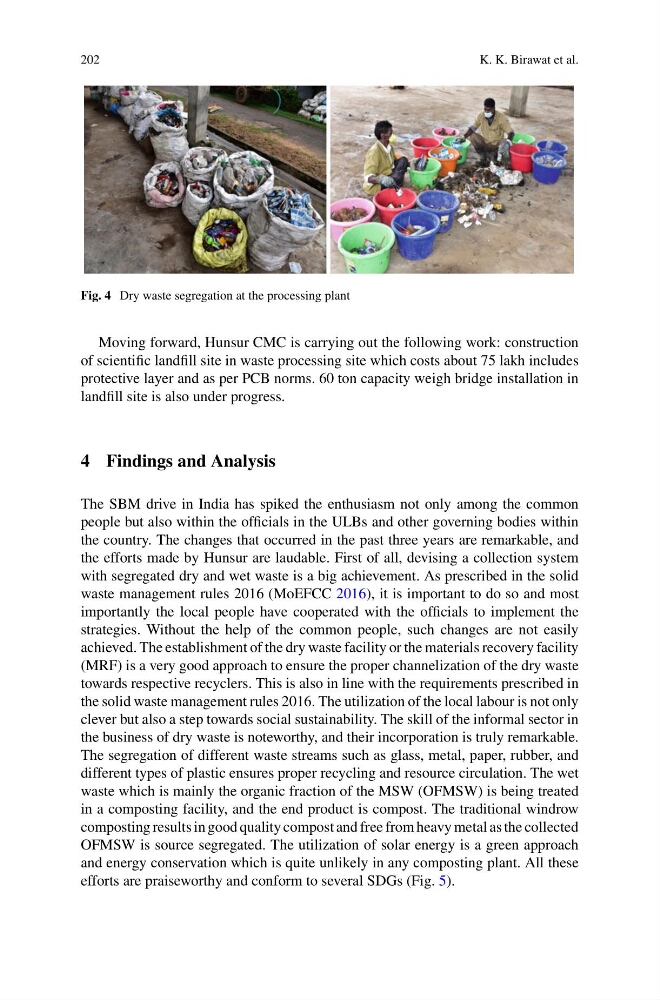
Fig. 4 Dry waste segregation at the processing plant
Moving forward, Hunsur CMC is carrying out the following work: construction
of scientific landfill site in waste processing site which costs about 75 lakh includes
protective layer and as per PCB norms. 60 ton capacity weigh bridge installation in
landfill site is also under progress.
4 Findings and Analysis
The SBM drive in India has spiked the enthusiasm not only among the common
people but also within the officials in the ULBs and other governing bodies within
the country. The changes that occurred in the past three years are remarkable, and
the efforts made by Hunsur are laudable. First of all, devising a collection system
with segregated dry and wet waste is a big achievement. As prescribed in the solid
waste management rules 2016 (MoEFCC 2016), it is important to do so and most
importantly the local people have cooperated with the officials to implement the
strategies. Without the help of the common people, such changes are not easily
achieved. The establishment of the dry waste facility or the materials recovery facility
(MRF) is a very good approach to ensure the proper channelization of the dry waste
towards respective recyclers. This is also in line with the requirements prescribed in
the solid waste management rules 2016. The utilization of the local labour is not only
clever but also a step towards social sustainability. The skill of the informal sector in
the business of dry waste is noteworthy, and their incorporation is truly remarkable.
The segregation of different waste streams such as glass, metal, paper, rubber, and
different types of plastic ensures proper recycling and resource circulation. The wet
waste which is mainly the organic fraction of the MSW (OFMSW) is being treated
in a composting facility, and the end product is compost. The traditional windrow
composting results in good quality compost and free from heavy metal as the collected
OFMSW is source segregated. The utilization of solar energy is a green approach
and energy conservation which is quite unlikely in any composting plant. All these
efforts are praiseworthy and conform to several SDGs (Fig. 5).
K. K. Birawat et al.
Fig. 4 Dry waste segregation at the processing plant
Moving forward, Hunsur CMC is carrying out the following work: construction
of scientific landfill site in waste processing site which costs about 75 lakh includes
protective layer and as per PCB norms. 60 ton capacity weigh bridge installation in
landfill site is also under progress.
4 Findings and Analysis
The SBM drive in India has spiked the enthusiasm not only among the common
people but also within the officials in the ULBs and other governing bodies within
the country. The changes that occurred in the past three years are remarkable, and
the efforts made by Hunsur are laudable. First of all, devising a collection system
with segregated dry and wet waste is a big achievement. As prescribed in the solid
waste management rules 2016 (MoEFCC 2016), it is important to do so and most
importantly the local people have cooperated with the officials to implement the
strategies. Without the help of the common people, such changes are not easily
achieved. The establishment of the dry waste facility or the materials recovery facility
(MRF) is a very good approach to ensure the proper channelization of the dry waste
towards respective recyclers. This is also in line with the requirements prescribed in
the solid waste management rules 2016. The utilization of the local labour is not only
clever but also a step towards social sustainability. The skill of the informal sector in
the business of dry waste is noteworthy, and their incorporation is truly remarkable.
The segregation of different waste streams such as glass, metal, paper, rubber, and
different types of plastic ensures proper recycling and resource circulation. The wet
waste which is mainly the organic fraction of the MSW (OFMSW) is being treated
in a composting facility, and the end product is compost. The traditional windrow
composting results in good quality compost and free from heavy metal as the collected
OFMSW is source segregated. The utilization of solar energy is a green approach
and energy conservation which is quite unlikely in any composting plant. All these
efforts are praiseworthy and conform to several SDGs (Fig. 5).