

Integrated Solid Waste Management in India—Implications …
203
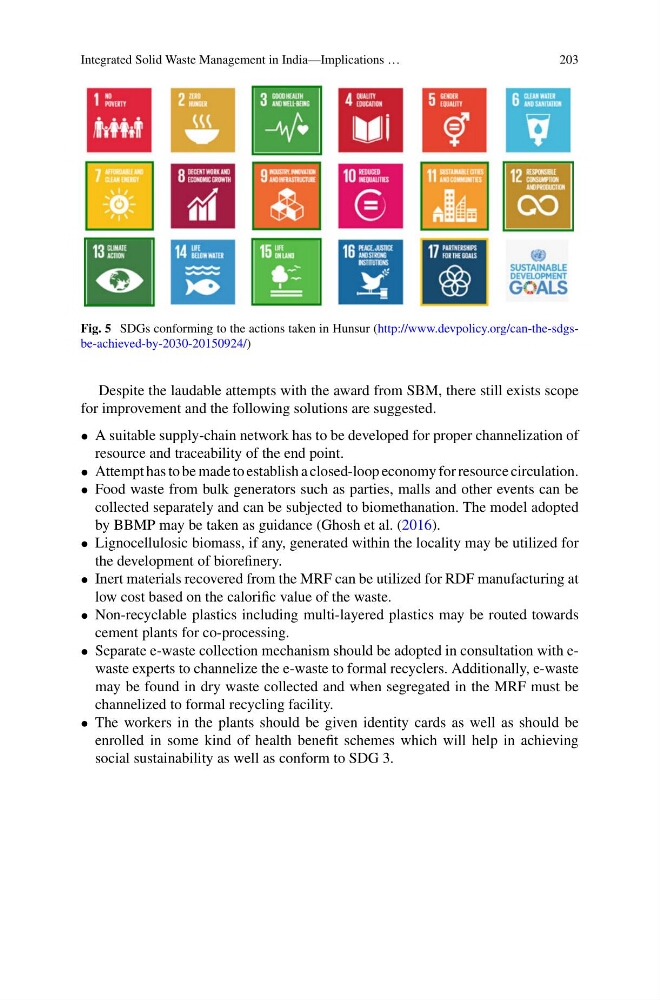
Fig. 5 SDGs conforming to the actions taken in Hunsur (http://www.devpolicy.org/can-the-sdgsbe-achieved-by-2030-20150924/)
Despite the laudable attempts with the award from SBM, there still exists scope
for improvement and the following solutions are suggested.
• A suitable supply-chain network has to be developed for proper channelization of
resource and traceability of the end point.
• Attempt has to be made to establish a closed-loop economy for resource circulation.
• Food waste from bulk generators such as parties, malls and other events can be
collected separately and can be subjected to biomethanation. The model adopted
by BBMP may be taken as guidance (Ghosh et al. (2016).
• Lignocellulosic biomass, if any, generated within the locality may be utilized for
the development of biorefinery.
• Inert materials recovered from the MRF can be utilized for RDF manufacturing at
low cost based on the calorific value of the waste.
• Non-recyclable plastics including multi-layered plastics may be routed towards
cement plants for co-processing.
• Separate e-waste collection mechanism should be adopted in consultation with ewaste experts to channelize the e-waste to formal recyclers. Additionally, e-waste
may be found in dry waste collected and when segregated in the MRF must be
channelized to formal recycling facility.
• The workers in the plants should be given identity cards as well as should be
enrolled in some kind of health benefit schemes which will help in achieving
social sustainability as well as conform to SDG 3.
203
Fig. 5 SDGs conforming to the actions taken in Hunsur (http://www.devpolicy.org/can-the-sdgsbe-achieved-by-2030-20150924/)
Despite the laudable attempts with the award from SBM, there still exists scope
for improvement and the following solutions are suggested.
• A suitable supply-chain network has to be developed for proper channelization of
resource and traceability of the end point.
• Attempt has to be made to establish a closed-loop economy for resource circulation.
• Food waste from bulk generators such as parties, malls and other events can be
collected separately and can be subjected to biomethanation. The model adopted
by BBMP may be taken as guidance (Ghosh et al. (2016).
• Lignocellulosic biomass, if any, generated within the locality may be utilized for
the development of biorefinery.
• Inert materials recovered from the MRF can be utilized for RDF manufacturing at
low cost based on the calorific value of the waste.
• Non-recyclable plastics including multi-layered plastics may be routed towards
cement plants for co-processing.
• Separate e-waste collection mechanism should be adopted in consultation with ewaste experts to channelize the e-waste to formal recyclers. Additionally, e-waste
may be found in dry waste collected and when segregated in the MRF must be
channelized to formal recycling facility.
• The workers in the plants should be given identity cards as well as should be
enrolled in some kind of health benefit schemes which will help in achieving
social sustainability as well as conform to SDG 3.