

Waste Management—A Case Study in Nepal
191
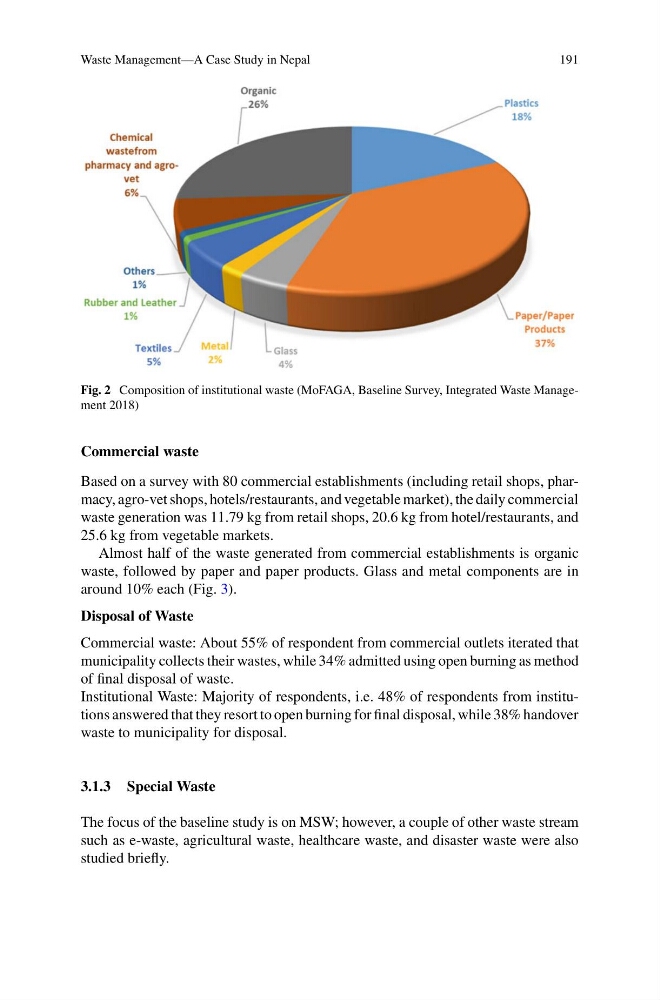
Fig. 2 Composition of institutional waste (MoFAGA, Baseline Survey, Integrated Waste Management 2018)
Commercial waste
Based on a survey with 80 commercial establishments (including retail shops, pharmacy, agro-vet shops, hotels/restaurants, and vegetable market), the daily commercial
waste generation was 11.79 kg from retail shops, 20.6 kg from hotel/restaurants, and
25.6 kg from vegetable markets.
Almost half of the waste generated from commercial establishments is organic
waste, followed by paper and paper products. Glass and metal components are in
around 10% each (Fig. 3).
Disposal of Waste
Commercial waste: About 55% of respondent from commercial outlets iterated that
municipality collects their wastes, while 34% admitted using open burning as method
of final disposal of waste.
Institutional Waste: Majority of respondents, i.e. 48% of respondents from institutions answered that they resort to open burning for final disposal, while 38% handover
waste to municipality for disposal.
3.1.3 Special Waste
The focus of the baseline study is on MSW; however, a couple of other waste stream
such as e-waste, agricultural waste, healthcare waste, and disaster waste were also
studied briefly.
191
Fig. 2 Composition of institutional waste (MoFAGA, Baseline Survey, Integrated Waste Management 2018)
Commercial waste
Based on a survey with 80 commercial establishments (including retail shops, pharmacy, agro-vet shops, hotels/restaurants, and vegetable market), the daily commercial
waste generation was 11.79 kg from retail shops, 20.6 kg from hotel/restaurants, and
25.6 kg from vegetable markets.
Almost half of the waste generated from commercial establishments is organic
waste, followed by paper and paper products. Glass and metal components are in
around 10% each (Fig. 3).
Disposal of Waste
Commercial waste: About 55% of respondent from commercial outlets iterated that
municipality collects their wastes, while 34% admitted using open burning as method
of final disposal of waste.
Institutional Waste: Majority of respondents, i.e. 48% of respondents from institutions answered that they resort to open burning for final disposal, while 38% handover
waste to municipality for disposal.
3.1.3 Special Waste
The focus of the baseline study is on MSW; however, a couple of other waste stream
such as e-waste, agricultural waste, healthcare waste, and disaster waste were also
studied briefly.