

213
based on quality index method (QIM), while the skin of octopus (Cistopus indicus)
stored in ice which was initially very bright, with well-marked colour, elastic and
white, later changed to slightly pink with loss of brightness on day 5 and finally
became dull and pinkish on day 8 (Shalini et al. 2015). Manimaran et al. (2016a)
reported sensory shelf life to be 5–7 days for whole octopus (Cistopus indicus) and
9 days for gutted octopus. Gullian-Klanian et al. (2016) determined gradual changes
in the texture, skin colour, and muscle odour of octopus (Octopus maya) during the
storage at 4 °C. They found a sensorial shelf life of 5 days in this condition. Paarup
et al. (2002a) reported to be 12 days in ice for whole and gutted squid (Todaropsis
eblanae). Quality index Method (QIM) has been developed for some cephalopod
species based on the analysis of some freshness quality parameters, as follows:
appearance/colour, odour and mucus of the skin; texture of the flesh; cornea and
pupil of the eyes; colour, odour and mucus of the mouth region and finally presence
of material in the sucker of arms (Barbosa and Vaz-Pires 2004; Vaz-Pires and
Seixas 2006).
For some time after capture, the dorsal surface of the squid shows a dark brown
colour due to certain pigment cells. With subsequent decrease in freshness, these
cells contract and the meat turn white. When the meat shows an alkaline reaction,
the cells decompose, and the pigment particles redden the meat. Thus, the freshness
of the squid can be roughly estimated by the change in skin colour with progressive
deterioration (Takashi 1965).
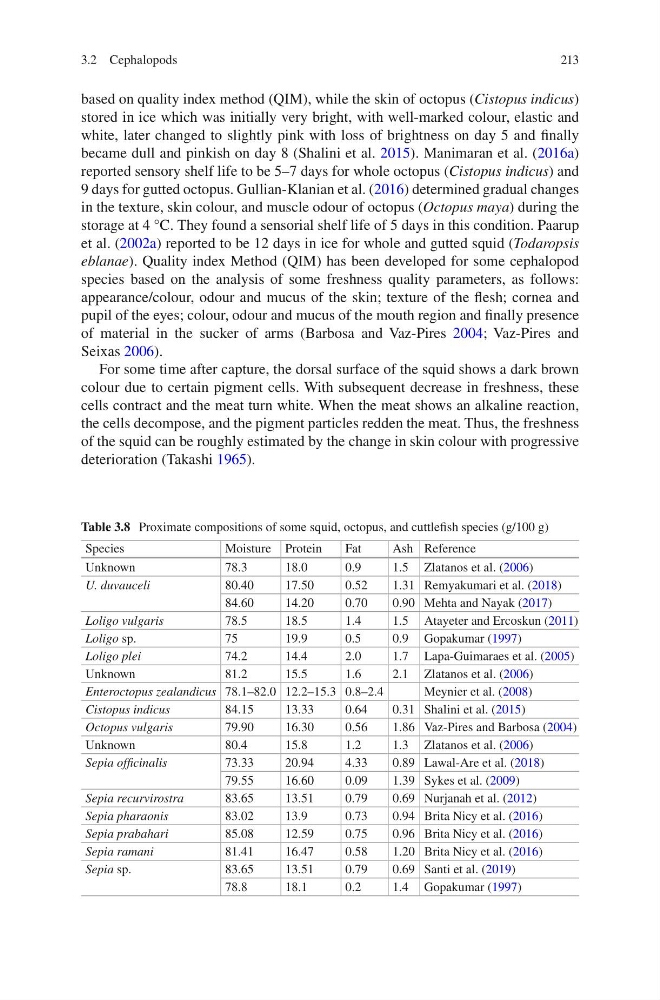
Table 3.8 Proximate compositions of some squid, octopus, and cuttlefish species (g/100 g)
Species
Moisture Protein
Fat
Ash Reference
Unknown
78.3
18.0
0.9
1.5 Zlatanos et al. (2006)
U. duvauceli
80.40
17.50
0.52
1.31 Remyakumari et al. (2018)
84.60
14.20
0.70
0.90 Mehta and Nayak (2017)
Loligo vulgaris
78.5
18.5
1.4
1.5 Atayeter and Ercoskun (2011)
Loligo sp.
75
19.9
0.5
0.9 Gopakumar (1997)
Loligo plei
74.2
14.4
2.0
1.7 Lapa-Guimaraes et al. (2005)
Unknown
81.2
15.5
1.6
2.1 Zlatanos et al. (2006)
Enteroctopus zealandicus 78.1–82.0 12.2–15.3 0.8–2.4
Meynier et al. (2008)
Cistopus indicus
84.15
13.33
0.64
0.31 Shalini et al. (2015)
Octopus vulgaris
79.90
16.30
0.56
1.86 Vaz-Pires and Barbosa (2004)
Unknown
80.4
15.8
1.2
1.3 Zlatanos et al. (2006)
Sepia officinalis
73.33
20.94
4.33
0.89 Lawal-Are et al. (2018)
79.55
16.60
0.09
1.39 Sykes et al. (2009)
Sepia recurvirostra
83.65
13.51
0.79
0.69 Nurjanah et al. (2012)
Sepia pharaonis
83.02
13.9
0.73
0.94 Brita Nicy et al. (2016)
Sepia prabahari
85.08
12.59
0.75
0.96 Brita Nicy et al. (2016)
Sepia ramani
81.41
16.47
0.58
1.20 Brita Nicy et al. (2016)
Sepia sp.
83.65
13.51
0.79
0.69 Santi et al. (2019)
78.8
18.1
0.2
1.4 Gopakumar (1997)
3.2 Cephalopods
based on quality index method (QIM), while the skin of octopus (Cistopus indicus)
stored in ice which was initially very bright, with well-marked colour, elastic and
white, later changed to slightly pink with loss of brightness on day 5 and finally
became dull and pinkish on day 8 (Shalini et al. 2015). Manimaran et al. (2016a)
reported sensory shelf life to be 5–7 days for whole octopus (Cistopus indicus) and
9 days for gutted octopus. Gullian-Klanian et al. (2016) determined gradual changes
in the texture, skin colour, and muscle odour of octopus (Octopus maya) during the
storage at 4 °C. They found a sensorial shelf life of 5 days in this condition. Paarup
et al. (2002a) reported to be 12 days in ice for whole and gutted squid (Todaropsis
eblanae). Quality index Method (QIM) has been developed for some cephalopod
species based on the analysis of some freshness quality parameters, as follows:
appearance/colour, odour and mucus of the skin; texture of the flesh; cornea and
pupil of the eyes; colour, odour and mucus of the mouth region and finally presence
of material in the sucker of arms (Barbosa and Vaz-Pires 2004; Vaz-Pires and
Seixas 2006).
For some time after capture, the dorsal surface of the squid shows a dark brown
colour due to certain pigment cells. With subsequent decrease in freshness, these
cells contract and the meat turn white. When the meat shows an alkaline reaction,
the cells decompose, and the pigment particles redden the meat. Thus, the freshness
of the squid can be roughly estimated by the change in skin colour with progressive
deterioration (Takashi 1965).
Table 3.8 Proximate compositions of some squid, octopus, and cuttlefish species (g/100 g)
Species
Moisture Protein
Fat
Ash Reference
Unknown
78.3
18.0
0.9
1.5 Zlatanos et al. (2006)
U. duvauceli
80.40
17.50
0.52
1.31 Remyakumari et al. (2018)
84.60
14.20
0.70
0.90 Mehta and Nayak (2017)
Loligo vulgaris
78.5
18.5
1.4
1.5 Atayeter and Ercoskun (2011)
Loligo sp.
75
19.9
0.5
0.9 Gopakumar (1997)
Loligo plei
74.2
14.4
2.0
1.7 Lapa-Guimaraes et al. (2005)
Unknown
81.2
15.5
1.6
2.1 Zlatanos et al. (2006)
Enteroctopus zealandicus 78.1–82.0 12.2–15.3 0.8–2.4
Meynier et al. (2008)
Cistopus indicus
84.15
13.33
0.64
0.31 Shalini et al. (2015)
Octopus vulgaris
79.90
16.30
0.56
1.86 Vaz-Pires and Barbosa (2004)
Unknown
80.4
15.8
1.2
1.3 Zlatanos et al. (2006)
Sepia officinalis
73.33
20.94
4.33
0.89 Lawal-Are et al. (2018)
79.55
16.60
0.09
1.39 Sykes et al. (2009)
Sepia recurvirostra
83.65
13.51
0.79
0.69 Nurjanah et al. (2012)
Sepia pharaonis
83.02
13.9
0.73
0.94 Brita Nicy et al. (2016)
Sepia prabahari
85.08
12.59
0.75
0.96 Brita Nicy et al. (2016)
Sepia ramani
81.41
16.47
0.58
1.20 Brita Nicy et al. (2016)
Sepia sp.
83.65
13.51
0.79
0.69 Santi et al. (2019)
78.8
18.1
0.2
1.4 Gopakumar (1997)
3.2 Cephalopods