

171
monitoring environmental contaminants. As they are filter feeders, they can accumulate elements in their bodies.
The fatty acid compositions of some oyster species reported by some researchers
are shown in Table 3.5. The fatty acid compositions of some oyster species reported
by some researchers are shown in Table 3.5. Many factors impact the fatty acid
composition, such as diet, geographic locations of catch and seasons of the year,
which may be related to water temperature (Chen 2011). Fatty acids composition of
oyster also changes seasonally. Temperature is one of the variables that greatly
influence fatty acid composition. As temperature decreases, the level of unsaturation tends to increase, in order to maintain the freezing point below that of the surrounding water and to ensure membrane fluidity and general body flexibility (Lira
et al. 2013). The sum of SFA was found significantly lower in winter than in the
other seasons. Monounsaturated fatty acids (MUFA) were significantly lower in
spring, than in the other seasons. As for PUFA, it was lower in autumn than in the
other seasons, while the sum of the concentration of the n-3 fatty acids was lower in
summer than in the other seasons. The n-3/n-6 ratio was higher in spring and winter
than in summer and autumn (Martino and Cruz 2004). The growth conditions of the
oyster and especially the presence of nutrients in the environment in which it grows
affect their fatty acid composition. The availability of phytoplankton resources
affects the fatty acid composition. Due to availability of non-phytoplanktonic
organic material in the cultured condition resulted in the accumulation of higher
proportion of SFAs (Freites et al. 2002). While the total MUFA content of the cultured oyster was found to be higher than that obtained from the natural environment,
total PUFA content was found to be higher in the wild oyster (Chakraborty et al.
2016a). The fatty acids (FA) profile of oysters is dependent on the FA composition
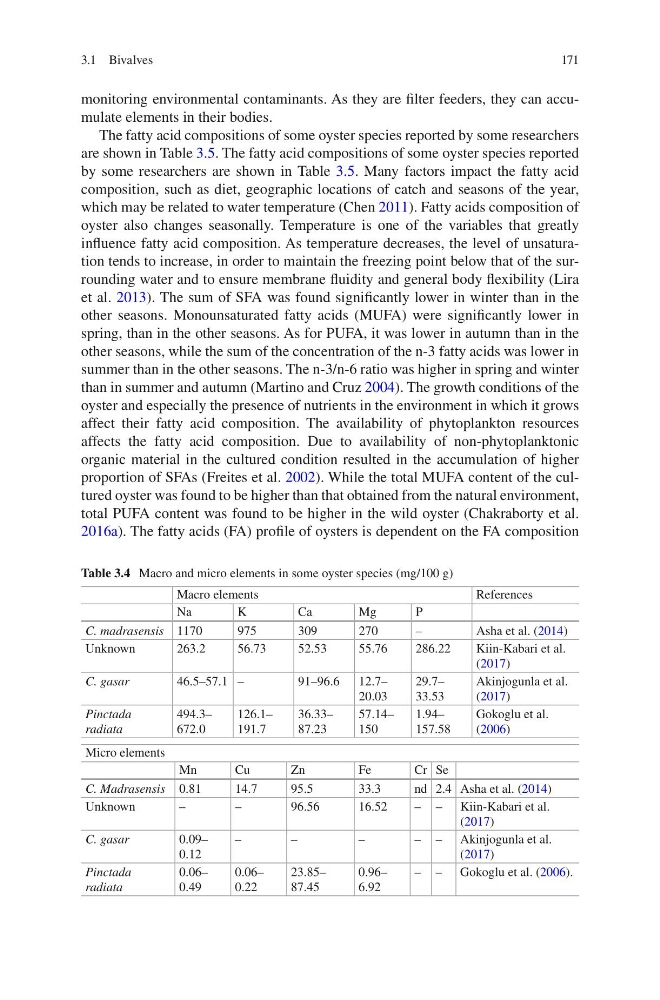
Table 3.4 Macro and micro elements in some oyster species (mg/100 g)
Macro elements
References
Na
K
Ca
Mg
P
C. madrasensis 1170
975
309
270
–
Asha et al. (2014)
Unknown
263.2
56.73
52.53
55.76
286.22
Kiin-Kabari et al.
(2017)
C. gasar
46.5–57.1 –
91–96.6
12.7–
20.03
29.7–
33.53
Akinjogunla et al.
(2017)
Pinctada
radiata
494.3–
672.0
126.1–
191.7
36.33–
87.23
57.14–
150
1.94–
157.58
Gokoglu et al.
(2006)
Micro elements
Mn
Cu
Zn
Fe
Cr Se
C. Madrasensis 0.81
14.7
95.5
33.3
nd 2.4 Asha et al. (2014)
Unknown
–
–
96.56
16.52
– – Kiin-Kabari et al.
(2017)
C. gasar
0.09–
0.12
–
–
–
– – Akinjogunla et al.
(2017)
Pinctada
radiata
0.06–
0.49
0.06–
0.22
23.85–
87.45
0.96–
6.92
– – Gokoglu et al. (2006).
3.1 Bivalves
monitoring environmental contaminants. As they are filter feeders, they can accumulate elements in their bodies.
The fatty acid compositions of some oyster species reported by some researchers
are shown in Table 3.5. The fatty acid compositions of some oyster species reported
by some researchers are shown in Table 3.5. Many factors impact the fatty acid
composition, such as diet, geographic locations of catch and seasons of the year,
which may be related to water temperature (Chen 2011). Fatty acids composition of
oyster also changes seasonally. Temperature is one of the variables that greatly
influence fatty acid composition. As temperature decreases, the level of unsaturation tends to increase, in order to maintain the freezing point below that of the surrounding water and to ensure membrane fluidity and general body flexibility (Lira
et al. 2013). The sum of SFA was found significantly lower in winter than in the
other seasons. Monounsaturated fatty acids (MUFA) were significantly lower in
spring, than in the other seasons. As for PUFA, it was lower in autumn than in the
other seasons, while the sum of the concentration of the n-3 fatty acids was lower in
summer than in the other seasons. The n-3/n-6 ratio was higher in spring and winter
than in summer and autumn (Martino and Cruz 2004). The growth conditions of the
oyster and especially the presence of nutrients in the environment in which it grows
affect their fatty acid composition. The availability of phytoplankton resources
affects the fatty acid composition. Due to availability of non-phytoplanktonic
organic material in the cultured condition resulted in the accumulation of higher
proportion of SFAs (Freites et al. 2002). While the total MUFA content of the cultured oyster was found to be higher than that obtained from the natural environment,
total PUFA content was found to be higher in the wild oyster (Chakraborty et al.
2016a). The fatty acids (FA) profile of oysters is dependent on the FA composition
Table 3.4 Macro and micro elements in some oyster species (mg/100 g)
Macro elements
References
Na
K
Ca
Mg
P
C. madrasensis 1170
975
309
270
–
Asha et al. (2014)
Unknown
263.2
56.73
52.53
55.76
286.22
Kiin-Kabari et al.
(2017)
C. gasar
46.5–57.1 –
91–96.6
12.7–
20.03
29.7–
33.53
Akinjogunla et al.
(2017)
Pinctada
radiata
494.3–
672.0
126.1–
191.7
36.33–
87.23
57.14–
150
1.94–
157.58
Gokoglu et al.
(2006)
Micro elements
Mn
Cu
Zn
Fe
Cr Se
C. Madrasensis 0.81
14.7
95.5
33.3
nd 2.4 Asha et al. (2014)
Unknown
–
–
96.56
16.52
– – Kiin-Kabari et al.
(2017)
C. gasar
0.09–
0.12
–
–
–
– – Akinjogunla et al.
(2017)
Pinctada
radiata
0.06–
0.49
0.06–
0.22
23.85–
87.45
0.96–
6.92
– – Gokoglu et al. (2006).
3.1 Bivalves