

170
determined that he oysters began to store glycogen from December to a maximum
in May. Glycogen levels then began to decrease and reached a minimum from
August to December. In another study, an inverse relationship was found between
glycogen levels and lipid levels of Crassostrea gigas. In winter, lipid concentrations
were the lowest and the highest glycogen levels. During the maturing period
(spring), while lipids accumulate in gonads, glycogen reaches minimum values in
maturity. In addition, the protein content at the maturing stage was found to be high
and decreased at the beginning of spawning (late summer). This change in protein
level has been associated with nutrient availability (Dridi et al. 2007). The smell, the
appearance and the taste of oysters vary according to their physiological state and
the season in which they are eaten. At the time when they are best for consumption,
oysters are called seasonal. In winter they create large quantities of glycogen, which
makes them fatty and light in colour and gives a savoury smell and a sweet taste. In
late spring and summer, they grow thin, tough and dark, due to reproduction.
Therefore, the best time to eat oysters is in February, and the caloric value is highest
from January to April (Hasanspahić 2011).
Proteins are the main structural material of gonads during gametogenetic development. There is a change in proteins with the development of gonad. Proteins are
also used as energy reserves where glycogen levels are not sufficient (Berthelin
et al. 2000).
The lipid reserves of mollusc mainly depend on the environmental influences on
metabolic activities, the nutritional value of the food supply and the stage of gonadal
development. The oysters collected from the wild habitats exhibited higher lipid
content as compared to those cultured ones. Some researchers have reported significant variations of lipid content of oysters seasonally (Salaskar and Nayak 2011;
Subasinghe et al. 2019).
Oyster meat is rich in both macro elements and trace metals (Table 3.4). Oysters
are reported as excellent sources of iron (Fe), copper (Cu), zinc (Zn), and selenium
(Se) (Noel et al. 2012). On the other hand, oysters also serve as bioindicators for
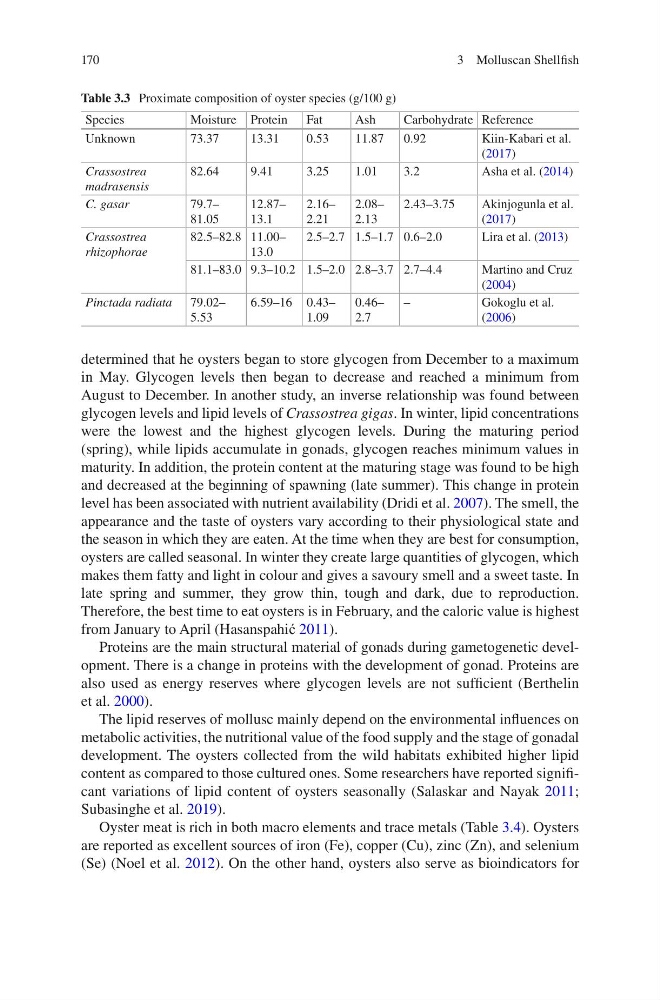
Table 3.3 Proximate composition of oyster species (g/100 g)
Species
Moisture Protein Fat
Ash
Carbohydrate Reference
Unknown
73.37
13.31
0.53
11.87
0.92
Kiin-Kabari et al.
(2017)
Crassostrea
madrasensis
82.64
9.41
3.25
1.01
3.2
Asha et al. (2014)
C. gasar
79.7–
81.05
12.87–
13.1
2.16–
2.21
2.08–
2.13
2.43–3.75
Akinjogunla et al.
(2017)
Crassostrea
rhizophorae
82.5–82.8 11.00–
13.0
2.5–2.7 1.5–1.7 0.6–2.0
Lira et al. (2013)
81.1–83.0 9.3–10.2 1.5–2.0 2.8–3.7 2.7–4.4
Martino and Cruz
(2004)
Pinctada radiata 79.02–
5.53
6.59–16 0.43–
1.09
0.46–
2.7
–
Gokoglu et al.
(2006)
3 Molluscan Shellfish
determined that he oysters began to store glycogen from December to a maximum
in May. Glycogen levels then began to decrease and reached a minimum from
August to December. In another study, an inverse relationship was found between
glycogen levels and lipid levels of Crassostrea gigas. In winter, lipid concentrations
were the lowest and the highest glycogen levels. During the maturing period
(spring), while lipids accumulate in gonads, glycogen reaches minimum values in
maturity. In addition, the protein content at the maturing stage was found to be high
and decreased at the beginning of spawning (late summer). This change in protein
level has been associated with nutrient availability (Dridi et al. 2007). The smell, the
appearance and the taste of oysters vary according to their physiological state and
the season in which they are eaten. At the time when they are best for consumption,
oysters are called seasonal. In winter they create large quantities of glycogen, which
makes them fatty and light in colour and gives a savoury smell and a sweet taste. In
late spring and summer, they grow thin, tough and dark, due to reproduction.
Therefore, the best time to eat oysters is in February, and the caloric value is highest
from January to April (Hasanspahić 2011).
Proteins are the main structural material of gonads during gametogenetic development. There is a change in proteins with the development of gonad. Proteins are
also used as energy reserves where glycogen levels are not sufficient (Berthelin
et al. 2000).
The lipid reserves of mollusc mainly depend on the environmental influences on
metabolic activities, the nutritional value of the food supply and the stage of gonadal
development. The oysters collected from the wild habitats exhibited higher lipid
content as compared to those cultured ones. Some researchers have reported significant variations of lipid content of oysters seasonally (Salaskar and Nayak 2011;
Subasinghe et al. 2019).
Oyster meat is rich in both macro elements and trace metals (Table 3.4). Oysters
are reported as excellent sources of iron (Fe), copper (Cu), zinc (Zn), and selenium
(Se) (Noel et al. 2012). On the other hand, oysters also serve as bioindicators for
Table 3.3 Proximate composition of oyster species (g/100 g)
Species
Moisture Protein Fat
Ash
Carbohydrate Reference
Unknown
73.37
13.31
0.53
11.87
0.92
Kiin-Kabari et al.
(2017)
Crassostrea
madrasensis
82.64
9.41
3.25
1.01
3.2
Asha et al. (2014)
C. gasar
79.7–
81.05
12.87–
13.1
2.16–
2.21
2.08–
2.13
2.43–3.75
Akinjogunla et al.
(2017)
Crassostrea
rhizophorae
82.5–82.8 11.00–
13.0
2.5–2.7 1.5–1.7 0.6–2.0
Lira et al. (2013)
81.1–83.0 9.3–10.2 1.5–2.0 2.8–3.7 2.7–4.4
Martino and Cruz
(2004)
Pinctada radiata 79.02–
5.53
6.59–16 0.43–
1.09
0.46–
2.7
–
Gokoglu et al.
(2006)
3 Molluscan Shellfish