

172
of the diet. It was reported that the diet contained 100% seaweed resulted in poor in
highly unsaturated FA. Such a diet is unable to meet nutritional requirements of
oysters. On the other hand, microalgae containing diets showed higher contents of
PUFA, namely EPA and DHA (Rato et al. 2019). Significant differences were found
in the fatty acid composition of oysters fed with different microalgae diets (Pennarun
et al. 2003).
3.1.3.2 Postharvest Quality Changes in Oysters
Since bivalve molluscs are susceptible to microbial deterioration, their shelf life is
considerably short, which limits their distribution and trade. In addition to being
highly perishable, oysters can be harmful to public health as they can carry pathogenic bacteria related to outbreaks. The safety of raw oysters for consumption
depends upon their initial degree of contamination, mainly due to the quality of
seawater from which they are extracted or cultured, rather than to postharvest storage conditions. Natural spoilage flora and microbial pathogens may grow during
and post harvesting conditions and affect composition and texture of oysters and
cause health risks for consumers. The initial number and type of microorganisms
present at the oysters affect the rate of deterioration. In addition, unfavourable conditions during transport and storage may cause re-contamination and rapid deterioration. When common conditions of oysters change to unusual environments,
significant physiological changes in oysters may occur. Thus, in the new conditions,
there is a decrease in total carbohydrate and ATP levels, causing biochemical
changes in the muscle. Therefore, the occurrence of significant biochemical changes
during harvesting, transport and storage can lead to a significant negative impact on
final quality (Montanhini and Neto 2015).
As in fish, after death, oysters pass through rigor mortis autolysis and bacterial
spoilage. Post-harvest changes in oysters depend on some factors such as capture
method, handling, processing, and storage (Songsaeng 2010). Spoilage of oysters
occurs by microbial growth. It has been reported that the microbial flora of mollusc
shellfish varies significantly depending on the quality of the water from which these
fish are taken and the quality of the wash water and other factors (Jay 2000). In a
study where the number of faecal coliforms in water and oyster (Crassostrea
iredalei) samples collected from two different oyster growth areas exceeded microbiological limits, it was concluded that these results were obtained because these
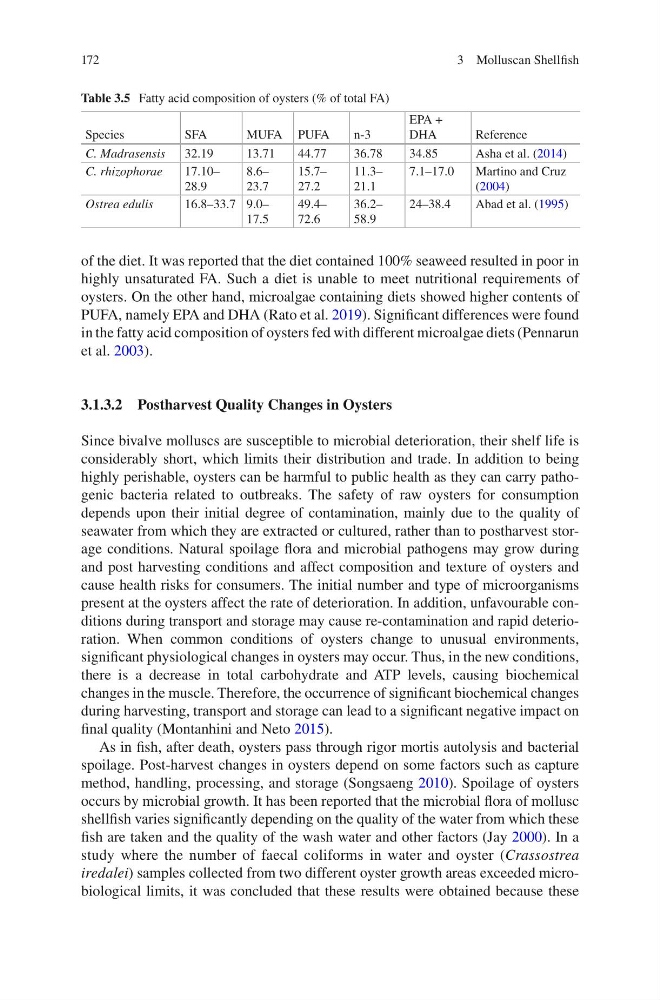
Table 3.5 Fatty acid composition of oysters (% of total FA)
Species
SFA
MUFA PUFA
n-3
EPA +
DHA
Reference
C. Madrasensis
32.19
13.71
44.77
36.78
34.85
Asha et al. (2014)
C. rhizophorae
17.10–
28.9
8.6–
23.7
15.7–
27.2
11.3–
21.1
7.1–17.0
Martino and Cruz
(2004)
Ostrea edulis
16.8–33.7 9.0–
17.5
49.4–
72.6
36.2–
58.9
24–38.4
Abad et al. (1995)
3 Molluscan Shellfish
of the diet. It was reported that the diet contained 100% seaweed resulted in poor in
highly unsaturated FA. Such a diet is unable to meet nutritional requirements of
oysters. On the other hand, microalgae containing diets showed higher contents of
PUFA, namely EPA and DHA (Rato et al. 2019). Significant differences were found
in the fatty acid composition of oysters fed with different microalgae diets (Pennarun
et al. 2003).
3.1.3.2 Postharvest Quality Changes in Oysters
Since bivalve molluscs are susceptible to microbial deterioration, their shelf life is
considerably short, which limits their distribution and trade. In addition to being
highly perishable, oysters can be harmful to public health as they can carry pathogenic bacteria related to outbreaks. The safety of raw oysters for consumption
depends upon their initial degree of contamination, mainly due to the quality of
seawater from which they are extracted or cultured, rather than to postharvest storage conditions. Natural spoilage flora and microbial pathogens may grow during
and post harvesting conditions and affect composition and texture of oysters and
cause health risks for consumers. The initial number and type of microorganisms
present at the oysters affect the rate of deterioration. In addition, unfavourable conditions during transport and storage may cause re-contamination and rapid deterioration. When common conditions of oysters change to unusual environments,
significant physiological changes in oysters may occur. Thus, in the new conditions,
there is a decrease in total carbohydrate and ATP levels, causing biochemical
changes in the muscle. Therefore, the occurrence of significant biochemical changes
during harvesting, transport and storage can lead to a significant negative impact on
final quality (Montanhini and Neto 2015).
As in fish, after death, oysters pass through rigor mortis autolysis and bacterial
spoilage. Post-harvest changes in oysters depend on some factors such as capture
method, handling, processing, and storage (Songsaeng 2010). Spoilage of oysters
occurs by microbial growth. It has been reported that the microbial flora of mollusc
shellfish varies significantly depending on the quality of the water from which these
fish are taken and the quality of the wash water and other factors (Jay 2000). In a
study where the number of faecal coliforms in water and oyster (Crassostrea
iredalei) samples collected from two different oyster growth areas exceeded microbiological limits, it was concluded that these results were obtained because these
Table 3.5 Fatty acid composition of oysters (% of total FA)
Species
SFA
MUFA PUFA
n-3
EPA +
DHA
Reference
C. Madrasensis
32.19
13.71
44.77
36.78
34.85
Asha et al. (2014)
C. rhizophorae
17.10–
28.9
8.6–
23.7
15.7–
27.2
11.3–
21.1
7.1–17.0
Martino and Cruz
(2004)
Ostrea edulis
16.8–33.7 9.0–
17.5
49.4–
72.6
36.2–
58.9
24–38.4
Abad et al. (1995)
3 Molluscan Shellfish