

An acrylamide was chosen as an electrophilic warhead due to the fact
that α,β-unsaturated carbonyl groups are soft electrophiles. On the one side, the
acrylamide preferentially reacts with the soft thiol present in the side chain of
Cys154. On the other side, acrylamides are less reactive than α,β-unsaturated
esters as well as α,β-unsaturated ketones, thereby reducing possible side reactions
with thiol groups present in other intracellular proteins.
Potential covalent inhibitors bearing different linkers consisting of two phenyl
rings connected by an amide bond were synthesized wherein the linker length
and geometry was varied (Fig. 16). The contribution of the covalent bond formation
to the inhibitory activity was estimated by comparing the activity of the potential
irreversible inhibitors with the one of the corresponding saturated analogs [34].
The linker, consisting of a para-substitution pattern on the phenyl ring
connected to the pyridine-C2-amino position as well as a meta-substitution
pattern on the second phenyl ring bearing the acryl amide moiety, showed to have
the appropriate length and properties to place the reactive electrophile in optimal
position to form the covalent bond with the Cys154 side chain. The resulting
covalent inhibitor PIT0104026 inhibits JNK3 in the low nanomolar range and
possesses an approximately 1,000-fold selectivity versus the p38α MAP kinase.
The irreversible binding mode of PIT0104026 was confirmed by mass shift
experiments. This covalent inhibitor displays a good selectivity. In a screening
versus a panel of 410 kinases, 15 kinases including JNK1,2,3 were inhibited
at a test concentration of 1 μM [34].
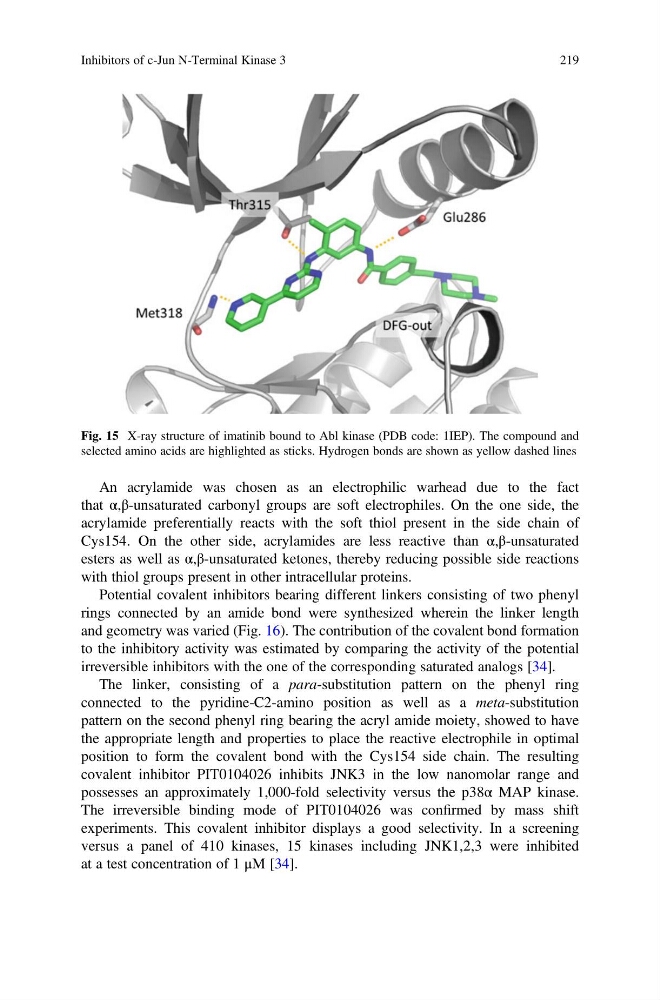
Fig. 15 X-ray structure of imatinib bound to Abl kinase (PDB code: 1IEP). The compound and
selected amino acids are highlighted as sticks. Hydrogen bonds are shown as yellow dashed lines
Inhibitors of c-Jun N-Terminal Kinase 3
219
that α,β-unsaturated carbonyl groups are soft electrophiles. On the one side, the
acrylamide preferentially reacts with the soft thiol present in the side chain of
Cys154. On the other side, acrylamides are less reactive than α,β-unsaturated
esters as well as α,β-unsaturated ketones, thereby reducing possible side reactions
with thiol groups present in other intracellular proteins.
Potential covalent inhibitors bearing different linkers consisting of two phenyl
rings connected by an amide bond were synthesized wherein the linker length
and geometry was varied (Fig. 16). The contribution of the covalent bond formation
to the inhibitory activity was estimated by comparing the activity of the potential
irreversible inhibitors with the one of the corresponding saturated analogs [34].
The linker, consisting of a para-substitution pattern on the phenyl ring
connected to the pyridine-C2-amino position as well as a meta-substitution
pattern on the second phenyl ring bearing the acryl amide moiety, showed to have
the appropriate length and properties to place the reactive electrophile in optimal
position to form the covalent bond with the Cys154 side chain. The resulting
covalent inhibitor PIT0104026 inhibits JNK3 in the low nanomolar range and
possesses an approximately 1,000-fold selectivity versus the p38α MAP kinase.
The irreversible binding mode of PIT0104026 was confirmed by mass shift
experiments. This covalent inhibitor displays a good selectivity. In a screening
versus a panel of 410 kinases, 15 kinases including JNK1,2,3 were inhibited
at a test concentration of 1 μM [34].
Fig. 15 X-ray structure of imatinib bound to Abl kinase (PDB code: 1IEP). The compound and
selected amino acids are highlighted as sticks. Hydrogen bonds are shown as yellow dashed lines
Inhibitors of c-Jun N-Terminal Kinase 3
219