

How Molecular Modelling Tools Can Help …
195
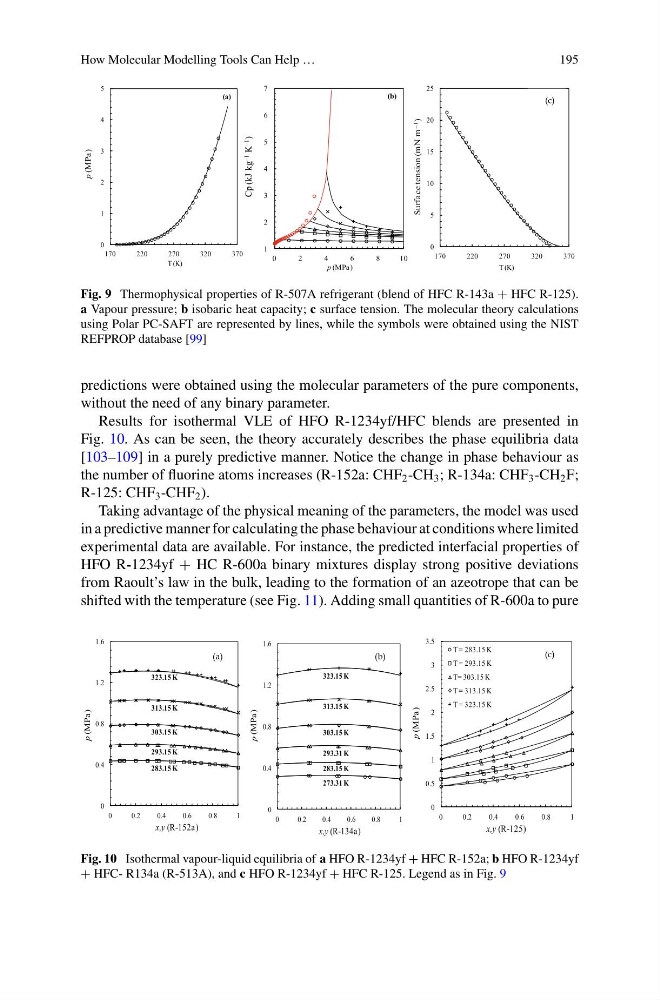
Fig. 9 Thermophysical properties of R-507A refrigerant (blend of HFC R-143a + HFC R-125).
a Vapour pressure; b isobaric heat capacity; c surface tension. The molecular theory calculations
using Polar PC-SAFT are represented by lines, while the symbols were obtained using the NIST
REFPROP database [99]
predictions were obtained using the molecular parameters of the pure components,
without the need of any binary parameter.
Results for isothermal VLE of HFO R-1234yf/HFC blends are presented in
Fig. 10. As can be seen, the theory accurately describes the phase equilibria data
[103–109] in a purely predictive manner. Notice the change in phase behaviour as
the number of fluorine atoms increases (R-152a: CHF 2 -CH 3 ; R-134a: CHF 3 -CH 2 F;
R-125: CHF 3 -CHF 2 ).
Taking advantage of the physical meaning of the parameters, the model was used
in a predictive manner for calculating the phase behaviour at conditions where limited
experimental data are available. For instance, the predicted interfacial properties of
HFO R-1234yf + HC R-600a binary mixtures display strong positive deviations
from Raoult’s law in the bulk, leading to the formation of an azeotrope that can be
shifted with the temperature (see Fig. 11). Adding small quantities of R-600a to pure
Fig. 10 Isothermal vapour-liquid equilibria of a HFO R-1234yf + HFC R-152a; b HFO R-1234yf
+ HFC- R134a (R-513A), and c HFO R-1234yf + HFC R-125. Legend as in Fig. 9
195
Fig. 9 Thermophysical properties of R-507A refrigerant (blend of HFC R-143a + HFC R-125).
a Vapour pressure; b isobaric heat capacity; c surface tension. The molecular theory calculations
using Polar PC-SAFT are represented by lines, while the symbols were obtained using the NIST
REFPROP database [99]
predictions were obtained using the molecular parameters of the pure components,
without the need of any binary parameter.
Results for isothermal VLE of HFO R-1234yf/HFC blends are presented in
Fig. 10. As can be seen, the theory accurately describes the phase equilibria data
[103–109] in a purely predictive manner. Notice the change in phase behaviour as
the number of fluorine atoms increases (R-152a: CHF 2 -CH 3 ; R-134a: CHF 3 -CH 2 F;
R-125: CHF 3 -CHF 2 ).
Taking advantage of the physical meaning of the parameters, the model was used
in a predictive manner for calculating the phase behaviour at conditions where limited
experimental data are available. For instance, the predicted interfacial properties of
HFO R-1234yf + HC R-600a binary mixtures display strong positive deviations
from Raoult’s law in the bulk, leading to the formation of an azeotrope that can be
shifted with the temperature (see Fig. 11). Adding small quantities of R-600a to pure
Fig. 10 Isothermal vapour-liquid equilibria of a HFO R-1234yf + HFC R-152a; b HFO R-1234yf
+ HFC- R134a (R-513A), and c HFO R-1234yf + HFC R-125. Legend as in Fig. 9