

Coarse-Grained Force Fields Built on Atomistic …
153
2.3 Parameterization
Two general approaches, the bottom-up and top-down, have been used for
parametrizations of CGFF. The bottom-up approach, which includes iterative Boltzmann inversion (IBI) [57, 58], force matching [59, 60], relative entropy [43] and
inverse Monte Carlo [61, 62], derives CGFF parameters from atomistic simulation data. The top-down approach, such as that used for developing SDK [63] or
SAFT-γ CGFF [64], uses experimental data to optimize the force field parameters.
Both approaches have disadvantages. The bottom-up is hindered by inaccuracy for
predicting physical properties, and the top-down is restricted by the number of experimental data available for parameterization. Naturally, a hybrid method provides an
ideal solution [15, 45, 65].
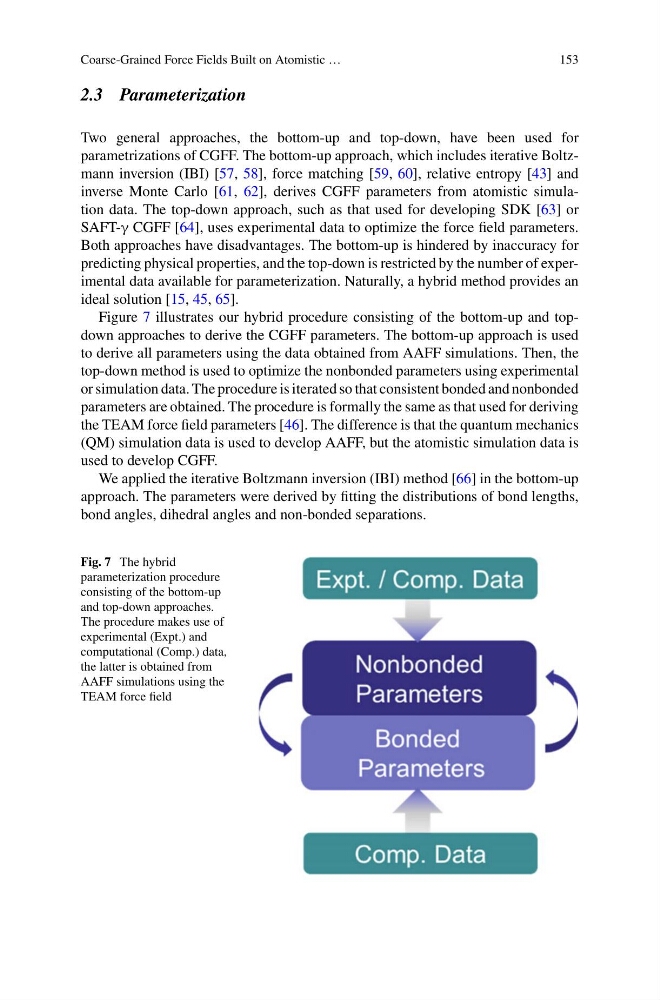
Figure 7 illustrates our hybrid procedure consisting of the bottom-up and topdown approaches to derive the CGFF parameters. The bottom-up approach is used
to derive all parameters using the data obtained from AAFF simulations. Then, the
top-down method is used to optimize the nonbonded parameters using experimental
or simulation data. The procedure is iterated so that consistent bonded and nonbonded
parameters are obtained. The procedure is formally the same as that used for deriving
the TEAM force field parameters [46]. The difference is that the quantum mechanics
(QM) simulation data is used to develop AAFF, but the atomistic simulation data is
used to develop CGFF.
We applied the iterative Boltzmann inversion (IBI) method [66] in the bottom-up
approach. The parameters were derived by fitting the distributions of bond lengths,
bond angles, dihedral angles and non-bonded separations.
Fig. 7 The hybrid
parameterization procedure
consisting of the bottom-up
and top-down approaches.
The procedure makes use of
experimental (Expt.) and
computational (Comp.) data,
the latter is obtained from
AAFF simulations using the
TEAM force field
153
2.3 Parameterization
Two general approaches, the bottom-up and top-down, have been used for
parametrizations of CGFF. The bottom-up approach, which includes iterative Boltzmann inversion (IBI) [57, 58], force matching [59, 60], relative entropy [43] and
inverse Monte Carlo [61, 62], derives CGFF parameters from atomistic simulation data. The top-down approach, such as that used for developing SDK [63] or
SAFT-γ CGFF [64], uses experimental data to optimize the force field parameters.
Both approaches have disadvantages. The bottom-up is hindered by inaccuracy for
predicting physical properties, and the top-down is restricted by the number of experimental data available for parameterization. Naturally, a hybrid method provides an
ideal solution [15, 45, 65].
Figure 7 illustrates our hybrid procedure consisting of the bottom-up and topdown approaches to derive the CGFF parameters. The bottom-up approach is used
to derive all parameters using the data obtained from AAFF simulations. Then, the
top-down method is used to optimize the nonbonded parameters using experimental
or simulation data. The procedure is iterated so that consistent bonded and nonbonded
parameters are obtained. The procedure is formally the same as that used for deriving
the TEAM force field parameters [46]. The difference is that the quantum mechanics
(QM) simulation data is used to develop AAFF, but the atomistic simulation data is
used to develop CGFF.
We applied the iterative Boltzmann inversion (IBI) method [66] in the bottom-up
approach. The parameters were derived by fitting the distributions of bond lengths,
bond angles, dihedral angles and non-bonded separations.
Fig. 7 The hybrid
parameterization procedure
consisting of the bottom-up
and top-down approaches.
The procedure makes use of
experimental (Expt.) and
computational (Comp.) data,
the latter is obtained from
AAFF simulations using the
TEAM force field