

26 Encapsulation of Microalgal Pigments
641
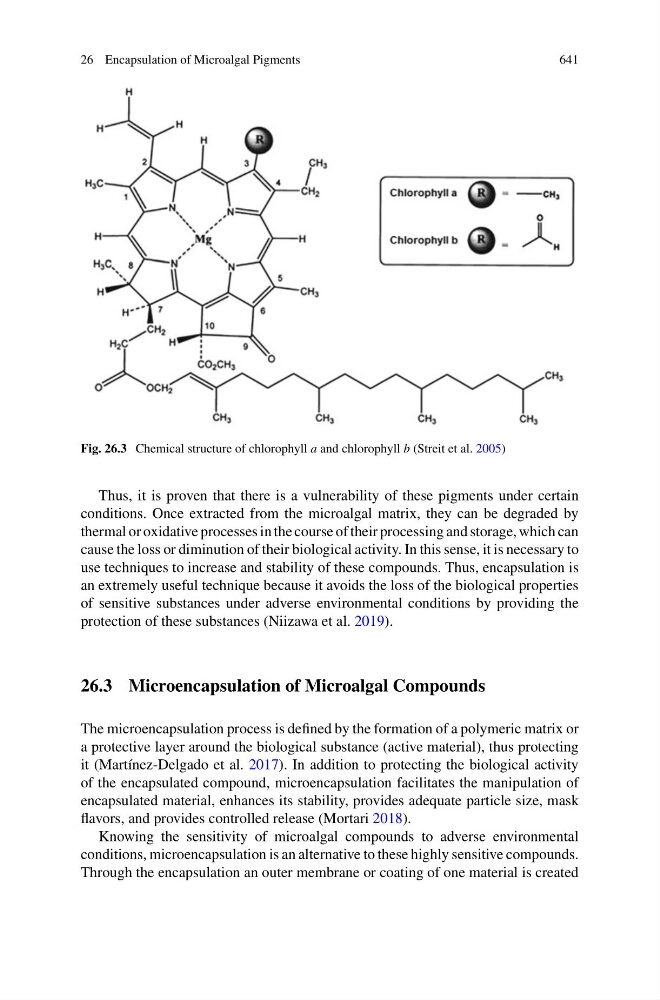
Fig. 26.3 Chemical structure of chlorophyll a and chlorophyll b (Streit et al. 2005)
Thus, it is proven that there is a vulnerability of these pigments under certain
conditions. Once extracted from the microalgal matrix, they can be degraded by
thermal or oxidative processes in the course of their processing and storage, which can
cause the loss or diminution of their biological activity. In this sense, it is necessary to
use techniques to increase and stability of these compounds. Thus, encapsulation is
an extremely useful technique because it avoids the loss of the biological properties
of sensitive substances under adverse environmental conditions by providing the
protection of these substances (Niizawa et al. 2019).
26.3 Microencapsulation of Microalgal Compounds
The microencapsulation process is defined by the formation of a polymeric matrix or
a protective layer around the biological substance (active material), thus protecting
it (Martínez-Delgado et al. 2017). In addition to protecting the biological activity
of the encapsulated compound, microencapsulation facilitates the manipulation of
encapsulated material, enhances its stability, provides adequate particle size, mask
flavors, and provides controlled release (Mortari 2018).
Knowing the sensitivity of microalgal compounds to adverse environmental
conditions, microencapsulation is an alternative to these highly sensitive compounds.
Through the encapsulation an outer membrane or coating of one material is created