

216
T. Casagrande do Nascimento et al.
Fe
2+
N
N
Fe
3+
N
N
ANTIOXIDANT +
Reduction
(pH 3.6)
Ferric complex
[FE 3+ (TPTZ) 2 ] 3+
(Colorless)
Ferrous complex
[FE 2+ (TPTZ) 2 ] 2+
Absorption: 600 nm
(Blue color)
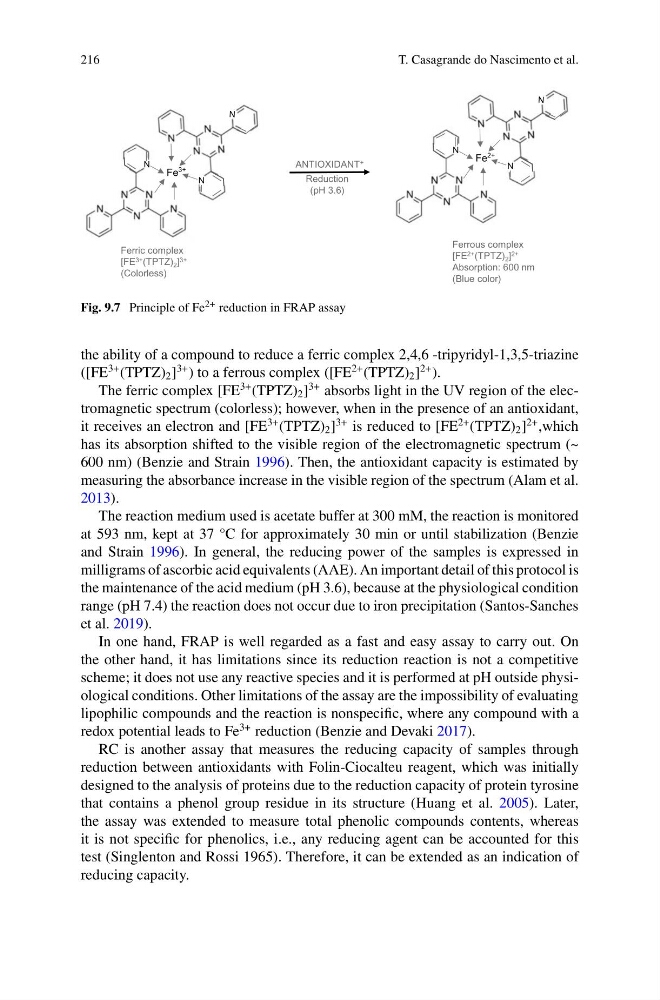
Fig. 9.7 Principle of Fe 2+ reduction in FRAP assay
the ability of a compound to reduce a ferric complex 2,4,6 -tripyridyl-1,3,5-triazine
([FE
3+ (TPTZ) 2 ]
3+ ) to a ferrous complex ([FE
2+ (TPTZ) 2 ]
2+ ).
The ferric complex [FE
3+ (TPTZ) 2 ]
3+ absorbs light in the UV region of the electromagnetic spectrum (colorless); however, when in the presence of an antioxidant,
it receives an electron and [FE
3+ (TPTZ) 2 ]
3+ is reduced to [FE
2+ (TPTZ) 2 ]
2+ ,which
has its absorption shifted to the visible region of the electromagnetic spectrum (~
600 nm) (Benzie and Strain 1996). Then, the antioxidant capacity is estimated by
measuring the absorbance increase in the visible region of the spectrum (Alam et al.
2013).
The reaction medium used is acetate buffer at 300 mM, the reaction is monitored
at 593 nm, kept at 37 °C for approximately 30 min or until stabilization (Benzie
and Strain 1996). In general, the reducing power of the samples is expressed in
milligrams of ascorbic acid equivalents (AAE). An important detail of this protocol is
the maintenance of the acid medium (pH 3.6), because at the physiological condition
range (pH 7.4) the reaction does not occur due to iron precipitation (Santos-Sanches
et al. 2019).
In one hand, FRAP is well regarded as a fast and easy assay to carry out. On
the other hand, it has limitations since its reduction reaction is not a competitive
scheme; it does not use any reactive species and it is performed at pH outside physiological conditions. Other limitations of the assay are the impossibility of evaluating
lipophilic compounds and the reaction is nonspecific, where any compound with a
redox potential leads to Fe
3+ reduction (Benzie and Devaki 2017).
RC is another assay that measures the reducing capacity of samples through
reduction between antioxidants with Folin-Ciocalteu reagent, which was initially
designed to the analysis of proteins due to the reduction capacity of protein tyrosine
that contains a phenol group residue in its structure (Huang et al. 2005). Later,
the assay was extended to measure total phenolic compounds contents, whereas
it is not specific for phenolics, i.e., any reducing agent can be accounted for this
test (Singlenton and Rossi 1965). Therefore, it can be extended as an indication of
reducing capacity.
T. Casagrande do Nascimento et al.
Fe
2+
N
N
Fe
3+
N
N
ANTIOXIDANT +
Reduction
(pH 3.6)
Ferric complex
[FE 3+ (TPTZ) 2 ] 3+
(Colorless)
Ferrous complex
[FE 2+ (TPTZ) 2 ] 2+
Absorption: 600 nm
(Blue color)
Fig. 9.7 Principle of Fe 2+ reduction in FRAP assay
the ability of a compound to reduce a ferric complex 2,4,6 -tripyridyl-1,3,5-triazine
([FE
3+ (TPTZ) 2 ]
3+ ) to a ferrous complex ([FE
2+ (TPTZ) 2 ]
2+ ).
The ferric complex [FE
3+ (TPTZ) 2 ]
3+ absorbs light in the UV region of the electromagnetic spectrum (colorless); however, when in the presence of an antioxidant,
it receives an electron and [FE
3+ (TPTZ) 2 ]
3+ is reduced to [FE
2+ (TPTZ) 2 ]
2+ ,which
has its absorption shifted to the visible region of the electromagnetic spectrum (~
600 nm) (Benzie and Strain 1996). Then, the antioxidant capacity is estimated by
measuring the absorbance increase in the visible region of the spectrum (Alam et al.
2013).
The reaction medium used is acetate buffer at 300 mM, the reaction is monitored
at 593 nm, kept at 37 °C for approximately 30 min or until stabilization (Benzie
and Strain 1996). In general, the reducing power of the samples is expressed in
milligrams of ascorbic acid equivalents (AAE). An important detail of this protocol is
the maintenance of the acid medium (pH 3.6), because at the physiological condition
range (pH 7.4) the reaction does not occur due to iron precipitation (Santos-Sanches
et al. 2019).
In one hand, FRAP is well regarded as a fast and easy assay to carry out. On
the other hand, it has limitations since its reduction reaction is not a competitive
scheme; it does not use any reactive species and it is performed at pH outside physiological conditions. Other limitations of the assay are the impossibility of evaluating
lipophilic compounds and the reaction is nonspecific, where any compound with a
redox potential leads to Fe
3+ reduction (Benzie and Devaki 2017).
RC is another assay that measures the reducing capacity of samples through
reduction between antioxidants with Folin-Ciocalteu reagent, which was initially
designed to the analysis of proteins due to the reduction capacity of protein tyrosine
that contains a phenol group residue in its structure (Huang et al. 2005). Later,
the assay was extended to measure total phenolic compounds contents, whereas
it is not specific for phenolics, i.e., any reducing agent can be accounted for this
test (Singlenton and Rossi 1965). Therefore, it can be extended as an indication of
reducing capacity.