

2 Atomically Precise Nanoclusters as Electrocatalysts
57
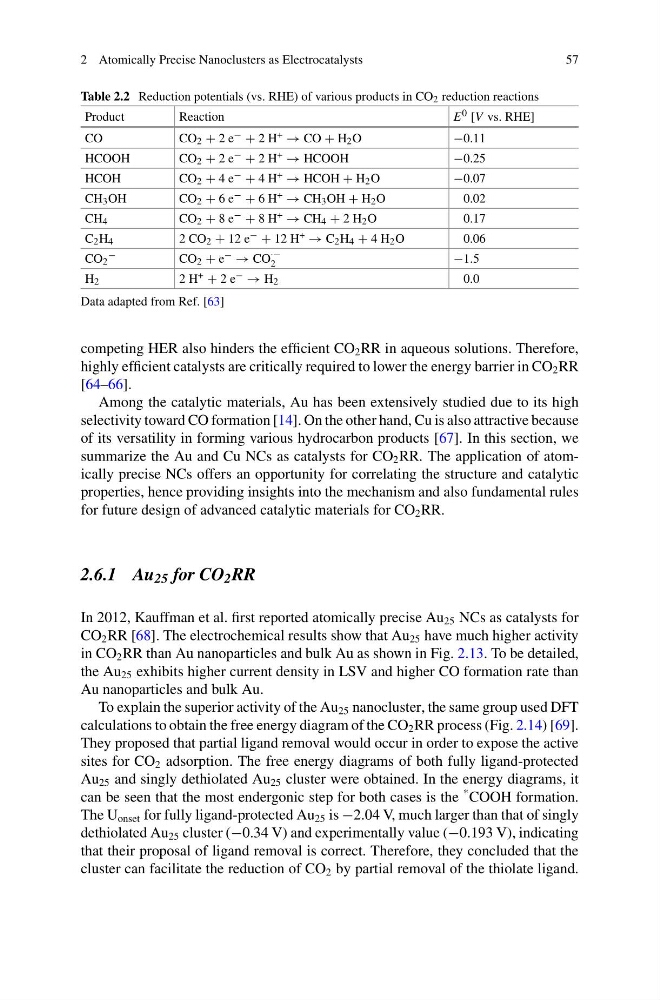
Table 2.2 Reduction potentials (vs. RHE) of various products in CO 2 reduction reactions
Product
Reaction
E 0 [V vs. RHE]
CO
CO 2 + 2 e − + 2 H + → CO + H 2 O
−0.11
HCOOH
CO 2 + 2 e − + 2 H + → HCOOH
−0.25
HCOH
CO 2 + 4 e − + 4 H + → HCOH + H 2 O
−0.07
CH 3 OH
CO 2 + 6 e − + 6 H + → CH 3 OH + H 2 O
0.02
CH 4
CO 2 + 8 e − + 8 H + → CH 4 + 2 H 2 O
0.17
C 2 H 4
2 CO 2 + 12 e − + 12 H + → C 2 H 4 + 4 H 2 O
0.06
CO 2
−
CO 2 + e − → CO
·−
2
−1.5
H 2
2 H + + 2 e − → H 2
0.0
Data adapted from Ref. [63]
competing HER also hinders the efficient CO 2 RR in aqueous solutions. Therefore,
highly efficient catalysts are critically required to lower the energy barrier in CO 2 RR
[64–66].
Among the catalytic materials, Au has been extensively studied due to its high
selectivity toward CO formation [14]. On the other hand, Cu is also attractive because
of its versatility in forming various hydrocarbon products [67]. In this section, we
summarize the Au and Cu NCs as catalysts for CO 2 RR. The application of atomically precise NCs offers an opportunity for correlating the structure and catalytic
properties, hence providing insights into the mechanism and also fundamental rules
for future design of advanced catalytic materials for CO 2 RR.
2.6.1 Au 25 for CO 2 RR
In 2012, Kauffman et al. first reported atomically precise Au 25 NCs as catalysts for
CO 2 RR [68]. The electrochemical results show that Au 25 have much higher activity
in CO 2 RR than Au nanoparticles and bulk Au as shown in Fig. 2.13. To be detailed,
the Au 25 exhibits higher current density in LSV and higher CO formation rate than
Au nanoparticles and bulk Au.
To explain the superior activity of the Au 25 nanocluster, the same group used DFT
calculations to obtain the free energy diagram of the CO 2 RR process (Fig. 2.14) [69].
They proposed that partial ligand removal would occur in order to expose the active
sites for CO 2 adsorption. The free energy diagrams of both fully ligand-protected
Au 25 and singly dethiolated Au 25 cluster were obtained. In the energy diagrams, it
can be seen that the most endergonic step for both cases is the
* COOH formation.
The U onset for fully ligand-protected Au 25 is −2.04 V, much larger than that of singly
dethiolated Au 25 cluster (−0.34 V) and experimentally value (−0.193 V), indicating
that their proposal of ligand removal is correct. Therefore, they concluded that the
cluster can facilitate the reduction of CO 2 by partial removal of the thiolate ligand.
57
Table 2.2 Reduction potentials (vs. RHE) of various products in CO 2 reduction reactions
Product
Reaction
E 0 [V vs. RHE]
CO
CO 2 + 2 e − + 2 H + → CO + H 2 O
−0.11
HCOOH
CO 2 + 2 e − + 2 H + → HCOOH
−0.25
HCOH
CO 2 + 4 e − + 4 H + → HCOH + H 2 O
−0.07
CH 3 OH
CO 2 + 6 e − + 6 H + → CH 3 OH + H 2 O
0.02
CH 4
CO 2 + 8 e − + 8 H + → CH 4 + 2 H 2 O
0.17
C 2 H 4
2 CO 2 + 12 e − + 12 H + → C 2 H 4 + 4 H 2 O
0.06
CO 2
−
CO 2 + e − → CO
·−
2
−1.5
H 2
2 H + + 2 e − → H 2
0.0
Data adapted from Ref. [63]
competing HER also hinders the efficient CO 2 RR in aqueous solutions. Therefore,
highly efficient catalysts are critically required to lower the energy barrier in CO 2 RR
[64–66].
Among the catalytic materials, Au has been extensively studied due to its high
selectivity toward CO formation [14]. On the other hand, Cu is also attractive because
of its versatility in forming various hydrocarbon products [67]. In this section, we
summarize the Au and Cu NCs as catalysts for CO 2 RR. The application of atomically precise NCs offers an opportunity for correlating the structure and catalytic
properties, hence providing insights into the mechanism and also fundamental rules
for future design of advanced catalytic materials for CO 2 RR.
2.6.1 Au 25 for CO 2 RR
In 2012, Kauffman et al. first reported atomically precise Au 25 NCs as catalysts for
CO 2 RR [68]. The electrochemical results show that Au 25 have much higher activity
in CO 2 RR than Au nanoparticles and bulk Au as shown in Fig. 2.13. To be detailed,
the Au 25 exhibits higher current density in LSV and higher CO formation rate than
Au nanoparticles and bulk Au.
To explain the superior activity of the Au 25 nanocluster, the same group used DFT
calculations to obtain the free energy diagram of the CO 2 RR process (Fig. 2.14) [69].
They proposed that partial ligand removal would occur in order to expose the active
sites for CO 2 adsorption. The free energy diagrams of both fully ligand-protected
Au 25 and singly dethiolated Au 25 cluster were obtained. In the energy diagrams, it
can be seen that the most endergonic step for both cases is the
* COOH formation.
The U onset for fully ligand-protected Au 25 is −2.04 V, much larger than that of singly
dethiolated Au 25 cluster (−0.34 V) and experimentally value (−0.193 V), indicating
that their proposal of ligand removal is correct. Therefore, they concluded that the
cluster can facilitate the reduction of CO 2 by partial removal of the thiolate ligand.