

440
L. M. Martínez-Prieto and P. W. N. M. van Leeuwen
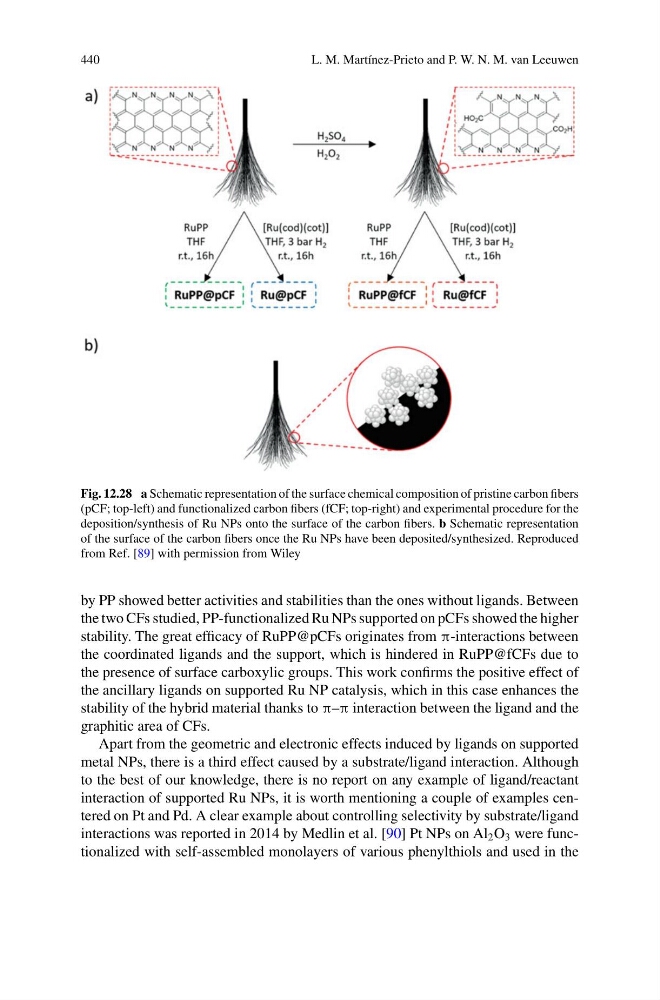
Fig. 12.28 a Schematic representation of the surface chemical composition of pristine carbon fibers
(pCF; top-left) and functionalized carbon fibers (fCF; top-right) and experimental procedure for the
deposition/synthesis of Ru NPs onto the surface of the carbon fibers. b Schematic representation
of the surface of the carbon fibers once the Ru NPs have been deposited/synthesized. Reproduced
from Ref. [89] with permission from Wiley
by PP showed better activities and stabilities than the ones without ligands. Between
the two CFs studied, PP-functionalized Ru NPs supported on pCFs showed the higher
stability. The great efficacy of RuPP@pCFs originates from π-interactions between
the coordinated ligands and the support, which is hindered in RuPP@fCFs due to
the presence of surface carboxylic groups. This work confirms the positive effect of
the ancillary ligands on supported Ru NP catalysis, which in this case enhances the
stability of the hybrid material thanks to π–π interaction between the ligand and the
graphitic area of CFs.
Apart from the geometric and electronic effects induced by ligands on supported
metal NPs, there is a third effect caused by a substrate/ligand interaction. Although
to the best of our knowledge, there is no report on any example of ligand/reactant
interaction of supported Ru NPs, it is worth mentioning a couple of examples centered on Pt and Pd. A clear example about controlling selectivity by substrate/ligand
interactions was reported in 2014 by Medlin et al. [90] Pt NPs on Al 2 O 3 were functionalized with self-assembled monolayers of various phenylthiols and used in the
L. M. Martínez-Prieto and P. W. N. M. van Leeuwen
Fig. 12.28 a Schematic representation of the surface chemical composition of pristine carbon fibers
(pCF; top-left) and functionalized carbon fibers (fCF; top-right) and experimental procedure for the
deposition/synthesis of Ru NPs onto the surface of the carbon fibers. b Schematic representation
of the surface of the carbon fibers once the Ru NPs have been deposited/synthesized. Reproduced
from Ref. [89] with permission from Wiley
by PP showed better activities and stabilities than the ones without ligands. Between
the two CFs studied, PP-functionalized Ru NPs supported on pCFs showed the higher
stability. The great efficacy of RuPP@pCFs originates from π-interactions between
the coordinated ligands and the support, which is hindered in RuPP@fCFs due to
the presence of surface carboxylic groups. This work confirms the positive effect of
the ancillary ligands on supported Ru NP catalysis, which in this case enhances the
stability of the hybrid material thanks to π–π interaction between the ligand and the
graphitic area of CFs.
Apart from the geometric and electronic effects induced by ligands on supported
metal NPs, there is a third effect caused by a substrate/ligand interaction. Although
to the best of our knowledge, there is no report on any example of ligand/reactant
interaction of supported Ru NPs, it is worth mentioning a couple of examples centered on Pt and Pd. A clear example about controlling selectivity by substrate/ligand
interactions was reported in 2014 by Medlin et al. [90] Pt NPs on Al 2 O 3 were functionalized with self-assembled monolayers of various phenylthiols and used in the