

12 Ligand Effects in Ruthenium Nanoparticle Catalysis
421
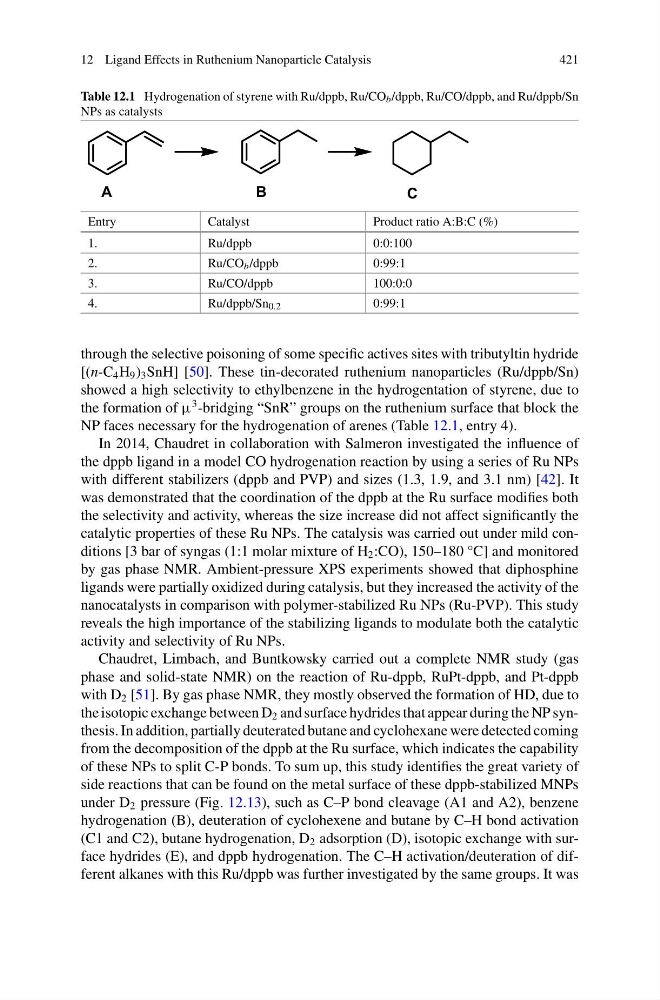
Table 12.1 Hydrogenation of styrene with Ru/dppb, Ru/CO b /dppb, Ru/CO/dppb, and Ru/dppb/Sn
NPs as catalysts
A
B
C
Entry
Catalyst
Product ratio A:B:C (%)
1.
Ru/dppb
0:0:100
2.
Ru/CO b /dppb
0:99:1
3.
Ru/CO/dppb
100:0:0
4.
Ru/dppb/Sn 0.2
0:99:1
through the selective poisoning of some specific actives sites with tributyltin hydride
[(n-C 4 H 9 ) 3 SnH] [50]. These tin-decorated ruthenium nanoparticles (Ru/dppb/Sn)
showed a high selectivity to ethylbenzene in the hydrogentation of styrene, due to
the formation of μ
3 -bridging “SnR” groups on the ruthenium surface that block the
NP faces necessary for the hydrogenation of arenes (Table 12.1, entry 4).
In 2014, Chaudret in collaboration with Salmeron investigated the influence of
the dppb ligand in a model CO hydrogenation reaction by using a series of Ru NPs
with different stabilizers (dppb and PVP) and sizes (1.3, 1.9, and 3.1 nm) [42]. It
was demonstrated that the coordination of the dppb at the Ru surface modifies both
the selectivity and activity, whereas the size increase did not affect significantly the
catalytic properties of these Ru NPs. The catalysis was carried out under mild conditions [3 bar of syngas (1:1 molar mixture of H 2 :CO), 150–180 °C] and monitored
by gas phase NMR. Ambient-pressure XPS experiments showed that diphosphine
ligands were partially oxidized during catalysis, but they increased the activity of the
nanocatalysts in comparison with polymer-stabilized Ru NPs (Ru-PVP). This study
reveals the high importance of the stabilizing ligands to modulate both the catalytic
activity and selectivity of Ru NPs.
Chaudret, Limbach, and Buntkowsky carried out a complete NMR study (gas
phase and solid-state NMR) on the reaction of Ru-dppb, RuPt-dppb, and Pt-dppb
with D 2 [51]. By gas phase NMR, they mostly observed the formation of HD, due to
the isotopic exchange between D 2 and surface hydrides that appear during the NP synthesis. In addition, partially deuterated butane and cyclohexane were detected coming
from the decomposition of the dppb at the Ru surface, which indicates the capability
of these NPs to split C-P bonds. To sum up, this study identifies the great variety of
side reactions that can be found on the metal surface of these dppb-stabilized MNPs
under D 2 pressure (Fig. 12.13), such as C–P bond cleavage (A1 and A2), benzene
hydrogenation (B), deuteration of cyclohexene and butane by C–H bond activation
(C1 and C2), butane hydrogenation, D 2 adsorption (D), isotopic exchange with surface hydrides (E), and dppb hydrogenation. The C–H activation/deuteration of different alkanes with this Ru/dppb was further investigated by the same groups. It was
421
Table 12.1 Hydrogenation of styrene with Ru/dppb, Ru/CO b /dppb, Ru/CO/dppb, and Ru/dppb/Sn
NPs as catalysts
A
B
C
Entry
Catalyst
Product ratio A:B:C (%)
1.
Ru/dppb
0:0:100
2.
Ru/CO b /dppb
0:99:1
3.
Ru/CO/dppb
100:0:0
4.
Ru/dppb/Sn 0.2
0:99:1
through the selective poisoning of some specific actives sites with tributyltin hydride
[(n-C 4 H 9 ) 3 SnH] [50]. These tin-decorated ruthenium nanoparticles (Ru/dppb/Sn)
showed a high selectivity to ethylbenzene in the hydrogentation of styrene, due to
the formation of μ
3 -bridging “SnR” groups on the ruthenium surface that block the
NP faces necessary for the hydrogenation of arenes (Table 12.1, entry 4).
In 2014, Chaudret in collaboration with Salmeron investigated the influence of
the dppb ligand in a model CO hydrogenation reaction by using a series of Ru NPs
with different stabilizers (dppb and PVP) and sizes (1.3, 1.9, and 3.1 nm) [42]. It
was demonstrated that the coordination of the dppb at the Ru surface modifies both
the selectivity and activity, whereas the size increase did not affect significantly the
catalytic properties of these Ru NPs. The catalysis was carried out under mild conditions [3 bar of syngas (1:1 molar mixture of H 2 :CO), 150–180 °C] and monitored
by gas phase NMR. Ambient-pressure XPS experiments showed that diphosphine
ligands were partially oxidized during catalysis, but they increased the activity of the
nanocatalysts in comparison with polymer-stabilized Ru NPs (Ru-PVP). This study
reveals the high importance of the stabilizing ligands to modulate both the catalytic
activity and selectivity of Ru NPs.
Chaudret, Limbach, and Buntkowsky carried out a complete NMR study (gas
phase and solid-state NMR) on the reaction of Ru-dppb, RuPt-dppb, and Pt-dppb
with D 2 [51]. By gas phase NMR, they mostly observed the formation of HD, due to
the isotopic exchange between D 2 and surface hydrides that appear during the NP synthesis. In addition, partially deuterated butane and cyclohexane were detected coming
from the decomposition of the dppb at the Ru surface, which indicates the capability
of these NPs to split C-P bonds. To sum up, this study identifies the great variety of
side reactions that can be found on the metal surface of these dppb-stabilized MNPs
under D 2 pressure (Fig. 12.13), such as C–P bond cleavage (A1 and A2), benzene
hydrogenation (B), deuteration of cyclohexene and butane by C–H bond activation
(C1 and C2), butane hydrogenation, D 2 adsorption (D), isotopic exchange with surface hydrides (E), and dppb hydrogenation. The C–H activation/deuteration of different alkanes with this Ru/dppb was further investigated by the same groups. It was