

366
I. Cano and P. W. N. M. van Leeuwen
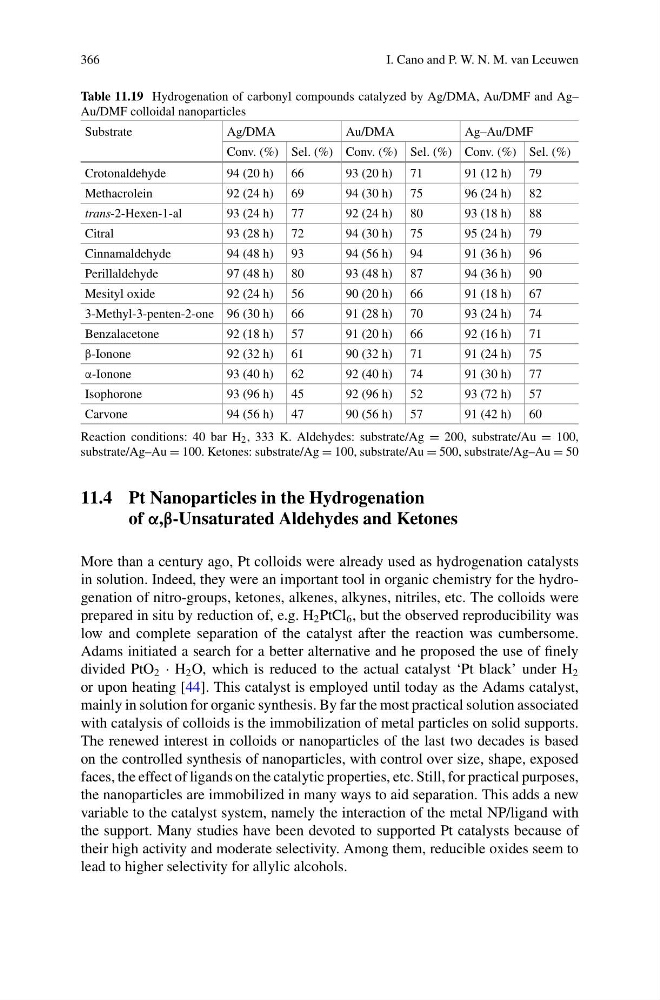
Table 11.19 Hydrogenation of carbonyl compounds catalyzed by Ag/DMA, Au/DMF and Ag–
Au/DMF colloidal nanoparticles
Substrate
Ag/DMA
Au/DMA
Ag–Au/DMF
Conv. (%) Sel. (%) Conv. (%) Sel. (%) Conv. (%) Sel. (%)
Crotonaldehyde
94 (20 h) 66
93 (20 h) 71
91 (12 h) 79
Methacrolein
92 (24 h) 69
94 (30 h) 75
96 (24 h) 82
trans-2-Hexen-1-al
93 (24 h) 77
92 (24 h) 80
93 (18 h) 88
Citral
93 (28 h) 72
94 (30 h) 75
95 (24 h) 79
Cinnamaldehyde
94 (48 h) 93
94 (56 h) 94
91 (36 h) 96
Perillaldehyde
97 (48 h) 80
93 (48 h) 87
94 (36 h) 90
Mesityl oxide
92 (24 h) 56
90 (20 h) 66
91 (18 h) 67
3-Methyl-3-penten-2-one 96 (30 h) 66
91 (28 h) 70
93 (24 h) 74
Benzalacetone
92 (18 h) 57
91 (20 h) 66
92 (16 h) 71
β-Ionone
92 (32 h) 61
90 (32 h) 71
91 (24 h) 75
α-Ionone
93 (40 h) 62
92 (40 h) 74
91 (30 h) 77
Isophorone
93 (96 h) 45
92 (96 h) 52
93 (72 h) 57
Carvone
94 (56 h) 47
90 (56 h) 57
91 (42 h) 60
Reaction conditions: 40 bar H 2 , 333 K. Aldehydes: substrate/Ag = 200, substrate/Au = 100,
substrate/Ag–Au = 100. Ketones: substrate/Ag = 100, substrate/Au = 500, substrate/Ag–Au = 50
11.4 Pt Nanoparticles in the Hydrogenation
of α,β-Unsaturated Aldehydes and Ketones
More than a century ago, Pt colloids were already used as hydrogenation catalysts
in solution. Indeed, they were an important tool in organic chemistry for the hydrogenation of nitro-groups, ketones, alkenes, alkynes, nitriles, etc. The colloids were
prepared in situ by reduction of, e.g. H 2 PtCl 6 , but the observed reproducibility was
low and complete separation of the catalyst after the reaction was cumbersome.
Adams initiated a search for a better alternative and he proposed the use of finely
divided PtO 2 · H 2 O, which is reduced to the actual catalyst ‘Pt black’ under H 2
or upon heating [44]. This catalyst is employed until today as the Adams catalyst,
mainly in solution for organic synthesis. By far the most practical solution associated
with catalysis of colloids is the immobilization of metal particles on solid supports.
The renewed interest in colloids or nanoparticles of the last two decades is based
on the controlled synthesis of nanoparticles, with control over size, shape, exposed
faces, the effect of ligands on the catalytic properties, etc. Still, for practical purposes,
the nanoparticles are immobilized in many ways to aid separation. This adds a new
variable to the catalyst system, namely the interaction of the metal NP/ligand with
the support. Many studies have been devoted to supported Pt catalysts because of
their high activity and moderate selectivity. Among them, reducible oxides seem to
lead to higher selectivity for allylic alcohols.
I. Cano and P. W. N. M. van Leeuwen
Table 11.19 Hydrogenation of carbonyl compounds catalyzed by Ag/DMA, Au/DMF and Ag–
Au/DMF colloidal nanoparticles
Substrate
Ag/DMA
Au/DMA
Ag–Au/DMF
Conv. (%) Sel. (%) Conv. (%) Sel. (%) Conv. (%) Sel. (%)
Crotonaldehyde
94 (20 h) 66
93 (20 h) 71
91 (12 h) 79
Methacrolein
92 (24 h) 69
94 (30 h) 75
96 (24 h) 82
trans-2-Hexen-1-al
93 (24 h) 77
92 (24 h) 80
93 (18 h) 88
Citral
93 (28 h) 72
94 (30 h) 75
95 (24 h) 79
Cinnamaldehyde
94 (48 h) 93
94 (56 h) 94
91 (36 h) 96
Perillaldehyde
97 (48 h) 80
93 (48 h) 87
94 (36 h) 90
Mesityl oxide
92 (24 h) 56
90 (20 h) 66
91 (18 h) 67
3-Methyl-3-penten-2-one 96 (30 h) 66
91 (28 h) 70
93 (24 h) 74
Benzalacetone
92 (18 h) 57
91 (20 h) 66
92 (16 h) 71
β-Ionone
92 (32 h) 61
90 (32 h) 71
91 (24 h) 75
α-Ionone
93 (40 h) 62
92 (40 h) 74
91 (30 h) 77
Isophorone
93 (96 h) 45
92 (96 h) 52
93 (72 h) 57
Carvone
94 (56 h) 47
90 (56 h) 57
91 (42 h) 60
Reaction conditions: 40 bar H 2 , 333 K. Aldehydes: substrate/Ag = 200, substrate/Au = 100,
substrate/Ag–Au = 100. Ketones: substrate/Ag = 100, substrate/Au = 500, substrate/Ag–Au = 50
11.4 Pt Nanoparticles in the Hydrogenation
of α,β-Unsaturated Aldehydes and Ketones
More than a century ago, Pt colloids were already used as hydrogenation catalysts
in solution. Indeed, they were an important tool in organic chemistry for the hydrogenation of nitro-groups, ketones, alkenes, alkynes, nitriles, etc. The colloids were
prepared in situ by reduction of, e.g. H 2 PtCl 6 , but the observed reproducibility was
low and complete separation of the catalyst after the reaction was cumbersome.
Adams initiated a search for a better alternative and he proposed the use of finely
divided PtO 2 · H 2 O, which is reduced to the actual catalyst ‘Pt black’ under H 2
or upon heating [44]. This catalyst is employed until today as the Adams catalyst,
mainly in solution for organic synthesis. By far the most practical solution associated
with catalysis of colloids is the immobilization of metal particles on solid supports.
The renewed interest in colloids or nanoparticles of the last two decades is based
on the controlled synthesis of nanoparticles, with control over size, shape, exposed
faces, the effect of ligands on the catalytic properties, etc. Still, for practical purposes,
the nanoparticles are immobilized in many ways to aid separation. This adds a new
variable to the catalyst system, namely the interaction of the metal NP/ligand with
the support. Many studies have been devoted to supported Pt catalysts because of
their high activity and moderate selectivity. Among them, reducible oxides seem to
lead to higher selectivity for allylic alcohols.