

10 Progress in the Selective Semi-hydrogenation of Alkynes …
311
+ 1 eq. K 2 PdCl 4
AgNPs seeds
stabilized by PVP
Water
85
HO
HO
+ H 2
Ethanol, 30
AgPd NPs (cluster-in-cluster)
(Ag/Pd 6:1 - 0:1)
0-6 eq.
3-hexyl-1-ol
cis-3-hexen-1-ol
99% (Z)
Highest TOF, Ag/Pd = 2:1
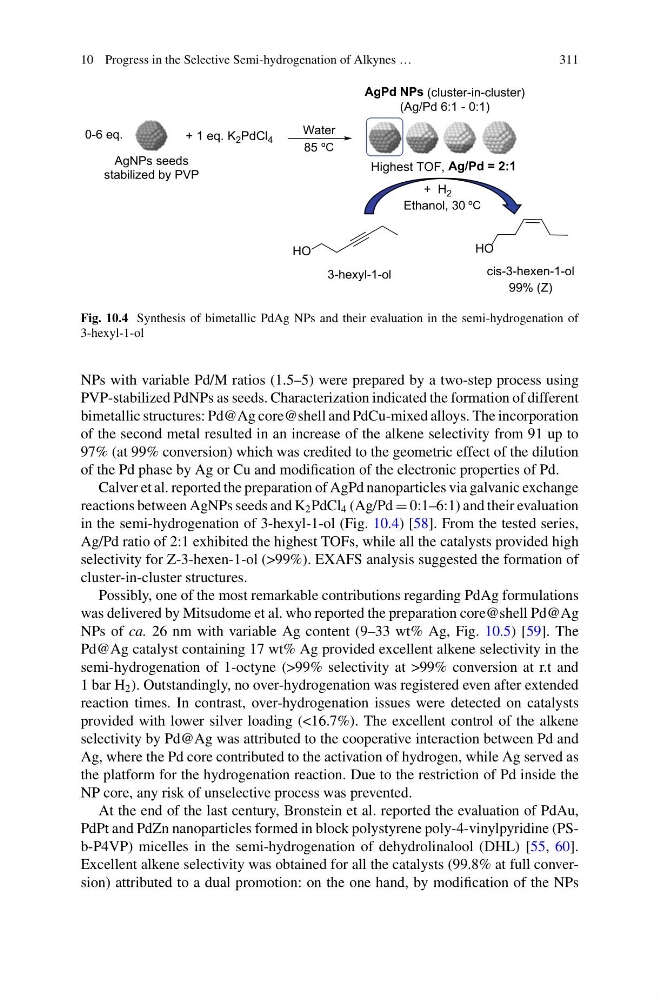
Fig. 10.4 Synthesis of bimetallic PdAg NPs and their evaluation in the semi-hydrogenation of
3-hexyl-1-ol
NPs with variable Pd/M ratios (1.5–5) were prepared by a two-step process using
PVP-stabilized PdNPs as seeds. Characterization indicated the formation of different
bimetallic structures: Pd@Ag core@shell and PdCu-mixed alloys. The incorporation
of the second metal resulted in an increase of the alkene selectivity from 91 up to
97% (at 99% conversion) which was credited to the geometric effect of the dilution
of the Pd phase by Ag or Cu and modification of the electronic properties of Pd.
Calver et al. reported the preparation of AgPd nanoparticles via galvanic exchange
reactions between AgNPs seeds and K 2 PdCl 4 (Ag/Pd = 0:1–6:1) and their evaluation
in the semi-hydrogenation of 3-hexyl-1-ol (Fig. 10.4) [58]. From the tested series,
Ag/Pd ratio of 2:1 exhibited the highest TOFs, while all the catalysts provided high
selectivity for Z-3-hexen-1-ol (>99%). EXAFS analysis suggested the formation of
cluster-in-cluster structures.
Possibly, one of the most remarkable contributions regarding PdAg formulations
was delivered by Mitsudome et al. who reported the preparation core@shell Pd@Ag
NPs of ca. 26 nm with variable Ag content (9–33 wt% Ag, Fig. 10.5) [59]. The
Pd@Ag catalyst containing 17 wt% Ag provided excellent alkene selectivity in the
semi-hydrogenation of 1-octyne (>99% selectivity at >99% conversion at r.t and
1 bar H 2 ). Outstandingly, no over-hydrogenation was registered even after extended
reaction times. In contrast, over-hydrogenation issues were detected on catalysts
provided with lower silver loading (<16.7%). The excellent control of the alkene
selectivity by Pd@Ag was attributed to the cooperative interaction between Pd and
Ag, where the Pd core contributed to the activation of hydrogen, while Ag served as
the platform for the hydrogenation reaction. Due to the restriction of Pd inside the
NP core, any risk of unselective process was prevented.
At the end of the last century, Bronstein et al. reported the evaluation of PdAu,
PdPt and PdZn nanoparticles formed in block polystyrene poly-4-vinylpyridine (PSb-P4VP) micelles in the semi-hydrogenation of dehydrolinalool (DHL) [55, 60].
Excellent alkene selectivity was obtained for all the catalysts (99.8% at full conversion) attributed to a dual promotion: on the one hand, by modification of the NPs
311
+ 1 eq. K 2 PdCl 4
AgNPs seeds
stabilized by PVP
Water
85
HO
HO
+ H 2
Ethanol, 30
AgPd NPs (cluster-in-cluster)
(Ag/Pd 6:1 - 0:1)
0-6 eq.
3-hexyl-1-ol
cis-3-hexen-1-ol
99% (Z)
Highest TOF, Ag/Pd = 2:1
Fig. 10.4 Synthesis of bimetallic PdAg NPs and their evaluation in the semi-hydrogenation of
3-hexyl-1-ol
NPs with variable Pd/M ratios (1.5–5) were prepared by a two-step process using
PVP-stabilized PdNPs as seeds. Characterization indicated the formation of different
bimetallic structures: Pd@Ag core@shell and PdCu-mixed alloys. The incorporation
of the second metal resulted in an increase of the alkene selectivity from 91 up to
97% (at 99% conversion) which was credited to the geometric effect of the dilution
of the Pd phase by Ag or Cu and modification of the electronic properties of Pd.
Calver et al. reported the preparation of AgPd nanoparticles via galvanic exchange
reactions between AgNPs seeds and K 2 PdCl 4 (Ag/Pd = 0:1–6:1) and their evaluation
in the semi-hydrogenation of 3-hexyl-1-ol (Fig. 10.4) [58]. From the tested series,
Ag/Pd ratio of 2:1 exhibited the highest TOFs, while all the catalysts provided high
selectivity for Z-3-hexen-1-ol (>99%). EXAFS analysis suggested the formation of
cluster-in-cluster structures.
Possibly, one of the most remarkable contributions regarding PdAg formulations
was delivered by Mitsudome et al. who reported the preparation core@shell Pd@Ag
NPs of ca. 26 nm with variable Ag content (9–33 wt% Ag, Fig. 10.5) [59]. The
Pd@Ag catalyst containing 17 wt% Ag provided excellent alkene selectivity in the
semi-hydrogenation of 1-octyne (>99% selectivity at >99% conversion at r.t and
1 bar H 2 ). Outstandingly, no over-hydrogenation was registered even after extended
reaction times. In contrast, over-hydrogenation issues were detected on catalysts
provided with lower silver loading (<16.7%). The excellent control of the alkene
selectivity by Pd@Ag was attributed to the cooperative interaction between Pd and
Ag, where the Pd core contributed to the activation of hydrogen, while Ag served as
the platform for the hydrogenation reaction. Due to the restriction of Pd inside the
NP core, any risk of unselective process was prevented.
At the end of the last century, Bronstein et al. reported the evaluation of PdAu,
PdPt and PdZn nanoparticles formed in block polystyrene poly-4-vinylpyridine (PSb-P4VP) micelles in the semi-hydrogenation of dehydrolinalool (DHL) [55, 60].
Excellent alkene selectivity was obtained for all the catalysts (99.8% at full conversion) attributed to a dual promotion: on the one hand, by modification of the NPs