

9 Metal Nanoparticles for Hydrogen Isotope Exchange
293
N
R
R
R
D 2 (1-2 bar), 20-55 C
THF
N
H
R
N
N
H
R
RuNps/PVP cat.
R
N
R
R
R
N
H
R
N
N
H
R
R
Deuterium labeling position
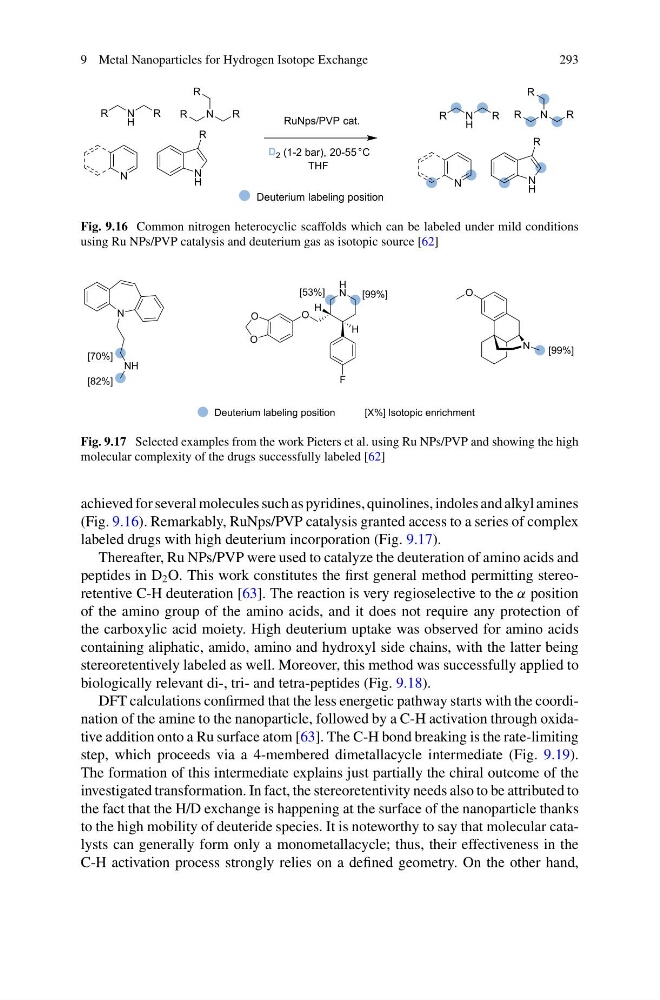
Fig. 9.16 Common nitrogen heterocyclic scaffolds which can be labeled under mild conditions
using Ru NPs/PVP catalysis and deuterium gas as isotopic source [62]
N
O
N
NH
O
O
O
H
N
F
H
H
[99%]
[99%]
[53%]
[70%]
[82%]
Deuterium labeling position
[X%] Isotopic enrichment
Fig. 9.17 Selected examples from the work Pieters et al. using Ru NPs/PVP and showing the high
molecular complexity of the drugs successfully labeled [62]
achieved for several molecules such as pyridines, quinolines, indoles and alkyl amines
(Fig. 9.16). Remarkably, RuNps/PVP catalysis granted access to a series of complex
labeled drugs with high deuterium incorporation (Fig. 9.17).
Thereafter, Ru NPs/PVP were used to catalyze the deuteration of amino acids and
peptides in D 2 O. This work constitutes the first general method permitting stereoretentive C-H deuteration [63]. The reaction is very regioselective to the α position
of the amino group of the amino acids, and it does not require any protection of
the carboxylic acid moiety. High deuterium uptake was observed for amino acids
containing aliphatic, amido, amino and hydroxyl side chains, with the latter being
stereoretentively labeled as well. Moreover, this method was successfully applied to
biologically relevant di-, tri- and tetra-peptides (Fig. 9.18).
DFT calculations confirmed that the less energetic pathway starts with the coordination of the amine to the nanoparticle, followed by a C-H activation through oxidative addition onto a Ru surface atom [63]. The C-H bond breaking is the rate-limiting
step, which proceeds via a 4-membered dimetallacycle intermediate (Fig. 9.19).
The formation of this intermediate explains just partially the chiral outcome of the
investigated transformation. In fact, the stereoretentivity needs also to be attributed to
the fact that the H/D exchange is happening at the surface of the nanoparticle thanks
to the high mobility of deuteride species. It is noteworthy to say that molecular catalysts can generally form only a monometallacycle; thus, their effectiveness in the
C-H activation process strongly relies on a defined geometry. On the other hand,
293
N
R
R
R
D 2 (1-2 bar), 20-55 C
THF
N
H
R
N
N
H
R
RuNps/PVP cat.
R
N
R
R
R
N
H
R
N
N
H
R
R
Deuterium labeling position
Fig. 9.16 Common nitrogen heterocyclic scaffolds which can be labeled under mild conditions
using Ru NPs/PVP catalysis and deuterium gas as isotopic source [62]
N
O
N
NH
O
O
O
H
N
F
H
H
[99%]
[99%]
[53%]
[70%]
[82%]
Deuterium labeling position
[X%] Isotopic enrichment
Fig. 9.17 Selected examples from the work Pieters et al. using Ru NPs/PVP and showing the high
molecular complexity of the drugs successfully labeled [62]
achieved for several molecules such as pyridines, quinolines, indoles and alkyl amines
(Fig. 9.16). Remarkably, RuNps/PVP catalysis granted access to a series of complex
labeled drugs with high deuterium incorporation (Fig. 9.17).
Thereafter, Ru NPs/PVP were used to catalyze the deuteration of amino acids and
peptides in D 2 O. This work constitutes the first general method permitting stereoretentive C-H deuteration [63]. The reaction is very regioselective to the α position
of the amino group of the amino acids, and it does not require any protection of
the carboxylic acid moiety. High deuterium uptake was observed for amino acids
containing aliphatic, amido, amino and hydroxyl side chains, with the latter being
stereoretentively labeled as well. Moreover, this method was successfully applied to
biologically relevant di-, tri- and tetra-peptides (Fig. 9.18).
DFT calculations confirmed that the less energetic pathway starts with the coordination of the amine to the nanoparticle, followed by a C-H activation through oxidative addition onto a Ru surface atom [63]. The C-H bond breaking is the rate-limiting
step, which proceeds via a 4-membered dimetallacycle intermediate (Fig. 9.19).
The formation of this intermediate explains just partially the chiral outcome of the
investigated transformation. In fact, the stereoretentivity needs also to be attributed to
the fact that the H/D exchange is happening at the surface of the nanoparticle thanks
to the high mobility of deuteride species. It is noteworthy to say that molecular catalysts can generally form only a monometallacycle; thus, their effectiveness in the
C-H activation process strongly relies on a defined geometry. On the other hand,