

292
A. Palazzolo et al.
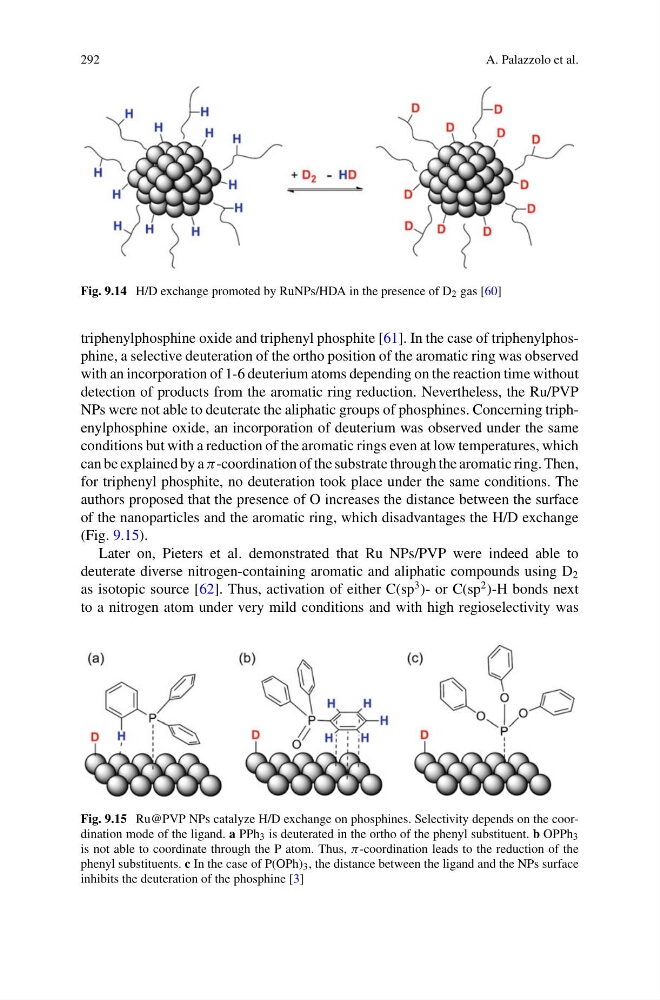
Fig. 9.14 H/D exchange promoted by RuNPs/HDA in the presence of D 2 gas [60]
triphenylphosphine oxide and triphenyl phosphite [61]. In the case of triphenylphosphine, a selective deuteration of the ortho position of the aromatic ring was observed
with an incorporation of 1-6 deuterium atoms depending on the reaction time without
detection of products from the aromatic ring reduction. Nevertheless, the Ru/PVP
NPs were not able to deuterate the aliphatic groups of phosphines. Concerning triphenylphosphine oxide, an incorporation of deuterium was observed under the same
conditions but with a reduction of the aromatic rings even at low temperatures, which
can be explained by a π-coordination of the substrate through the aromatic ring. Then,
for triphenyl phosphite, no deuteration took place under the same conditions. The
authors proposed that the presence of O increases the distance between the surface
of the nanoparticles and the aromatic ring, which disadvantages the H/D exchange
(Fig. 9.15).
Later on, Pieters et al. demonstrated that Ru NPs/PVP were indeed able to
deuterate diverse nitrogen-containing aromatic and aliphatic compounds using D 2
as isotopic source [62]. Thus, activation of either C(sp
3 )- or C(sp
2 )-H bonds next
to a nitrogen atom under very mild conditions and with high regioselectivity was
Fig. 9.15 Ru@PVP NPs catalyze H/D exchange on phosphines. Selectivity depends on the coordination mode of the ligand. a PPh 3 is deuterated in the ortho of the phenyl substituent. b OPPh 3
is not able to coordinate through the P atom. Thus, π-coordination leads to the reduction of the
phenyl substituents. c In the case of P(OPh) 3 , the distance between the ligand and the NPs surface
inhibits the deuteration of the phosphine [3]
A. Palazzolo et al.
Fig. 9.14 H/D exchange promoted by RuNPs/HDA in the presence of D 2 gas [60]
triphenylphosphine oxide and triphenyl phosphite [61]. In the case of triphenylphosphine, a selective deuteration of the ortho position of the aromatic ring was observed
with an incorporation of 1-6 deuterium atoms depending on the reaction time without
detection of products from the aromatic ring reduction. Nevertheless, the Ru/PVP
NPs were not able to deuterate the aliphatic groups of phosphines. Concerning triphenylphosphine oxide, an incorporation of deuterium was observed under the same
conditions but with a reduction of the aromatic rings even at low temperatures, which
can be explained by a π-coordination of the substrate through the aromatic ring. Then,
for triphenyl phosphite, no deuteration took place under the same conditions. The
authors proposed that the presence of O increases the distance between the surface
of the nanoparticles and the aromatic ring, which disadvantages the H/D exchange
(Fig. 9.15).
Later on, Pieters et al. demonstrated that Ru NPs/PVP were indeed able to
deuterate diverse nitrogen-containing aromatic and aliphatic compounds using D 2
as isotopic source [62]. Thus, activation of either C(sp
3 )- or C(sp
2 )-H bonds next
to a nitrogen atom under very mild conditions and with high regioselectivity was
Fig. 9.15 Ru@PVP NPs catalyze H/D exchange on phosphines. Selectivity depends on the coordination mode of the ligand. a PPh 3 is deuterated in the ortho of the phenyl substituent. b OPPh 3
is not able to coordinate through the P atom. Thus, π-coordination leads to the reduction of the
phenyl substituents. c In the case of P(OPh) 3 , the distance between the ligand and the NPs surface
inhibits the deuteration of the phosphine [3]