

9 Metal Nanoparticles for Hydrogen Isotope Exchange
291
Deuterium labeling position
[X%] Isotopic enrichment
N
N
N
NH 2
N
OH
[76%]
[17%]
[13%]
[87%]
[34%]
[6%]
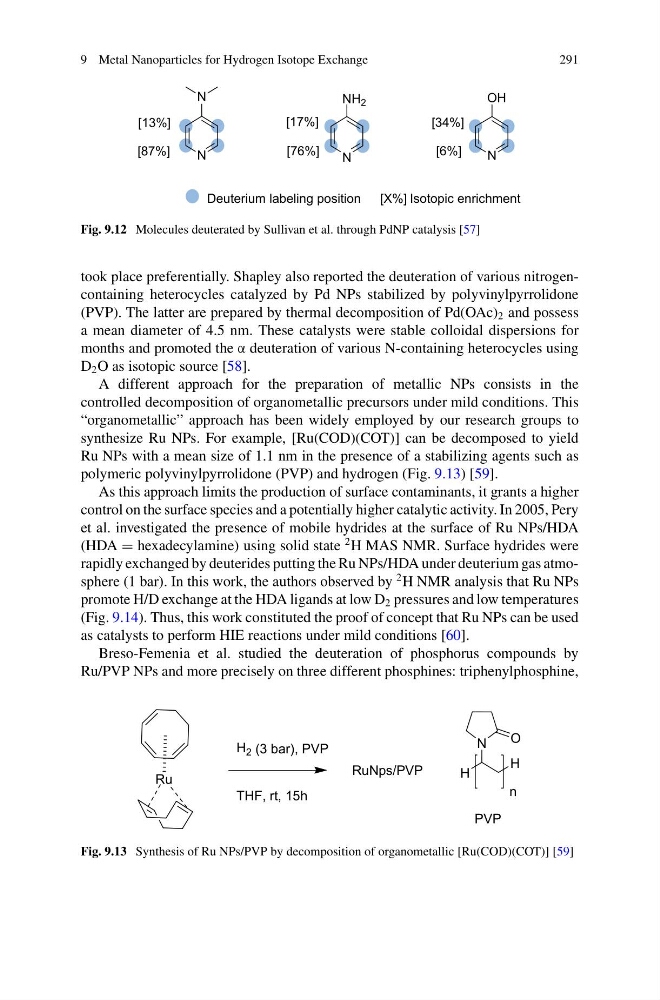
Fig. 9.12 Molecules deuterated by Sullivan et al. through PdNP catalysis [57]
took place preferentially. Shapley also reported the deuteration of various nitrogencontaining heterocycles catalyzed by Pd NPs stabilized by polyvinylpyrrolidone
(PVP). The latter are prepared by thermal decomposition of Pd(OAc) 2 and possess
a mean diameter of 4.5 nm. These catalysts were stable colloidal dispersions for
months and promoted the α deuteration of various N-containing heterocycles using
D 2 O as isotopic source [58].
A different approach for the preparation of metallic NPs consists in the
controlled decomposition of organometallic precursors under mild conditions. This
“organometallic” approach has been widely employed by our research groups to
synthesize Ru NPs. For example, [Ru(COD)(COT)] can be decomposed to yield
Ru NPs with a mean size of 1.1 nm in the presence of a stabilizing agents such as
polymeric polyvinylpyrrolidone (PVP) and hydrogen (Fig. 9.13) [59].
As this approach limits the production of surface contaminants, it grants a higher
control on the surface species and a potentially higher catalytic activity. In 2005, Pery
et al. investigated the presence of mobile hydrides at the surface of Ru NPs/HDA
(HDA = hexadecylamine) using solid state
2 H MAS NMR. Surface hydrides were
rapidly exchanged by deuterides putting the Ru NPs/HDA under deuterium gas atmosphere (1 bar). In this work, the authors observed by
2 H NMR analysis that Ru NPs
promote H/D exchange at the HDA ligands at low D 2 pressures and low temperatures
(Fig. 9.14). Thus, this work constituted the proof of concept that Ru NPs can be used
as catalysts to perform HIE reactions under mild conditions [60].
Breso-Femenia et al. studied the deuteration of phosphorus compounds by
Ru/PVP NPs and more precisely on three different phosphines: triphenylphosphine,
Ru
H 2 (3 bar), PVP
THF, rt, 15h
RuNps/PVP
N
O
H
H
n
PVP
Fig. 9.13 Synthesis of Ru NPs/PVP by decomposition of organometallic [Ru(COD)(COT)] [59]
291
Deuterium labeling position
[X%] Isotopic enrichment
N
N
N
NH 2
N
OH
[76%]
[17%]
[13%]
[87%]
[34%]
[6%]
Fig. 9.12 Molecules deuterated by Sullivan et al. through PdNP catalysis [57]
took place preferentially. Shapley also reported the deuteration of various nitrogencontaining heterocycles catalyzed by Pd NPs stabilized by polyvinylpyrrolidone
(PVP). The latter are prepared by thermal decomposition of Pd(OAc) 2 and possess
a mean diameter of 4.5 nm. These catalysts were stable colloidal dispersions for
months and promoted the α deuteration of various N-containing heterocycles using
D 2 O as isotopic source [58].
A different approach for the preparation of metallic NPs consists in the
controlled decomposition of organometallic precursors under mild conditions. This
“organometallic” approach has been widely employed by our research groups to
synthesize Ru NPs. For example, [Ru(COD)(COT)] can be decomposed to yield
Ru NPs with a mean size of 1.1 nm in the presence of a stabilizing agents such as
polymeric polyvinylpyrrolidone (PVP) and hydrogen (Fig. 9.13) [59].
As this approach limits the production of surface contaminants, it grants a higher
control on the surface species and a potentially higher catalytic activity. In 2005, Pery
et al. investigated the presence of mobile hydrides at the surface of Ru NPs/HDA
(HDA = hexadecylamine) using solid state
2 H MAS NMR. Surface hydrides were
rapidly exchanged by deuterides putting the Ru NPs/HDA under deuterium gas atmosphere (1 bar). In this work, the authors observed by
2 H NMR analysis that Ru NPs
promote H/D exchange at the HDA ligands at low D 2 pressures and low temperatures
(Fig. 9.14). Thus, this work constituted the proof of concept that Ru NPs can be used
as catalysts to perform HIE reactions under mild conditions [60].
Breso-Femenia et al. studied the deuteration of phosphorus compounds by
Ru/PVP NPs and more precisely on three different phosphines: triphenylphosphine,
Ru
H 2 (3 bar), PVP
THF, rt, 15h
RuNps/PVP
N
O
H
H
n
PVP
Fig. 9.13 Synthesis of Ru NPs/PVP by decomposition of organometallic [Ru(COD)(COT)] [59]